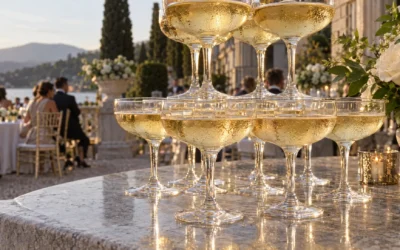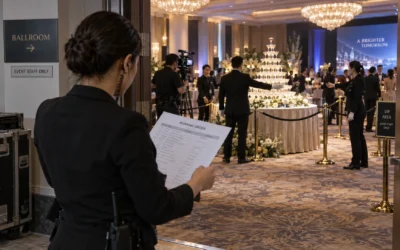


The right champagne tower glasses do more than complete the styling of an event. Their bowl shape, foot geometry and consistency influence how the structure sits, how liquid moves between tiers and how confidently a specialist can deliver the live pour. For a luxury wedding, hotel opening or brand activation, glassware selection is a production decision as much as an aesthetic one.
A beautiful coupe is not automatically suitable for stacking. Two models that look nearly identical in a rental catalog can behave differently once assembled. The strongest purchasing brief therefore starts with the intended tower design, then asks the builder to approve the exact glass model before stock is reserved. That approach protects both the visual concept and the time available for production, without relying on appearance alone.
Which champagne tower glasses work best?
Matching, tower-compatible coupes are the usual starting point for a traditional cascading display. Their broad, open bowls accommodate the arrangement needed for liquid to overflow toward the glasses below. Narrow flutes and inward-curving tulip glasses are generally not suitable substitutes for this conventional format.
However, “coupe” describes a family of shapes, not a stacking specification. Some have deep bowls, delicate stems or foot profiles that make them poor candidates for the planned structure. Decorative cocktail coupes may photograph beautifully yet prove unsuitable when the builder assesses their contact points.
Choose champagne tower glasses by exact model rather than by a general description such as “classic coupe” or “vintage champagne glass.” Confirm that the specialist has assessed that model for the intended arrangement, scale and pour.
For a heritage-inspired wedding, a traditional silhouette may be appropriate. For a contemporary hotel launch, a cleaner profile may better suit the setting. In either case, styling should follow technical approval rather than replace it.
Check the geometry before approving the design
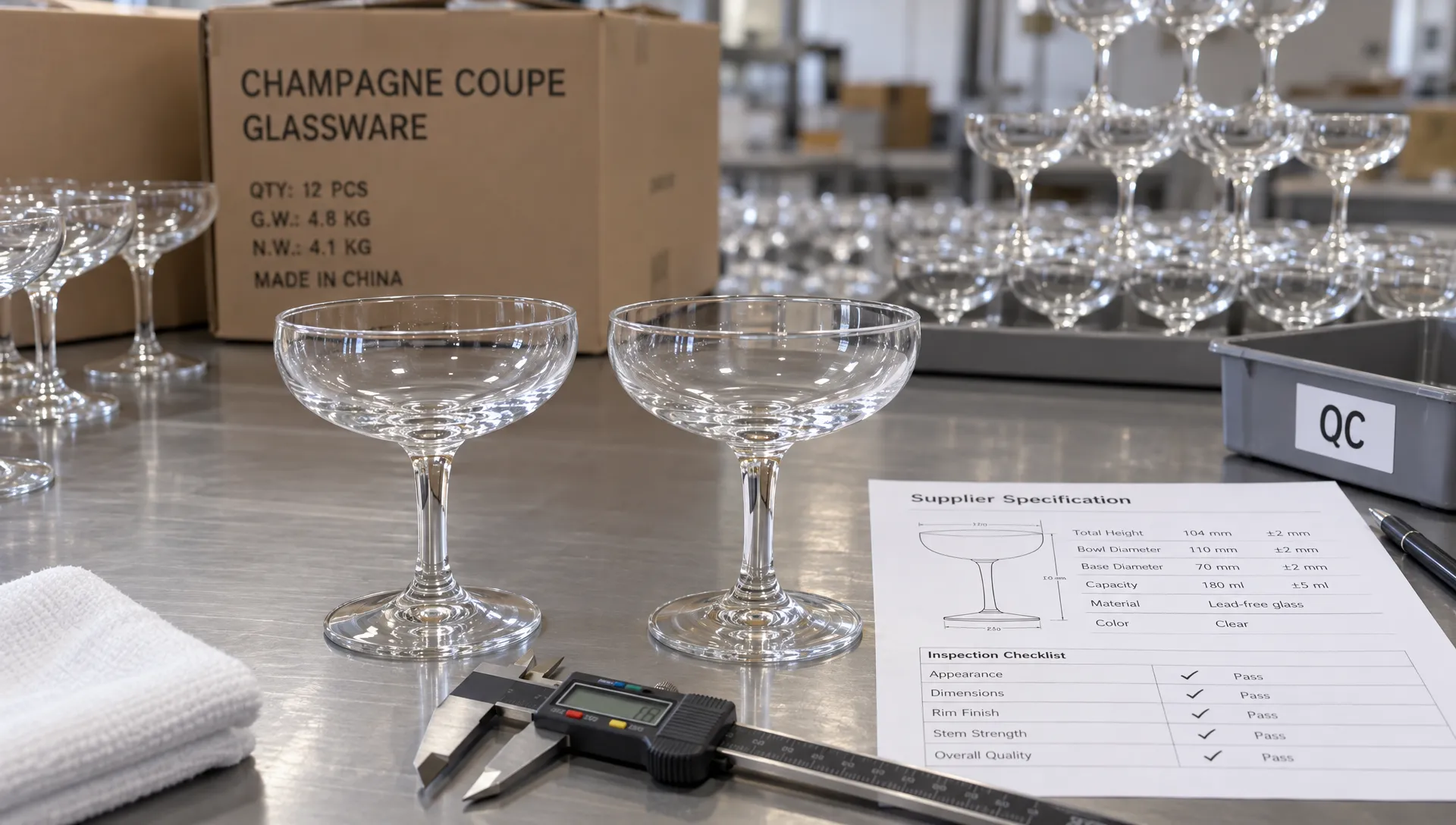
A supplier specification should include overall height, rim diameter, maximum bowl diameter, foot diameter, nominal capacity and unit weight. These measurements help identify differences between models, but none establishes suitability on its own.
Bowl, rim and foot
The bowl must work with the intended overlap between tiers. Its depth and curvature affect where overflowing liquid travels, while the foot of each upper glass must sit correctly on the supporting glasses below.
Rim profiles also deserve attention. Rolled, rounded or unusually shaped rims can alter contact and runoff. A broad foot may appear reassuring, but its underside profile matters as much as its width: a foot that rocks on a flat inspection surface needs further assessment.
When comparing champagne tower glasses, ask the builder to evaluate the relationship between the bowl, rim and foot rather than selecting whichever model has the widest dimensions.
Stem height and consistency
A shorter stem may be a useful starting point, but there is no universal stem height or diameter ratio that makes a glass suitable for every tower. The structure must be assessed as a whole.
Consistency is particularly valuable. Variations in height, foot shape or rim level can create uneven contact across a tier. Mixing visually similar models introduces differences that may not become obvious until assembly.
An eclectic collection can still contribute to the tablescape or separate drinks service. For the stacked centerpiece, matching glassware gives the builder a more predictable starting point.
Choose materials for the venue, not just the photograph
Clear glass offers the familiar appearance many luxury clients expect. Crystal can provide a refined finish, but the word “crystal” does not establish suitability for stacking. If crystal is selected, confirm that it is lead-free and intended for beverage service, then assess the exact model separately.
Thickness is not a reliable shortcut either. A heavier glass is not automatically better for a tower, and a fine rim does not automatically rule one out. Material, manufacturing quality and geometry need to be considered together.
For champagne tower glasses, venue restrictions should be established before the material is approved. Poolside hospitality areas or other controlled spaces may prohibit breakable glass, regardless of the event’s styling preferences.
Rigid plastic alternatives require their own assessment. Depending on the product, flexing, molded seams, scratches or uneven feet can affect the finish and assembly. A plastic coupe should never be treated as an interchangeable replacement for an approved glass model.
Ask the venue about permitted materials and the supplier about care requirements. Those answers can prevent an attractive shortlist from becoming an unusable delivery.
Inspect actual stock, not only showroom samples
A pristine sample demonstrates the design, not the condition of the inventory arriving at your event. Rental stock may include worn pieces, replacements from different batches or substitutions introduced during packing.
Approval should therefore cover both the model and the condition of the delivered stock. Agree on who conducts the inspection, how rejected pieces are separated and what happens if too few acceptable glasses remain.
A practical inspection brief can use the following checks:
| Check | What to look for | Why it matters |
|---|---|---|
| Model consistency | Matching shape, dimensions and product reference | Reduces unexpected differences between tiers |
| Rim condition | Chips, cracks or obvious deformation | Damaged pieces must be excluded |
| Foot condition | Cracks, rocking or an uneven underside | Contact must be assessed by the builder |
| Stem condition | Visible damage or unusual alignment | Compromised pieces are not acceptable |
| Presentation | Haze, residue, scratches and fingerprints | Defects can be conspicuous under event lighting |
| Packing | Protective separation and traceable cartons | Helps preserve condition during transport |
Reserve champagne tower glasses from the approved model, with additional stock agreed for inspection rejects and breakage. Do not assume that every delivered piece will enter the finished display.
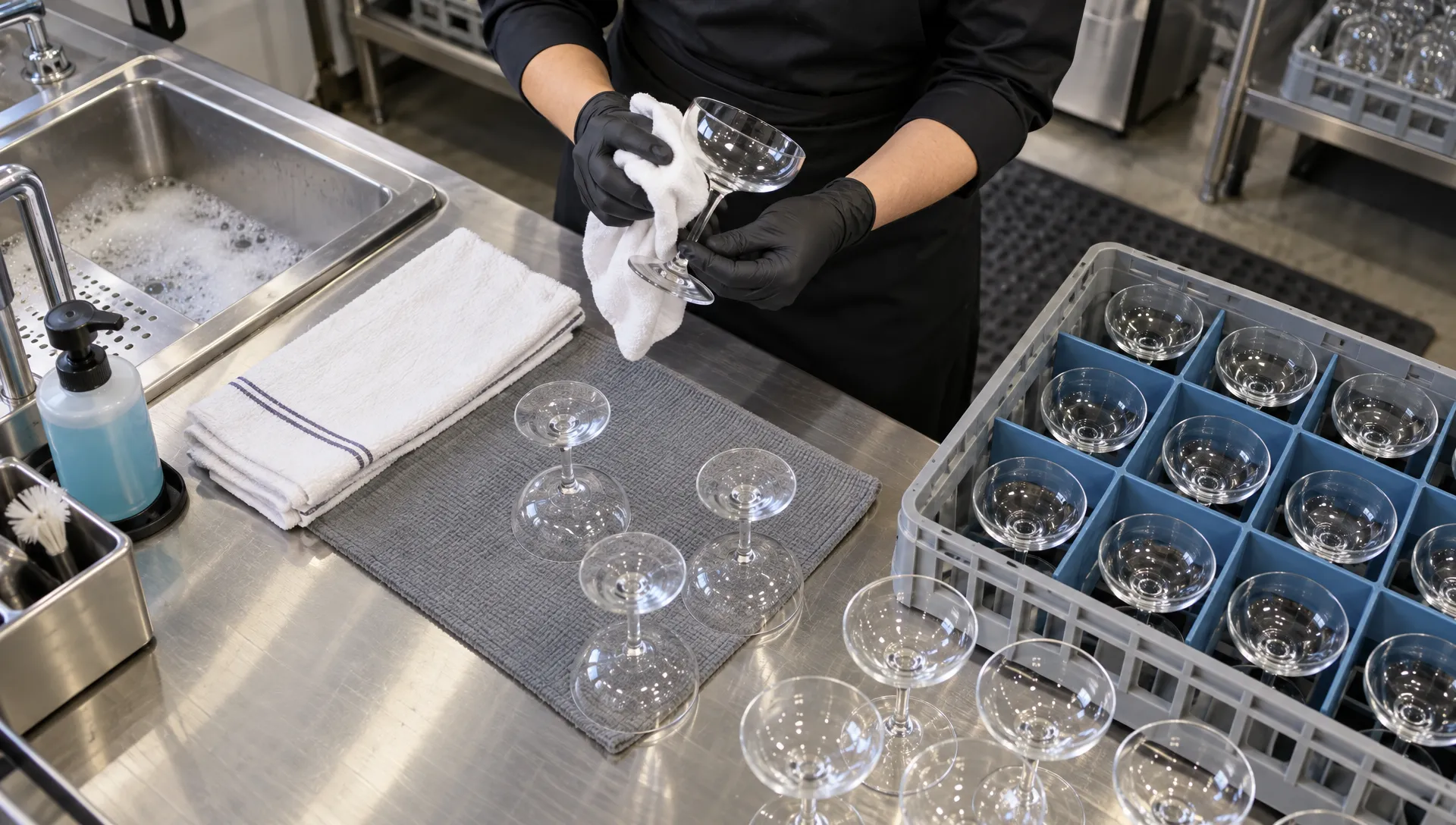
Cleanliness is part of the approval process too. Residue can affect presentation and beverage behavior, while aggressive last-minute polishing can introduce handling damage. Follow the manufacturer’s care guidance and inspect after cleaning.
Make the sample pour your purchasing decision
Before committing to a substantial order, request physical samples and an assessment led by the person responsible for the build. Catalog measurements and photographs cannot show exactly how the glasses sit together or how liquid moves across their rims.
The assessment should use the planned beverage where practical. Champagne, other sparkling wines and alcohol-free sparkling drinks can behave differently, so water alone does not establish how the final pour will look.
The builder should observe the contact between glasses, the route of overflow and any tendency for liquid to run outside the intended receiving bowls. The test should also establish what the display can realistically achieve. A ceremonial cascade does not necessarily fill every lower glass evenly or to a serving measure.
Testing champagne tower glasses should answer a clear approval question: does this exact model support the proposed display and the intended visual effect? For a large or unusual structure, agree on an appropriate validation process with the specialist rather than treating a small demonstration as proof of the full design.
Once the glassware is selected, integrate it into the wider production plan. These champagne tower set up considerations help connect the approved model with the foundation, placement and live event sequence.
Write a specification suppliers can deliver
A clear procurement brief reduces the risk of a substitution arriving when there is no time to reassess it. “Champagne coupes for a tower” leaves too much room for interpretation.
Record the approved manufacturer and model reference, supported by photographs and the relevant dimensions. If the supplier cannot guarantee that reference, resolve the alternative before confirming the order.
Your brief should cover:
- Approved glassware: Exact model, material, dimensions and agreed condition requirements.
- Quantities: Display stock, inspection reserves and separate service stock where needed.
- Substitutions: No alternative model without the builder’s prior approval.
- Logistics: Delivery timing, protective packing, inspection access and return arrangements.
- Responsibilities: Who cleans, inspects, approves, handles and packs the glasses.
Keep the specification for champagne tower glasses attached to the supplier order and available to the production team. A styling reference alone is not enough for the people receiving and checking the delivery.
When comparing quotes, assess the complete delivery arrangement rather than the unit rental price alone. Inspection time, reserve availability, handling and replacement terms can make an apparently inexpensive option less practical. The best value is an approved model that arrives in usable condition with clear responsibilities.
Separate display stock from guest service
The number of glasses in the structure and the number needed to serve guests are different planning decisions. A dramatic centerpiece may be designed for a short ceremonial pour rather than to provide every attendee with a drink directly from the tower.
Keeping separate service glassware can simplify hospitality and preserve the display during its photographed moment. It also allows beverage service to use a different glass shape if that better suits the champagne or the venue’s service standards.
Calculate champagne tower glasses for the approved structure first, then add the reserves and service requirements agreed with the team. This guide to how many glasses a champagne tower needs explains the distinction between the display count and the wider event inventory.
If guests will receive glasses from the structure, the builder and hospitality team should agree on the dismantling and service sequence. Removing a glass is not simply a drinks-service action when it is supporting part of the display.
Frequently asked questions
Can I rent the glasses instead of buying them? Yes, provided the rental supplier can supply the approved model in sufficient quantity and acceptable condition. Confirm inspection arrangements, reserve stock and substitution rules before booking. Rental can be practical, but the catalog image should not be the only basis for approval.
Do all coupe glasses work in a champagne tower? No. Bowl shape, foot geometry, stem height and manufacturing consistency vary between models. A coupe must be assessed for the proposed structure; its name or appearance does not establish suitability.
What size champagne tower glasses should I choose? There is no universal ideal capacity or rim diameter. Ask the builder to recommend an exact model for the intended design. Nominal capacity helps with beverage planning, but it does not show how much liquid each glass will receive during the cascade.
Can the glasses be washed in a dishwasher? Follow the manufacturer’s instructions for the exact product. Dishwasher suitability depends on the material and construction. Allow time for drying, polishing where appropriate and inspection before the glasses are approved for use.
Will every glass fill during the pour? Not necessarily. Distribution depends on the approved arrangement, glass geometry, beverage and pour. Define whether the objective is a visual cascade, filled service glasses or a combination, then validate that expectation with the specialist.
Choose the glassware with the specialist
The most effective selection process brings the builder into the brief before glassware is purchased or reserved. Share the event objective, venue restrictions, desired scale and visual references, then agree on a model that supports the concept.
Luuk Broos Events specializes in champagne pyramid experiences, from smaller towers to world-record projects. Its tailor-made approach connects the centerpiece with the client’s event goals. Discuss the glassware alongside the proposed display so that craftsmanship, presentation and production requirements are considered together.