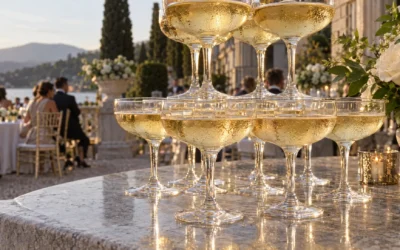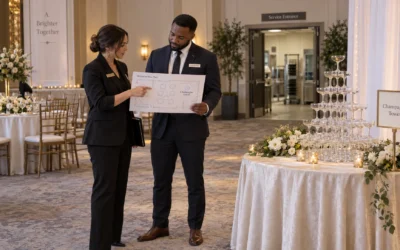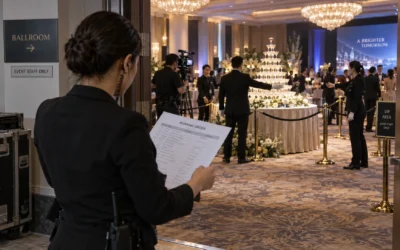


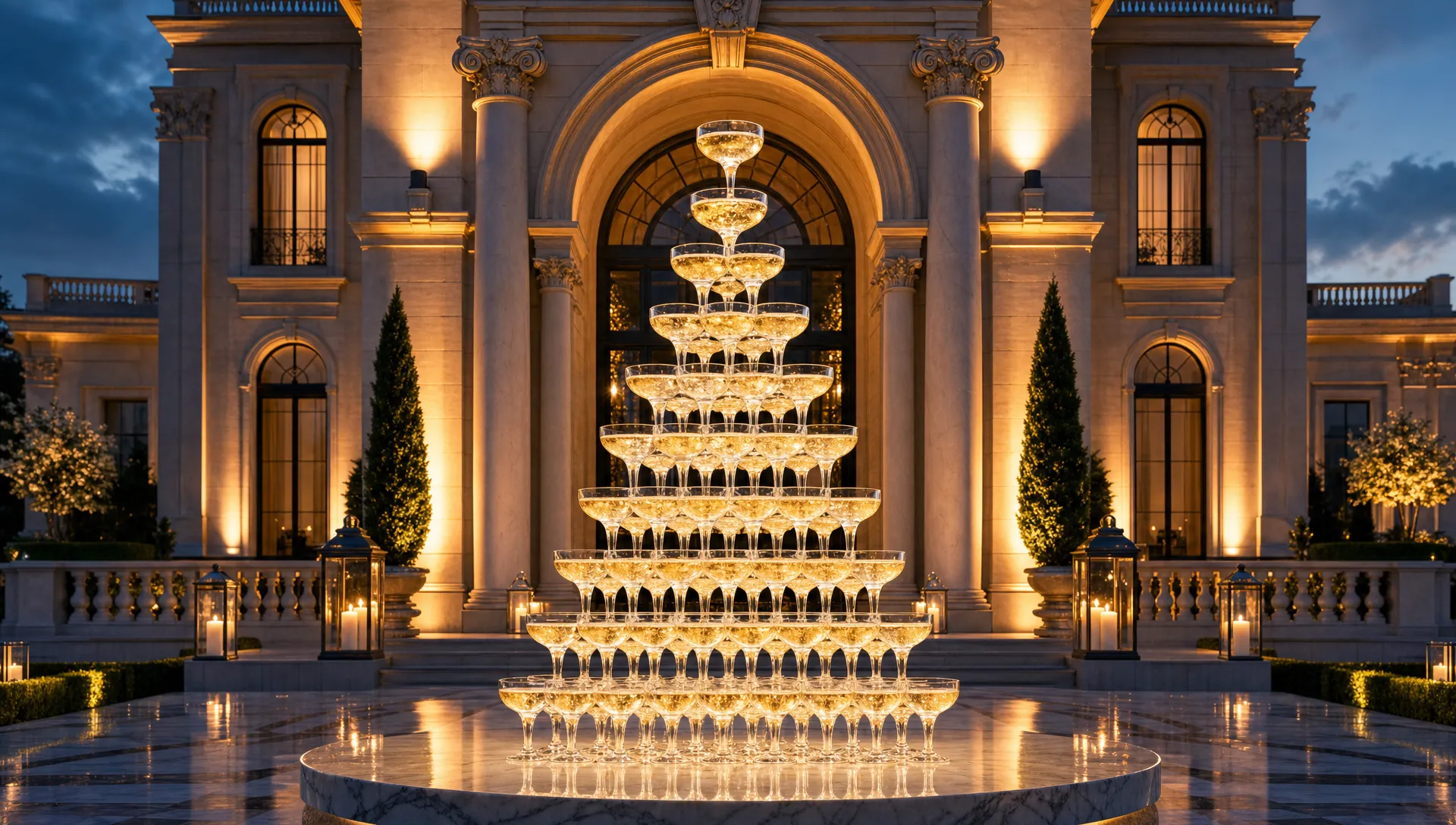
A champagne glass tower is never just a decorative object. In the right hands, it becomes a focal point, a photo opportunity, a ceremonial gesture and a signal that the event has entered a more memorable register. For luxury event agencies, hotel launch teams, brand managers and wedding planners, the question is not simply how tall the tower should be. The real question is how to style it so guests stop, look, film and remember.
Visual impact comes from more than height. It comes from proportion, lighting, placement, choreography and restraint. A beautifully styled champagne glass tower should feel intentional from every angle, not like an impressive feature added at the last minute. It must fit the room, support the event story and create a moment that feels natural for VIPs, photographers and guests.
Below is a practical, premium-focused guide to styling a champagne glass tower for maximum visual impact, whether you are planning a gala, hotel opening, brand activation, destination wedding or private celebration.
Start with the moment you want to create
Before choosing glassware, florals or lighting, define the role of the tower in the event. A champagne tower can perform very different functions depending on timing and context.
At a corporate gala, it may be the central ceremonial moment that marks an anniversary or partnership. At a luxury wedding, it may become an elegant transition between dinner and party. At a hotel opening, it can frame the first toast in a lobby or ballroom. At a brand activation, it may act as a visual metaphor for scale, prestige or celebration.
Clarifying the purpose helps every styling choice become sharper. If the tower is designed as a dramatic reveal, it needs space, anticipation and a clear guest-facing angle. If it is designed for photography, it needs controlled light and clean background lines. If it is designed for VIP participation, the styling must allow movement, security, camera access and a confident pour.
A strong styling concept usually answers three questions:
- What should guests feel when they see it?
- From where will most people view it?
- What image or video should the event be remembered by?
When those answers are clear, the champagne glass tower becomes part of the event architecture rather than a separate feature.
Match the scale to the room, not just the guest count
Scale is one of the fastest ways to create impact, but bigger is not always better. The most visually powerful tower is the one that feels perfectly proportioned to the venue.
A large ballroom, grand staircase, hotel atrium or outdoor terrace can carry a taller, more theatrical structure. A private dining room, intimate wedding reception or boutique launch may call for a smaller tower with exquisite detailing. The goal is visual authority, not visual clutter.
Consider ceiling height, camera distance, guest flow and surrounding furniture. A tower that is too small can disappear in a large room. A tower that is too large for a tight space can feel forced and difficult to experience. For planners calculating practical requirements, this guide on how many champagne tower glasses you really need is a useful starting point before finalizing the creative direction.
Also think about the viewing radius. Guests should be able to see the full silhouette without crowding the structure. Photographers should have at least one clean hero angle. The pourer should have enough room to approach with grace, not caution.
Create a clear visual hierarchy
A champagne glass tower has several visual layers: the base, the glass structure, the liquid movement, the surrounding styling and the background. When all of these compete, the result feels busy. When they are ordered well, the tower looks refined and expensive.
The tower should be the hero. The base should support it, not distract from it. Florals, candles, branding or decorative elements should frame the composition without hiding the glass geometry. The background should give contrast, depth or atmosphere.
A simple hierarchy might look like this:
| Visual layer | Styling role | What to avoid |
|---|---|---|
| Tower | Main sculptural centerpiece | Overcrowding it with decor |
| Base or plinth | Elevates and stabilizes the composition | Using materials that look temporary |
| Lighting | Defines sparkle, depth and mood | Harsh reflections or flat front light |
| Background | Frames photography and guest attention | Busy patterns behind the glass |
| Surrounding decor | Connects the tower to the event design | Florals or props blocking sightlines |
This hierarchy is especially important for luxury environments where restraint often communicates value better than excess. The tower should feel precise, luminous and considered.
Choose materials that reflect the event language
Styling a champagne glass tower is not about adding decoration for decoration’s sake. Every material should speak the same visual language as the event.
For a classic black-tie gala, polished metals, mirrored surfaces, ivory florals and warm light create a timeless atmosphere. For a fashion or automotive launch, a darker base, sharper light and minimalist floral treatment may feel more contemporary. For a destination wedding, local flowers, stone textures or soft linen tones can make the tower feel connected to the setting.
The glass itself already brings sparkle and symmetry. Styling should enhance that quality. Too many textures can make the display feel fragmented, while one or two refined materials can make it feel deliberate.
Here are a few styling directions that work well for premium events:
| Event style | Recommended styling direction | Visual effect |
|---|---|---|
| Luxury wedding | Soft florals, candlelight, warm neutral tones | Romantic and elegant |
| Hotel opening | Architectural plinth, branded backdrop, dramatic lighting | Grand and prestigious |
| Brand activation | Controlled color palette, sleek base, subtle logo integration | Modern and media-friendly |
| Gala dinner | Symmetry, polished metal accents, formal floral framing | Sophisticated and ceremonial |
| Private celebration | Low ambient light, intimate scale, refined table styling | Exclusive and personal |
The most successful towers do not copy a trend. They translate the event’s identity into a visual moment.
Use lighting as the main luxury amplifier
Lighting is where a good champagne tower becomes a spectacular one. Glass, champagne and crystal surfaces respond dramatically to light, but only when the setup is controlled.
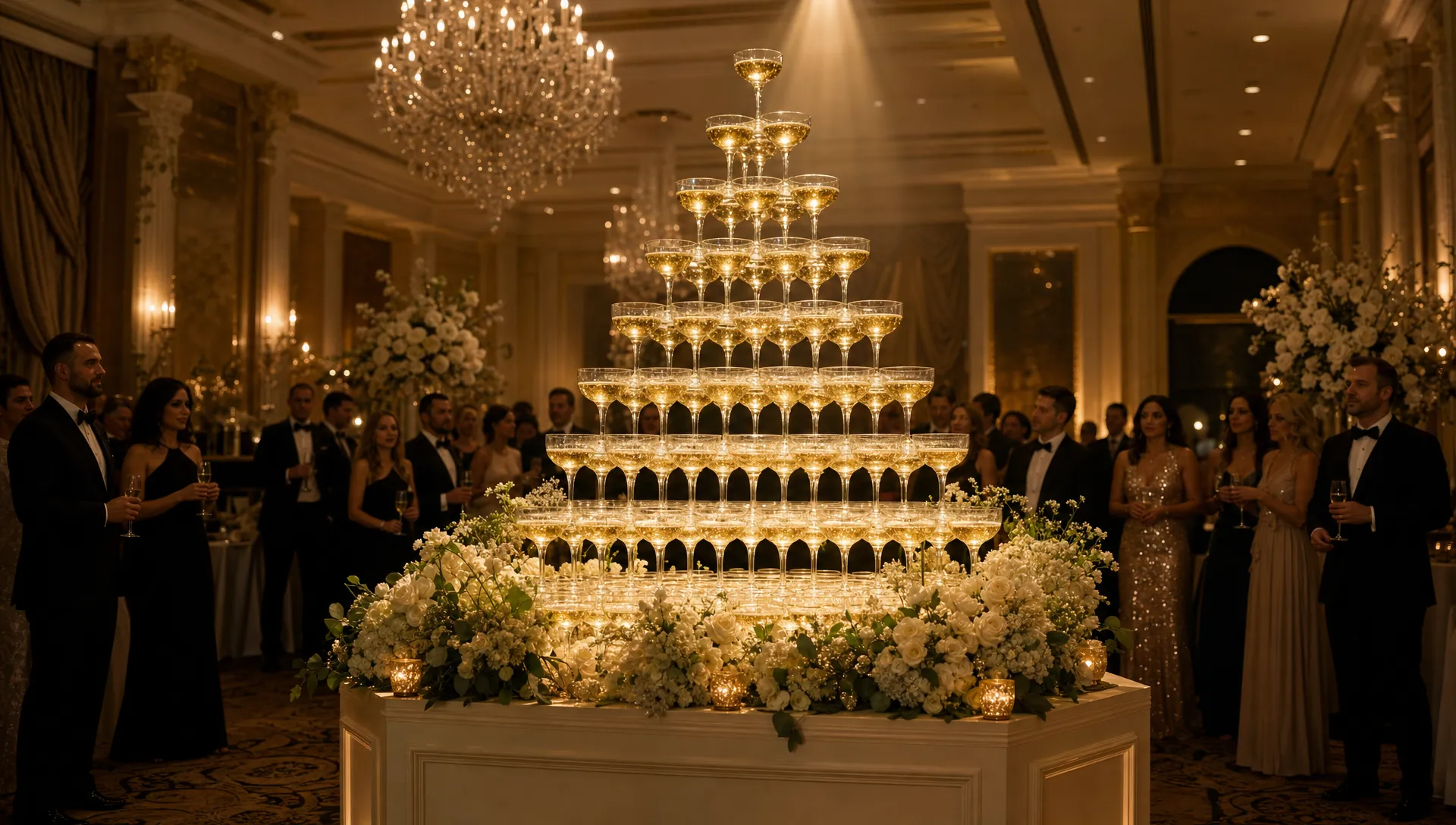
Warm, directional lighting often works beautifully because it brings depth and sparkle without making the display feel cold. Pin spots can highlight the top pour and the upper tiers. Backlighting can define the silhouette and make the liquid movement more visible. Soft side lighting can add dimension for photography.
Avoid relying only on general room lighting. In many venues, overhead light flattens the tower and reduces the reflective quality of the glass. Also be careful with strong colored light. A subtle brand color can work, but heavy saturation may make the champagne look unnatural or obscure the elegance of the glass.
For maximum effect, lighting should be planned with the photographer, production team and tower specialists before the event. The key question is simple: where will the most important image be taken from? Once that hero angle is identified, lighting can be shaped around it.
Think in camera angles, not only room design
In modern luxury events, visual impact is measured both in the room and on camera. A champagne glass tower should be styled for guests who are present, but also for the images and videos that will travel afterward.
This means designing for vertical video, wide venue shots, close-up pour details and editorial photography. The tower should have at least one strong front-facing composition and, ideally, a secondary angle for candid guest reactions.
Background matters here. A cluttered service station, emergency exit sign or visible cable can weaken the entire image. If the tower is placed near a branded wall, floral arch or architectural feature, check how that background appears through the glass. Transparent structures reveal more than many planners expect.
For high-profile events, the champagne tower may become one of the most shared images of the evening. Styling should make that easy. Clean lines, strong contrast, controlled light and enough space around the structure help the moment look premium across photography, video and social media.
Integrate branding with restraint
For corporate events, launches and hospitality openings, branding is often part of the brief. The challenge is to include it without making the tower feel like a promotional stand.
Subtle integration usually works best. A logo can appear on the plinth, backdrop, napkins, bottle presentation or surrounding environment. Brand colors can influence lighting, florals or base materials. The pour itself can be choreographed around a product reveal, leadership toast or sponsor moment.
What matters is balance. The tower brings prestige because it feels celebratory and rare. If the branding is too heavy, the sense of luxury can decrease. If it is too subtle, the brand may miss a valuable visibility opportunity. The ideal approach is to make the brand feel like the host of the moment, not the decoration pasted onto it.
For more inspiration on using towers as memorable event features, explore these champagne glass tower ideas for standout event moments, especially if you are designing for press coverage, guest interaction or sponsor value.
Choreograph the pour like a performance
The pour is the emotional peak of the champagne glass tower. Styling must support that moment, not only the static display.
The person pouring should be clearly visible. Their route to the tower should be unobstructed. The bottle presentation should feel ceremonial. The timing should allow guests to gather, photographers to prepare and the room to focus.
A strong pour sequence has rhythm. There is a pause before the first bottle tilts. Guests understand something is about to happen. The first stream catches the light. The liquid begins to cascade. Applause, music or a toast completes the scene.
This is why styling and choreography should be planned together. A beautiful tower loses impact if the pour feels rushed or hidden. If you are planning the tower as the closing highlight of the evening, this article on how champagne glass tower pouring creates a flawless finale offers useful perspective on timing, suspense and guest attention.
Make the surrounding space feel intentional
A champagne tower needs breathing room. The surrounding space should protect the structure, guide guests and make the display feel important.
Avoid placing the tower too close to bars, buffets, doors or high-traffic corridors. These areas may be practical from a service perspective, but they can reduce the feeling of ceremony. Instead, place the tower where it naturally draws attention without blocking movement.
The floor surface, temperature, access route and service logistics all matter. Outdoor settings can be beautiful, but they require additional planning around wind, ground stability and lighting changes. Destination events add another layer of complexity, especially when guests, crews and VIPs are traveling internationally. For travel industry partners coordinating cross-border guest movement, services like SimpleVisa can help simplify visa administration so the premium experience begins before guests even arrive.
In the room itself, use subtle spatial cues to define the tower area. A plinth, rug, floral perimeter or lighting pool can create a visual boundary. This tells guests where the moment is happening while keeping the atmosphere elegant.
Style for safety as much as beauty
A champagne glass tower is a live event feature. It must be visually stunning, but it also has to be stable, professionally built and managed with precision.
Safety begins with the right glassware, a suitable base, level surfaces and expert construction. It continues with controlled access, a clear pour plan and coordination between the event team, venue and production partners. The larger the tower, the more important professional execution becomes.
This is where experience matters. Luxury clients are not only paying for the look of the tower. They are paying for confidence, calm and reliability in front of important guests. A supplier who understands structure, timing, guest behavior and event pressure can protect the quality of the entire moment.
Luuk Broos Events specializes in champagne pyramid experiences ranging from smaller towers to world-record concepts. That specialization matters because styling is inseparable from execution. A tower can only look effortless when the planning behind it is highly disciplined.
Use restraint to make the spectacle stronger
One of the most common styling mistakes is trying to make every element spectacular at once. Oversized florals, bright branding, strong colored light, complex backdrops and excessive props can compete with the tower itself.
Luxury impact often comes from restraint. Let the symmetry of the glasses speak. Let the first pour become the movement. Let the lighting create sparkle. Let the guests feel the anticipation.
A champagne glass tower already contains drama: height, balance, reflection, celebration and risk managed with precision. Styling should reveal those qualities, not cover them.
Before finalizing the design, remove anything that does not serve the moment. If a floral arrangement blocks the cascade, reduce it. If a backdrop distracts from the glass, simplify it. If the brand color makes the champagne look dull, adjust the lighting. The most refined displays are edited, not crowded.
A practical styling checklist for event teams
Use this checklist during the planning phase to align creative, production and venue teams around the same visual goal.
- Define the tower’s role: welcome moment, dinner transition, VIP toast, brand reveal or finale.
- Confirm the hero angle for photographers, videographers and guests.
- Match the tower scale to the venue height, floor area and viewing distance.
- Select a base or plinth that feels permanent, premium and stable.
- Keep florals and decor low enough to preserve the tower silhouette.
- Plan lighting specifically for glass reflection and champagne movement.
- Protect guest flow with enough space around the structure.
- Rehearse the pour route, timing and photography cues.
- Coordinate branding so it feels integrated rather than forced.
- Work with specialists who understand both visual impact and live-event precision.
For a deeper look at structure, sightlines and premium execution, this guide to building a champagne tower that feels flawless from every angle is a strong companion resource.
Frequently asked questions
What is the best location for a champagne glass tower at an event? The best location is visible, spacious and visually clean. It should offer a strong guest-facing angle, enough room for the pourer and photographers, and a background that supports the event design without distracting from the glass structure.
How do you make a champagne tower look more luxurious? Focus on proportion, lighting, premium materials and restraint. A refined plinth, warm directional light, elegant florals and a clean background can make the tower feel far more luxurious than excessive decoration.
Can a champagne glass tower be branded for a corporate event? Yes, but branding should be integrated carefully. Subtle logo placement, brand-colored lighting, a designed backdrop or a ceremonial branded toast often feels more premium than heavy decoration on the tower itself.
When should the champagne tower pour happen? The best timing depends on the event flow. Popular moments include guest arrival, after speeches, before dinner service, during a product reveal or as a finale. The pour should happen when guest attention can be focused and cameras are ready.
Do I need a specialist to build a champagne glass tower? For premium events, large towers or high-visibility moments, a specialist is strongly recommended. Professional builders understand stability, timing, venue coordination and the visual precision required for a flawless experience.
Create a champagne tower moment guests will remember
A beautifully styled champagne glass tower can transform an event from elegant to unforgettable. It creates height, movement, ceremony and a natural gathering point for guests, cameras and conversation. But the impact depends on more than the tower itself. It depends on proportion, choreography, light, restraint and professional execution.
Luuk Broos Events brings specialist experience to champagne pyramid concepts for luxury events, brand activations, weddings, galas and world-record ambitions. If you want to create a visual moment that feels exclusive, meticulously planned and impossible to ignore, contact Luuk Broos Events to discuss a tailor-made champagne tower experience for your next event.