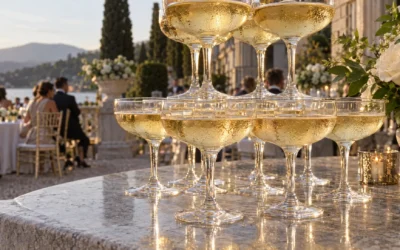


A champagne tower looks effortless when the pour is perfect. Guests see the first stream catch the light, the top glass overflow, and the champagne cascade down the structure in a moment that feels ceremonial, luxurious and spontaneous.
Behind that moment is a very different reality: precise glassware, stable construction, careful timing, disciplined choreography and a team that knows how to protect the experience from small but visible mistakes.
For luxury event agencies, hotel opening teams, brand activation managers and wedding planners, pouring champagne tower displays is not just a decorative detail. It is often the visual peak of the event, the image guests film, post and remember. The goal is not only to avoid spills. The goal is to make the entire scene feel calm, confident and premium from the first cue to the final toast.
Start with the purpose of the pour
Before discussing bottle angle or glass height, define what the champagne tower is meant to achieve. Is it a grand opening moment for a new hotel? A dramatic finale after speeches? A VIP toast for partners and sponsors? A wedding transition into the evening celebration?
The purpose shapes the safest and most elegant way to pour. A media-focused event needs clean sightlines and camera choreography. A private wedding may need a more intimate position near the couple. A corporate celebration may need space for executives, brand partners and photographers without making the pour feel crowded.
If the scale, format or role of the tower is still open, it is worth deciding that before the production details are locked. A tower designed for a guest experience is different from a tower designed for press impact, and this is exactly why choosing the format based on objectives matters. For a deeper strategic view, Luuk Broos Events explains how to choose the right champagne tower for event goals before committing to a concept.
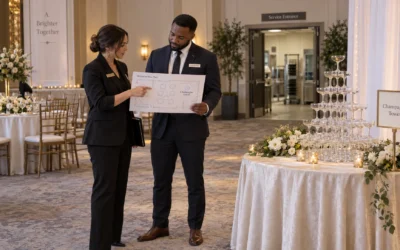
At the planning stage, clarify these details early:
- Who will perform the pour, such as a couple, CEO, celebrity guest or trained specialist.
- When the pour happens within the run of show, including music, lighting and announcements.
- Where photographers, videographers and VIP guests will stand.
- Whether the tower is mainly a visual centerpiece, a ceremonial toast, or part of actual beverage service.
- How the area will be protected before, during and after the pour.
A champagne tower becomes risky when it is treated as a last-minute prop. It becomes spectacular when it is treated as a choreographed event moment.
Use one glass model and inspect every coupe
The biggest visual mistakes often begin long before the bottle is opened. Mixed glassware, uneven rims, tiny chips, inconsistent bowl shapes or wet bases can all compromise the way the champagne flows.
Classic coupe glasses are often used because their wide rims help create the cascade effect. However, not every coupe is suitable for a tower. The glasses need to stack cleanly, distribute weight evenly and sit securely on the level below. A beautiful glass that looks elegant on a dining table may be unsuitable if the rim profile is irregular or the base is unstable.
Every glass should be inspected before the tower is built. This is not excessive attention to detail. It is the standard required when a visual centerpiece is expected to perform in front of cameras, VIPs and live guests.
| Glassware detail | Possible mistake | Prevention |
|---|---|---|
| Mixed glass models | Uneven stacking and unpredictable overflow | Use one consistent glass type throughout the tower |
| Chipped or irregular rims | Poor contact between glasses and visible imperfections | Inspect every glass before installation |
| Wet glass bases | Slipping during setup or service | Dry and polish glassware before stacking |
| Lightweight glassware | Reduced stability in taller structures | Select glasses that suit the height and scale |
| Inconsistent cleaning | Smudges visible under event lighting | Final polish under similar lighting conditions |
For luxury events, the glassware is not a background detail. It is part of the architecture of the moment.
Build on a surface that behaves like engineering
A champagne tower can be visually delicate, but its foundation must be uncompromising. The table, platform or plinth should be stable, level and isolated from unnecessary movement. A stunning surface is not enough if it flexes under weight, sits on uneven flooring or is positioned where guests can bump into it.
Venue conditions deserve serious attention. Carpet, temporary flooring, outdoor terraces, raised stages and historic venue surfaces can all create hidden challenges. Even a small slope can affect the pour. A small vibration from nearby foot traffic can matter during the final build. Air conditioning, heat, wind and condensation can also influence the behavior of the tower.
The most important question is simple: will this structure remain stable during the most crowded, energetic and photographed moment of the event?
For larger builds, safety planning should begin well before event day. This includes load-bearing surfaces, guest barriers, staff access, bottle handling, cleanup routes and emergency protocols. If scale is a priority, review the considerations behind planning a large champagne tower without compromising safety before confirming the production layout.
Control temperature, timing and bottle handling
Champagne temperature affects both taste and performance. If the bottles are too warm, the pour can become overly foamy and harder to control. If they are too cold, the experience may lose some of its aromatic expression, and condensation can become more noticeable on bottles and surrounding surfaces.
A classic serving range of around 8 to 10°C is often used for Champagne, but a live tower pour also requires event-specific judgment. The bottle must be comfortable to hold, easy to control and ready at exactly the right moment. For premium events, this means the beverage plan should be integrated into the production schedule, not delegated casually at the end.
Bottle handling should also be rehearsed. Foil, cages, corks, napkins and backup bottles all need a clear place in the sequence. A VIP should never be left awkwardly struggling with a cork while photographers wait and the room goes quiet. If the opening is part of the show, stage it beautifully. If the focus is the cascade, prepare the bottle discreetly and let the pour own the attention.
Rehearse the choreography before guests arrive
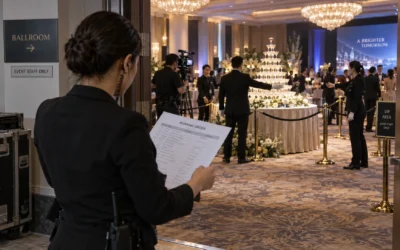
The best champagne tower pours look relaxed because the team has already made the decisions. Where does the pourer stand? Which hand holds the bottle? Who gives the cue? Where does the second bottle wait? What happens if the first stream foams more than expected? Where will the photographer move after the first shot?
Rehearsal does not need to remove emotion from the moment. It protects it. A CEO, bride, groom or celebrity guest can still feel natural and spontaneous when the support team has already solved the operational details around them.
Lighting is especially important. Champagne needs light to sparkle, but the pourer also needs to see the top glass clearly. A spotlight that looks perfect from the audience may create glare at the tower. A videographer may request a dramatic angle that blocks service access. These conflicts should be resolved before the event begins, not during the countdown.

Pour for the tower, not for the individual glass
One of the most common mistakes is trying to pour as if filling a normal glass. A champagne tower requires a different mindset. The goal is to fill the top glass and allow champagne to overflow naturally into the glasses below. The cascade should feel continuous, not rushed, forced or interrupted.
A controlled pour usually looks slower than people expect. The stream should be steady enough to build momentum, but not so aggressive that the top glass foams excessively or splashes over the rim. The bottle should remain under control at all times, with the pourer focusing on the point of contact rather than waving the bottle across the tower.
These principles help protect the visual effect:
- Begin with a steady stream into the top glass and allow the overflow to develop naturally.
- Keep the bottle at a comfortable height so the pourer is not stretching or leaning into the tower.
- Avoid sudden changes in speed, especially when the cameras are focused on the first cascade.
- Do not chase individual glasses with the bottle, since the tower should do the distribution work.
- Pause only when planned, because unplanned stops can make the moment feel uncertain.
Patience is part of the luxury. A rushed pour can feel anxious. A controlled pour creates suspense.
Avoid the most common pouring mistakes
Most champagne tower mistakes are preventable. They usually come from unclear responsibilities, poor timing, unsuitable glassware or pressure to make the moment bigger than the setup can safely support.
| Mistake | Why it happens | Better approach |
|---|---|---|
| Too much foam at the top | Champagne is too warm or the pour is too aggressive | Chill properly and begin with a controlled stream |
| Uneven cascade | Glasses are misaligned or the surface is not level | Check alignment and level before the event space opens |
| Bottle touches the glass | Pourer is too close, nervous or unsupported | Rehearse stance and bottle position in advance |
| Guests crowd the tower | The moment attracts cameras and movement | Create a defined viewing area and staff presence |
| The tower looks messy after the pour | No cleanup or service plan was prepared | Assign staff for wiping, tray service and area reset |
| VIP feels uncomfortable | They were not briefed or given the wrong role | Give them a simple, elegant action supported by professionals |
A flawless tower is rarely about one dramatic skill. It is about removing dozens of small opportunities for error.
Do not let service logistics damage the spectacle
A champagne tower is often photographed as a symbol of abundance, celebration and prestige. But the service plan after the pour can either reinforce that impression or weaken it.
Not every tower should function as direct guest service. In many premium settings, the tower is primarily ceremonial while guests receive fresh glasses from trays. This approach can protect hygiene, timing, presentation and guest comfort. If glasses from the tower will be served, the plan needs to be clear, safe and appropriate for the event environment.
Think through what happens immediately after the applause. Are staff ready with trays? Is there a discreet route to remove empty bottles? Are napkins and cleanup materials close enough to be useful but hidden enough to preserve the aesthetic? Is the floor protected against drips without looking industrial?
Luxury is not only the beautiful peak moment. It is also the absence of awkwardness afterward.
Give VIPs a role without giving them the risk
Many luxury events want an important person to participate in the pour. That can be powerful. A founder pouring the first bottle at a brand anniversary, a hotel owner opening a new property, or a couple beginning the evening celebration can create a memorable and highly shareable image.
The mistake is giving the VIP too much operational responsibility. Their role should be ceremonial, elegant and simple. They should not be expected to judge the stability of the tower, manage bottle pressure, direct staff or correct a pour that starts badly.
A professional team can position the VIP, guide the first movement, support the bottle if needed and take over discreetly when the spectacle requires control. The audience should see confidence, not complexity.
This is especially important when sponsors, press or international guests are present. The person in the spotlight should feel protected. The supplier team should carry the technical pressure.
Prepare a recovery plan that guests never notice
Even with excellent preparation, live events are live. A small splash, uneven stream or delayed cue does not need to become a visible failure. The difference between a generic supplier and a premium specialist is how calmly the situation is managed.
A recovery plan may include spare glassware, backup bottles, absorbent materials, extra staff nearby, a controlled guest boundary and a clear decision-maker who can adjust timing without creating confusion. None of this should be obvious to guests. It should simply make the experience feel smooth.
The most refined events are not the ones where nothing could ever go wrong. They are the ones where the planning is so strong that guests never see the complexity.
Know when to bring in a specialist
For a small private gathering, a modest champagne tower might appear simple enough. For luxury weddings, hotel openings, galas, F1 hospitality, Olympic-related celebrations, brand activations and high-profile corporate events, the expectations are different. The tower must be beautiful, safe, camera-ready and aligned with the reputation of the host.
A specialist brings more than glass stacking. They understand proportion, pressure, visual rhythm, venue limitations, guest behavior and the exact moment when the pour should become the emotional peak of the event. They also help planners reduce supplier complexity by taking ownership of a concept that has many moving parts.
When the event needs to impress VIPs, create social visibility or support brand prestige, the champagne tower should not be improvised. It should be designed, rehearsed and delivered as a signature experience.
Frequently asked questions
Can you pour a champagne tower yourself? Yes, for a very small and low-risk setting, it may be possible. For premium events, large towers, VIP moments or media-focused celebrations, professional support is strongly recommended because stability, glassware, timing, safety and choreography all affect the result.
What is the best glass for a champagne tower? Coupe-style glasses are commonly used because their shape supports the cascade effect. The exact glass should be chosen for stability, consistency and appearance, not only for style. Every glass in the tower should be the same model and carefully inspected.
How much champagne do you need for a tower? The amount depends on the number of glasses, glass capacity, desired fill level, overflow, rehearsal needs and backup bottles. A professional team will calculate more than the basic glass volume because a tower pour needs margin for a clean visual result.
Should guests drink from the champagne tower? They can in some event formats, but it must be planned properly. Many luxury events use the tower as a ceremonial centerpiece while serving guests separately from trays to protect timing, hygiene and presentation.
When should the tower be poured during an event? The strongest timing is usually when attention is already focused, such as after speeches, during a reveal, at the opening toast or as a transition into the party. The best moment depends on the event objective, guest flow and production schedule.
What is the biggest mistake when pouring champagne tower displays? The biggest mistake is treating the pour as a simple beverage action rather than a staged experience. The tower needs planning, rehearsal, stable construction, controlled pouring and a clear service plan after the visual moment.
Create a champagne tower moment guests will remember
A perfect champagne tower pour is not about luck. It is the result of craftsmanship, patience, preparation and calm execution under pressure. When done well, it becomes more than a toast. It becomes the image of the event.
Luuk Broos Events specializes in spectacular champagne pyramid experiences, from refined smaller towers to record-breaking world-record concepts. With a professional builder team, experience at prestigious venues and collaboration with leading brands, the focus is always on creating a centerpiece that feels exclusive, precise and unforgettable.
If your event needs a luxury moment with genuine wow-factor, explore how Luuk Broos Events can help turn a champagne tower into a visual spectacle designed for impact, prestige and lasting memories.