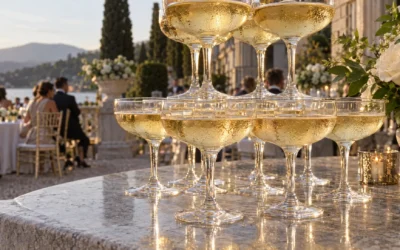


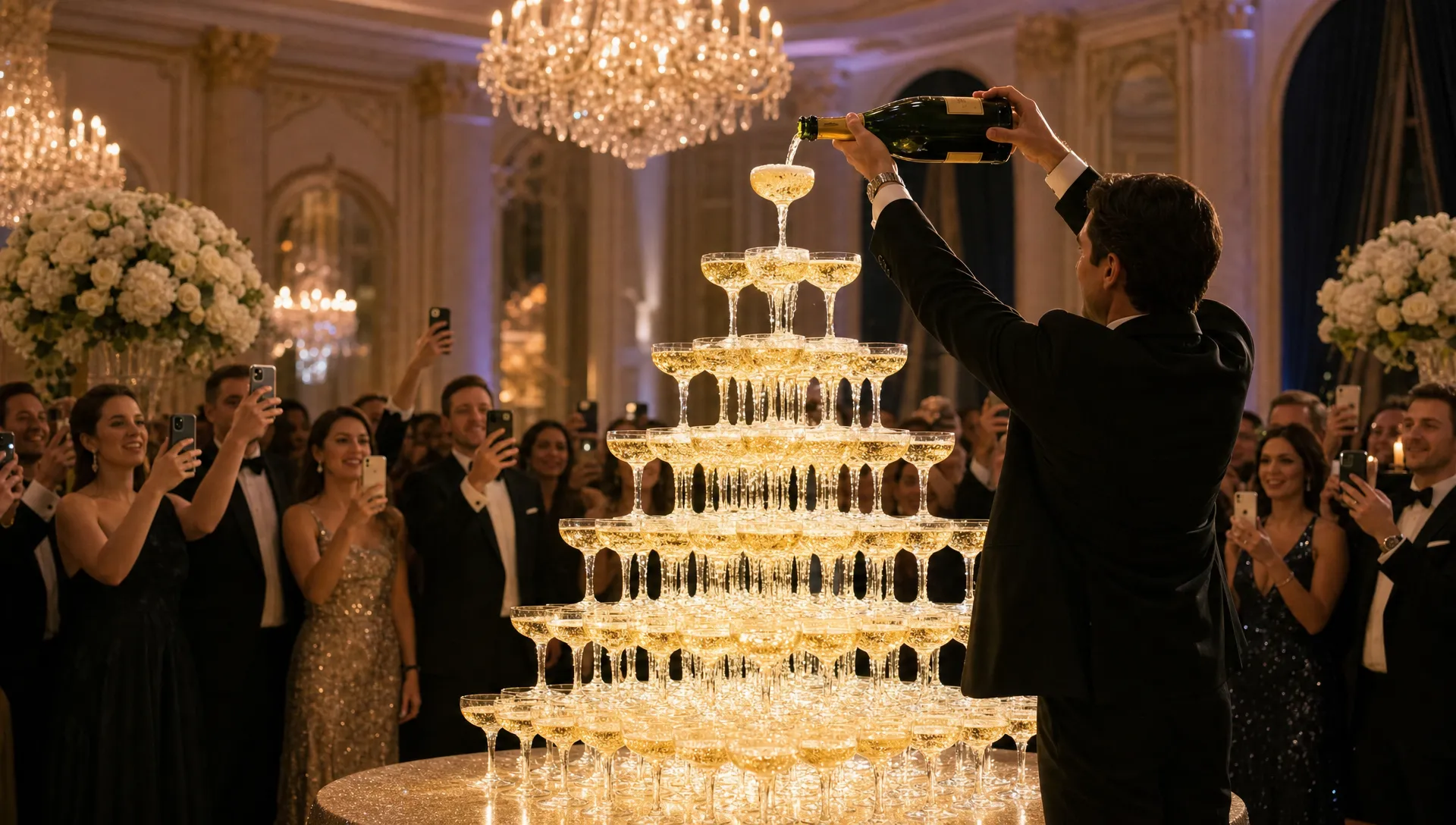
Guests do not film every beautiful detail at an event. They film the moment that feels rare, perfectly staged, and impossible to repeat. A champagne glass tower has that potential because it combines height, sparkle, anticipation, and movement in one elegant scene. But for guests to instinctively reach for their phones, the tower must be designed as more than decor. It must be designed as a cinematic event moment.
For luxury event managers, agencies, and wedding planners, this matters. A champagne tower can become the visual signature of a gala, hotel opening, brand activation, VIP celebration, or private wedding. It can give guests a reason to gather, create a shared sense of anticipation, and produce the kind of social content that extends the event beyond the room.
The difference between a tower people admire and a champagne glass tower guests will film comes down to precision. Scale, placement, lighting, timing, safety, and choreography all need to work together.
Start with the moment, not the tower
A filmable champagne tower begins with one question: what exact moment do you want guests to capture?
Is it the first pour by a brand founder? A bride and groom pouring together? A celebrity guest opening a gala? A hotel owner marking the launch of a new property? Or a world-record-style spectacle designed to attract press attention?
The tower should support that central moment. If the purpose is intimacy, the design may focus on elegance, closeness, and warm lighting. If the goal is brand visibility, the tower may need a larger footprint, stronger sightlines, and a backdrop that makes the sponsor or venue instantly recognizable. If the ambition is media impact, the tower needs scale, timing, and a production plan that photographers and guests can capture clearly.
Without a clear focal moment, the tower risks becoming impressive but passive. Guests may look, take one photo, and move on. With a clear climax, they wait, gather, film, react, and share.
Design for the phone camera
Luxury events are experienced in person, but they are often remembered through vertical video. That does not mean the design should feel like a social media gimmick. It means the composition should be clean, readable, and beautiful from the perspective of a guest standing with a phone in hand.
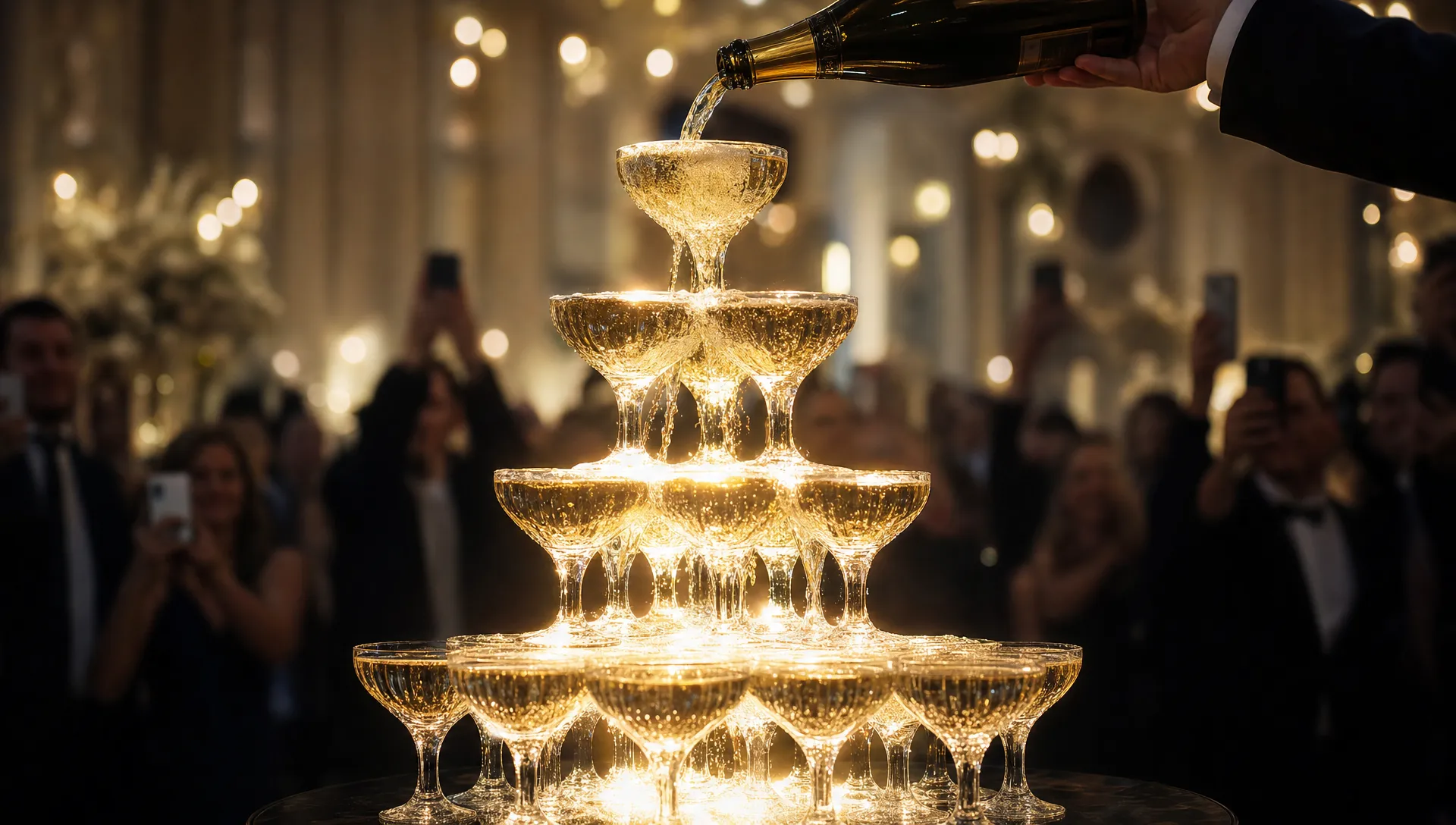
A strong champagne glass tower for video usually has three visual qualities. First, it has an unmistakable silhouette. Guests should understand the shape instantly, even from the back of the room. Second, it has contrast. Glass disappears when placed against a busy or reflective background, so the setting needs depth, shadow, or controlled lighting. Third, it has movement. The pour gives the moment life, turning a static centerpiece into a performance.
Think in terms of the first three seconds of a video. The viewer should immediately recognize the tower, the occasion, and the sense of luxury. If too many elements compete for attention, the clip becomes visually noisy. If the background is clean and the pour is perfectly timed, the moment feels effortless.
| Design choice | Why it helps guests film | Premium event consideration |
|---|---|---|
| Clear backdrop | Makes the glass structure visible on camera | Use branding, architecture, or draping without clutter |
| Controlled lighting | Adds sparkle and definition to each tier | Avoid harsh glare that reflects into phones and cameras |
| Elevated focal point | Helps more guests capture the full structure | Balance visibility with safety and venue restrictions |
| Planned pour timing | Creates anticipation and a natural video climax | Coordinate with music, speeches, and service flow |
| Open sightlines | Prevents blocked views and crowded camera angles | Reserve space for VIPs, press, and photographers |
Choose scale that matches the ambition
A taller tower is not automatically more memorable. The right scale is the one that feels powerful in the venue and appropriate for the event’s purpose.
For a luxury wedding, a refined tower can feel deeply elegant when placed at the right moment, such as after dinner or before the first dance. For a hotel opening, the tower may need to command a lobby, staircase, or ballroom entrance. For a corporate anniversary or brand activation, scale can signal confidence, success, and celebration. For world record attempts, scale becomes the story itself.
The most effective towers feel intentional. They do not look like an oversized prop placed in a corner. They feel integrated into the event architecture, guest journey, and emotional rhythm of the evening.
If you are still deciding which format fits your objective, it helps to think through the right champagne tower for your event goals before committing to size, location, or production requirements.
Place the tower where anticipation can build
Placement determines whether the champagne tower becomes a background detail or the center of attention. Guests are more likely to film when they can gather naturally, see the full structure, and sense that something important is about to happen.
Avoid placing the tower where traffic constantly interrupts the view. Doorways, narrow corridors, service paths, and crowded bar areas can make the moment feel chaotic. Instead, choose a location with enough space for a natural audience arc. Guests should be able to approach, pause, film, and move away without pressure.
The best positions often include one strong hero angle and several secondary angles. The hero angle is where professional photographers, VIPs, or press can capture the most polished view. The secondary angles allow guests to film without feeling excluded from the moment.
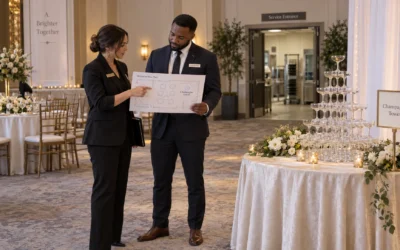
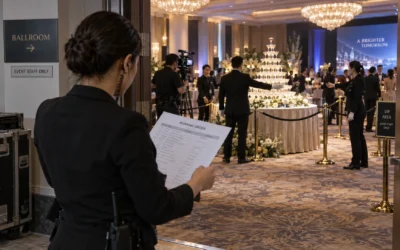
For high-profile events, it is worth planning guest flow in detail. Where will people stand before the pour? Where will staff move? Where will photographers work? Where does the host enter? These questions may seem technical, but they define whether the final moment feels graceful or crowded.
Light the glass, not just the room
Champagne towers are made of transparent material, which makes lighting especially important. In a dim ballroom, glass can disappear. Under harsh spotlights, it can create glare. Under flat lighting, the structure may lack depth.
The goal is to make each layer visible while preserving the softness and prestige of the setting. Side lighting can reveal the edges of the glasses. Warm highlights can make champagne tones glow. A darker or more controlled background can help the tower stand out without overpowering the room.
Lighting should also be tested from guest height, not only from the production desk. A tower may look beautiful to the naked eye but lose definition through a phone camera. A short rehearsal or camera test can reveal reflections, dark zones, and angles that need adjustment before guests arrive.
Choreograph the pour as a performance
The pour is the moment most guests will film, so it should never feel improvised. It needs rhythm.
A strong pour usually has a clear beginning, a moment of suspense, and a visible cascade. The person pouring should be positioned confidently and should know exactly where to stand, when to start, and how long the moment should last. If there is music, the pour should align with the emotional peak. If there is a speech, the transition into the pour should be smooth and deliberate.
Silence can be powerful too. In some luxury settings, the room quiets, the host steps forward, and every guest feels the significance of the moment before the first bottle is lifted. In other settings, the pour becomes a celebratory finale with music, applause, and cameras raised across the room.
Neither approach is better. The right choice depends on the brand, audience, and atmosphere. What matters is that the moment is intentional.
Give guests a reason to film before and after the pour
The main pour may be the climax, but a truly filmable tower creates content before and after it happens.
Before the pour, the tower can act as a visual magnet. Guests notice it, discuss it, and wonder when it will be used. This anticipation is valuable because it turns the tower into a storyline rather than a static object.
After the pour, the tower can remain a photo backdrop, a meeting point, or a symbol of the evening’s success. For weddings, it can become part of the couple’s visual memory. For corporate events, it can support brand storytelling. For hospitality launches, it can become the image that defines the opening night.
To increase filmability without making the event feel staged, consider these details:
- A short announcement that signals the pour without over-explaining it
- A clear VIP or host position that guests can identify quickly
- A visible countdown, musical cue, or lighting shift to build anticipation
- A polished backdrop that makes every guest video look intentional
- A post-pour pause so photographers and guests can capture the completed scene
Small production choices create a major difference in how guests behave. When they know something is about to happen, they prepare to capture it.
Keep branding elegant and camera-friendly
For brand activations, sponsor events, hotel openings, and corporate celebrations, the champagne tower can do more than impress. It can carry identity. The key is restraint.
Branding should enhance the visual world of the event, not dominate the tower. A logo wall that is too busy can make the glass hard to see. A product display placed too close can distract from the pour. A color palette that clashes with champagne tones can weaken the sense of luxury.
The most effective branded towers use subtle alignment. The backdrop, lighting color, floral styling, bottle choice, and surrounding architecture work together. Guests should be able to film a beautiful moment that also clearly belongs to the brand.
This is where a champagne tower becomes valuable beyond the room. A well-composed clip can be used by guests, sponsors, press, and internal teams. It becomes a proof point of prestige, not just a decorative feature.
Prioritize safety because confidence shows on camera
Guests can sense when a production feels uncertain. If staff appear nervous, if the pour feels rushed, or if people are standing too close, the atmosphere changes. A luxury spectacle should feel controlled from beginning to end.
Safety is not the opposite of beauty. It is what allows beauty to happen calmly. The foundation, glassware, venue floor, guest distance, staff access, and environmental conditions all matter. For large-scale builds especially, professional planning is essential.
If your event involves significant height, high guest numbers, or a complex venue, review the principles behind planning a large champagne tower without compromising safety early in the process. The earlier technical realities are considered, the easier it is to preserve both spectacle and elegance.
Work with specialists who understand the pressure of live events
A champagne glass tower looks effortless only when the planning is meticulous. Behind the final image are decisions about structure, timing, transport, build conditions, guest movement, lighting, and the exact choreography of the pour.
For luxury planners, the value of a specialist is not only the tower itself. It is the confidence that the moment will be delivered at the level your guests, clients, and stakeholders expect. This matters even more when the event has VIPs, media, sponsors, or international visibility.
Luuk Broos Events specializes in spectacular champagne pyramid experiences, from refined towers to world-record champagne pyramids. With experience across premium events and collaborations with renowned names such as Moët & Chandon and Atlantis Dubai, the focus is on precision, patience, teamwork, and creating a visual spectacle that people remember.
A tower guests will film is never an accident. It is the result of a clear concept, a flawless build, and a moment designed to feel unforgettable.
Frequently asked questions
What makes a champagne glass tower filmable? A filmable champagne glass tower has a clear silhouette, strong lighting, open sightlines, a beautiful backdrop, and a well-timed pour. Guests film when the moment feels rare, visually clear, and emotionally important.
How large should a champagne tower be for a luxury event? The ideal size depends on the venue, guest count, event purpose, and desired level of spectacle. A smaller tower can feel elegant in an intimate setting, while a larger tower may be better for galas, launches, hotel openings, and media-focused events.
Can a champagne tower be used for brand visibility? Yes. A champagne tower can support brand visibility when the backdrop, colors, lighting, host moment, and photography angles are planned carefully. The branding should feel premium and integrated, not distracting.
Is a champagne tower safe for a crowded event? It can be safe when planned and built by experienced specialists. Safety depends on the structure, surface, guest distance, staff access, venue conditions, and pour choreography.
When is the best moment to reveal or pour a champagne tower? The best timing is usually when guest attention is naturally high, such as after a speech, during a launch countdown, at the start of a gala dinner, or as a celebratory finale. The pour should feel like part of the event story.
Create the moment guests will keep talking about
If you want your event to feel exclusive, cinematic, and impossible to forget, a champagne tower can become the centerpiece that defines the evening. The right partner will help you transform it from a beautiful installation into a precise, filmable, high-impact experience.
To explore a tailor-made champagne tower concept for your event, start a conversation with Luuk Broos Events.