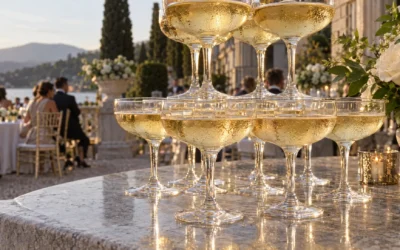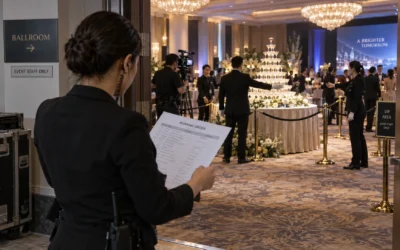


A champagne glasses pyramid has a rare quality: before the first pour, it already changes the energy in the room. Guests notice the height, the symmetry, the reflections, the sense that something ceremonial is about to happen. For luxury events, that anticipation is part of the value.
But the same concept can lose its impact quickly when details are treated casually. A pyramid that looks too small for the venue, sits in the wrong light, interrupts guest flow or feels unstable will not create prestige. It creates tension. And at a gala, brand launch, wedding or VIP hospitality event, tension is not the memory you want to leave behind.
The most successful champagne glasses pyramid moments feel effortless because the hard work is invisible. The structure is precise, the reveal is intentional, the pouring moment is choreographed and every stakeholder understands their role. These are the mistakes that most often weaken the wow factor, and how to avoid them.
Mistake 1: treating the pyramid as decoration instead of a ceremony
A champagne pyramid is not just a decorative object. It is a live event moment. It has a build-up, a focal point, a reveal and a peak moment when champagne begins to flow. When planners treat it as static decor, they often miss the emotional value that makes the concept memorable.
The first question should not be simply where will it stand? It should be what role should it play in the event? A pyramid can open a celebration, mark a product launch, frame a VIP toast, create a photo moment for press or close an evening with a theatrical finale. Each purpose calls for different placement, lighting, timing and guest positioning.
If you are still deciding whether this concept fits the event brief, it helps to understand what makes a champagne pyramid such a powerful event centerpiece before moving into technical planning.
Before confirming the design, define the moment in one clear sentence:
- A ceremonial toast led by the host or VIP.
- A brand reveal with a strong visual centerpiece.
- A luxury arrival moment that sets the tone immediately.
- A press and social media moment designed for cameras.
- A record-breaking spectacle that elevates the event story.
Without that purpose, the pyramid may still look impressive, but it will not be integrated into the experience. The result is often a beautiful object that guests walk past instead of a moment they gather around.
Mistake 2: choosing the wrong scale for the room
Scale is one of the fastest ways to either create or destroy impact. A champagne glasses pyramid that is too small for a grand ballroom, hotel lobby or outdoor terrace can disappear into the production design. One that is too large for a narrow space can feel forced, limit access and create unnecessary operational pressure.
Luxury event planners often think in terms of guest count, but visual scale is just as important. A room with high ceilings, dramatic architecture or large LED walls may require a stronger structure to compete visually. A private dining room or intimate wedding setting may need a more elegant, restrained tower that feels refined rather than oversized.
The best size is not always the biggest possible size. It is the size that photographs beautifully, feels proportionate from the guest perspective and allows the pouring moment to happen without distraction. The pyramid should command the room, not fight it.
A useful planning exercise is to view the space from several key positions: the entrance, the VIP tables, the stage, the main photographer angle and the social content angle. If the pyramid does not read clearly from those points, the design needs adjustment.
Mistake 3: involving the venue too late
A champagne pyramid may look purely elegant, but it is also a technical production element. Venue details matter. Floor level, access routes, guest movement, ceiling height, lighting infrastructure, temperature, vibration and service logistics can all influence execution.
Leaving the venue conversation until late in the process can create avoidable compromises. Perhaps the ideal location is too close to a service route. Perhaps the floor has subtle unevenness. Perhaps guest entrances place people directly behind the pyramid during the reveal. Perhaps lighting cannot be focused properly from the intended rigging position.
A premium result requires early alignment between the event planner, venue, production team and champagne pyramid specialist. The goal is not to make the concept feel complicated. The goal is to remove surprises before the event begins.
For high-stakes galas, launches and hospitality events, early planning also helps connect the pyramid to the wider event strategy. A structured approach to champagne pyramid planning for high-impact luxury events can make the difference between a visual feature and a fully integrated experience.
Mistake 4: underestimating glassware and structural precision
The beauty of a champagne pyramid comes from repetition. Each glass contributes to the symmetry, rhythm and perceived quality of the structure. When glassware is inconsistent, cloudy, scratched, poorly matched or inappropriate for the design, guests may not know exactly what is wrong, but they will feel that the result is less refined.
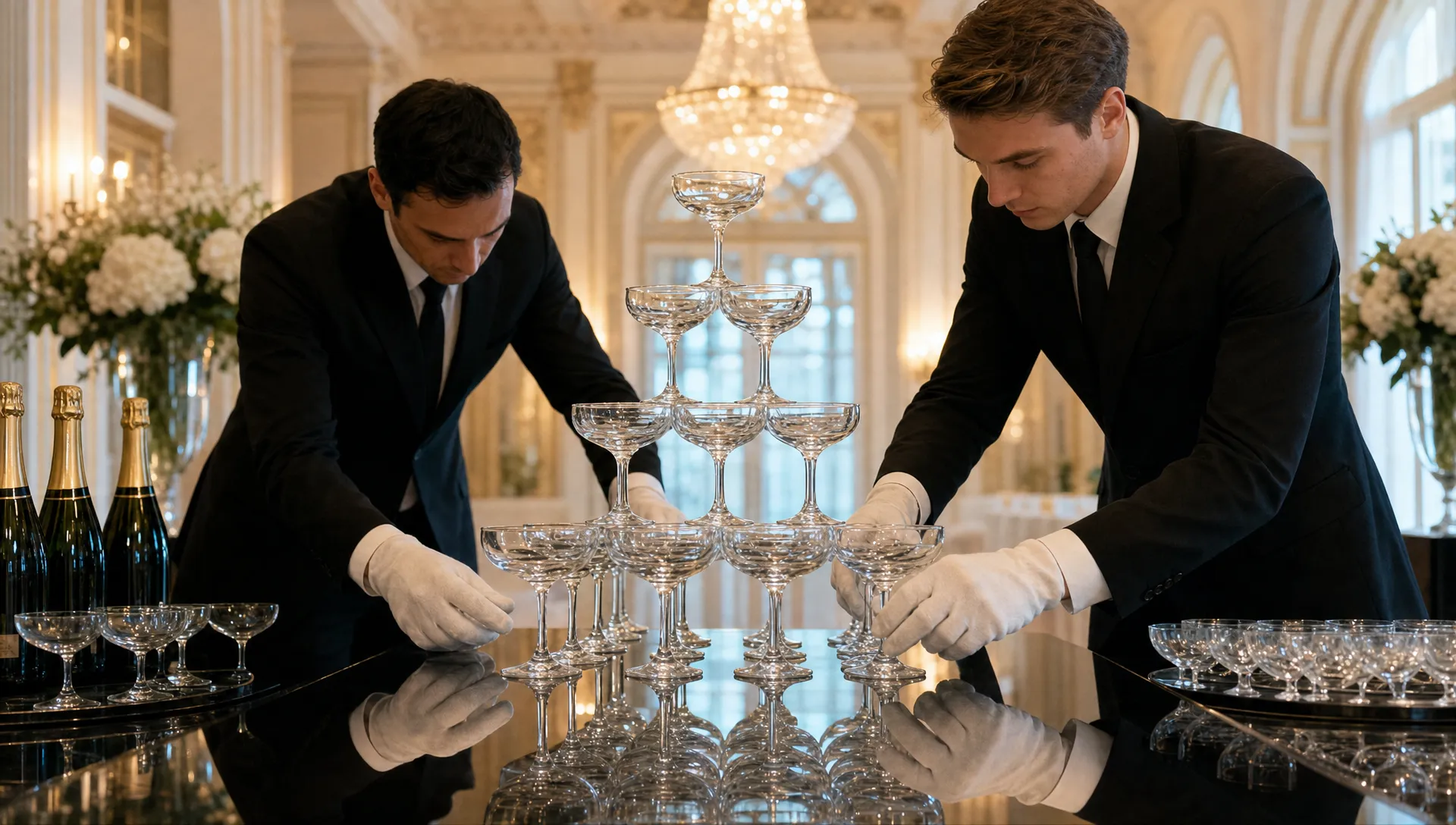
Precision also affects confidence. A luxury audience should never sense that the structure is improvised. The base must be stable, the glassware must be carefully selected and every tier must be built with patience. This is where craftsmanship becomes visible, not through drama, but through stillness. A flawless pyramid looks calm even before the pour begins.
The table below shows how small planning errors become visible guest experience problems.
| Mistake | What guests notice | Better planning question |
|---|---|---|
| Pyramid too small for the venue | The centerpiece feels secondary or lost | From which guest positions must the pyramid feel impressive? |
| Venue input comes too late | Last-minute compromises affect placement or flow | Has the venue approved the exact location and access needs? |
| Inconsistent glassware | The structure looks less premium in close-up photos | Are all glasses suitable, matching and inspected before use? |
| Weak lighting | Reflections disappear and photos feel flat | How will the pyramid be lit from guest and camera angles? |
| Unclear pouring cue | The peak moment feels awkward or rushed | Who leads the moment, and when do cameras need to be ready? |
| Poor guest flow | Guests crowd too closely or miss the reveal | Where should guests stand before, during and after the pour? |
Mistake 5: allowing lighting to flatten the spectacle
Champagne glass is built for light. It reflects, refracts and creates a sense of movement even when the structure is still. Yet lighting is often treated as a general room element rather than a critical part of the champagne pyramid design.
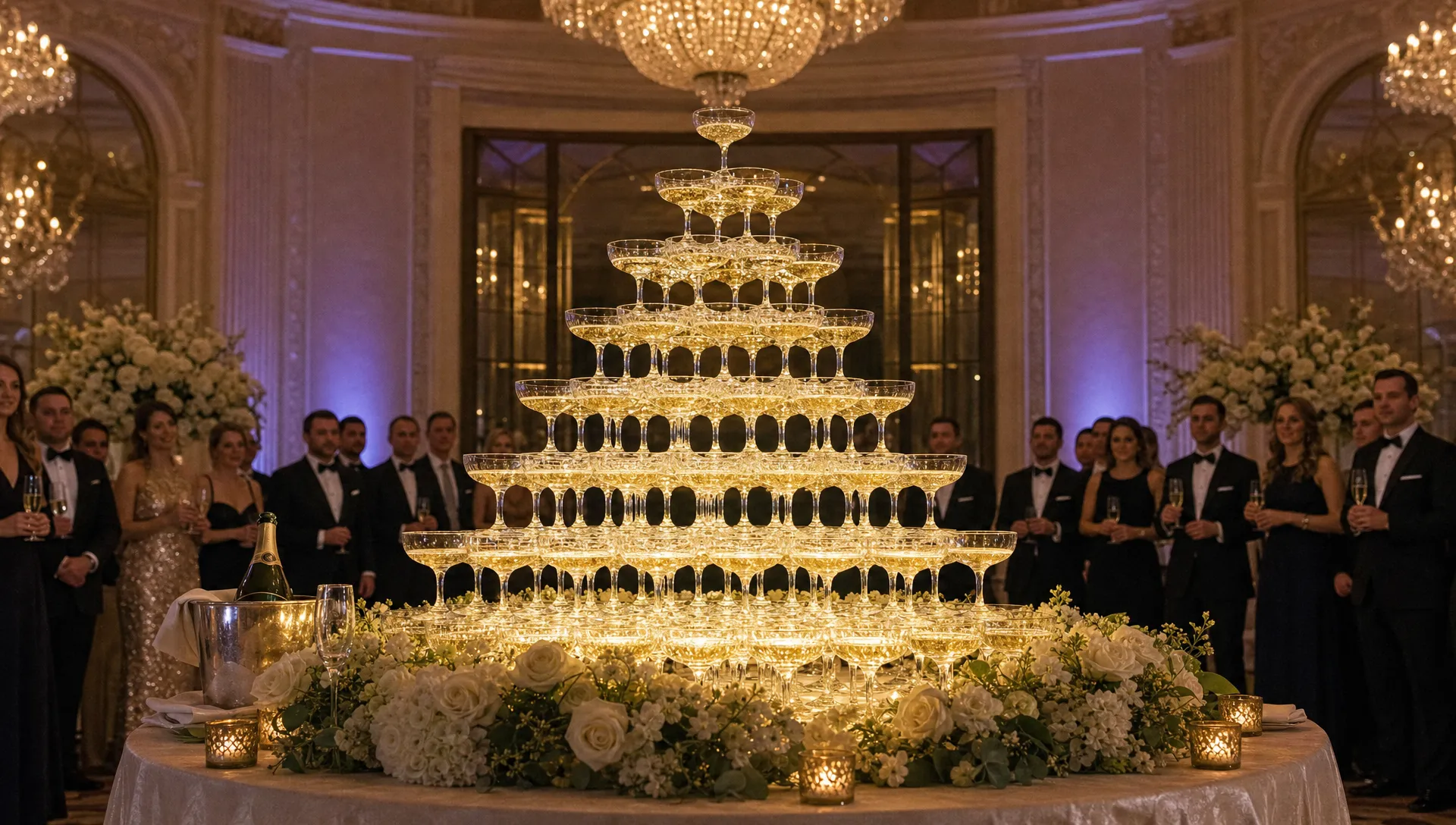
Flat front light can make the glassware look dull. Harsh overhead light can create glare. Colored light can work beautifully for brand moments, but it must be tested carefully so the glass and champagne still appear elegant. Darkness around the base can make the pyramid feel less secure on camera, while poor backlighting can make the structure disappear in a busy room.
The most refined setups think about live guests and cameras at the same time. A pyramid may look stunning in person but become visually confusing in photos if the background is too bright or too cluttered. The reverse can also happen: a setup designed only for a single camera angle may not impress guests moving through the space.
Great lighting gives the pyramid depth. It separates the edges of the glassware, enhances the liquid movement and frames the pour as a luxury performance rather than a service action.
Mistake 6: choreographing the pour too loosely
The pouring moment is where anticipation becomes theatre. If it is rushed, unclear or hidden from the right audience, the strongest part of the experience is lost. The pour needs timing, direction and confidence.
A common mistake is assuming the moment will organize itself. In reality, the host needs to know when to approach. The photographer and videographer need their positions. The MC or event director needs the cue. Music, lighting and guest attention should align. Service staff need to understand when to pause, support or step back.
This does not mean the moment should feel over-rehearsed. The most elegant event moments often appear spontaneous. But behind that ease is choreography. Everyone knows the sequence, so the host can simply enjoy the experience.
For planners who want the visual drama without operational stress, it is worth reviewing how to approach champagne pouring into stacked glasses without the stress as part of the production planning.
Mistake 7: forgetting what guests will do around it
A champagne pyramid attracts people. That is part of its power. Guests want to photograph it, gather near it, watch the pour and often stand close enough to feel involved. If guest behavior is not planned, the moment can become crowded or visually messy.
The best setups create a sense of access without sacrificing control. Guests should have a clear viewing zone, photographers should have unobstructed angles and service routes should remain efficient. If the pyramid is positioned near a bar, entrance or stage, timing becomes especially important because those areas already carry movement and attention.
Luxury event design is not only about what the centerpiece looks like. It is about how people move, pause and interact with it. The pyramid should invite attention while still feeling protected and professionally managed.
This is especially important for VIP events, F1 hospitality, hotel openings, sponsor activations and destination celebrations where guests may include executives, press, influencers or high-profile clients. The visual moment needs to feel exclusive, not chaotic.
Mistake 8: making branding too subtle, or too obvious
For corporate events and brand activations, a champagne pyramid can create strong media value. It gives photographers a clear hero moment and guests a natural reason to share. But branding must be handled with restraint.
If the branding is too subtle, the content may travel without reinforcing the event or sponsor. If it is too obvious, the pyramid can start to feel like a promotional display rather than a luxury experience. The strongest approach is usually integrated branding: a backdrop, lighting color, branded stage setting, bottle moment, floral direction or reveal sequence that connects the spectacle to the brand story.
The goal is not to place a logo everywhere. The goal is to make the entire moment belong unmistakably to the event. When the pyramid, room design, host role and camera framing work together, the brand value becomes more elegant and more shareable.
Mistake 9: assuming complexity is the enemy
Some stakeholders hesitate because a champagne pyramid sounds complex. That concern is understandable, especially when an event already has many moving parts. But complexity is not the problem. Unmanaged complexity is the problem.
A professionally planned pyramid experience should reduce stress for the event team, not increase it. The specialist should understand the build, the timing, the safety considerations, the venue coordination and the pressure of delivering in front of an important audience. For the planner, the value lies in having one expert partner own the details of a highly visible moment.
This is particularly relevant for international events, luxury weddings, brand anniversaries and large-scale celebrations where reputation is on the line. The more visible the moment, the more important it is to work with people who have handled the precision before.
Mistake 10: selecting a supplier on aesthetics alone
A champagne pyramid is judged visually, but it is delivered operationally. Beautiful reference images are important, but they are not enough. The right partner needs technical discipline, calm communication, event awareness and the ability to collaborate with venues, agencies, production teams and brand stakeholders.
Luxury planners should look for more than a supplier who can stack glasses. They need a team that understands spectacle, pressure and detail. They need people who can advise on scale, placement, safety, marketing potential and guest impact. They need confidence that the moment will feel premium from the first planning call to the final pour.
Luuk Broos Events specializes in champagne pyramid experiences, from smaller towers to world record attempts. With experience in record-breaking projects, premium venues and collaborations with brands such as Moët & Chandon and Atlantis Dubai, the focus is not only on building a pyramid. It is on creating a visual moment that earns attention and feels worthy of the occasion.
How to protect the wow factor from the first briefing
The wow factor is rarely created by one dramatic choice. It is built through alignment. Purpose, scale, glassware, lighting, guest flow, photography, branding and safety all need to support the same event objective.
A strong briefing should clarify the desired emotion first. Should guests feel awe, glamour, celebration, exclusivity, surprise or historic significance? From there, every production decision becomes easier. The size serves the venue. The lighting serves the image. The pour serves the story. The supplier serves the standard.
When handled well, a champagne glasses pyramid becomes more than a centerpiece. It becomes the moment guests talk about when they describe the event later. It gives photographers a reason to gather, VIPs a ceremonial role and brands a memorable visual asset. Most importantly, it makes the room feel like something rare is happening.
Frequently asked questions
Can a champagne glasses pyramid work in a smaller venue? Yes, if the scale is tailored to the space. A smaller pyramid can still feel luxurious when the placement, lighting, glassware and pouring moment are carefully designed.
What is the biggest mistake planners make with champagne pyramids? The biggest mistake is treating the pyramid as a decorative add-on instead of a live event moment. The strongest results come from planning the purpose, reveal, guest position and camera angles from the beginning.
Is a champagne pyramid only suitable for weddings? No. Champagne pyramids can work beautifully for luxury weddings, corporate galas, brand launches, hotel openings, VIP hospitality events, anniversaries and record-breaking publicity moments.
How can event planners reduce risk during the pour? Work with an experienced specialist, involve the venue early, confirm the structure and guest flow, assign clear cues and make sure the host, production team and photographers understand the sequence.
Does a champagne pyramid create marketing value? It can. A well-designed pyramid gives the event a strong visual centerpiece, creates a natural photo moment and can support press, sponsor visibility and social media content when branding is integrated elegantly.
Create a champagne pyramid moment worthy of the room
If your event needs more than beautiful decor, a champagne pyramid can deliver ceremony, prestige and visual impact in one unforgettable moment. The difference lies in expert planning and flawless execution.
For luxury events, brand activations, weddings, hospitality experiences or ambitious record-breaking concepts, Luuk Broos Events can help you shape a champagne pyramid experience that feels spectacular, controlled and truly memorable.