

The strongest internal brand launch ideas give employees more than a first look at a new identity. They help people understand what is changing, see where they belong and practice what the brand will mean in their work. For a luxury hotel, premium hospitality group or corporate organization, the experience should feel as considered as any client-facing launch.
A memorable reveal can create shared excitement. Real momentum comes from connecting that moment to employee participation, credible leadership and clear next steps.
Define what employees should do differently
Before selecting a venue or commissioning a centerpiece, complete this sentence: “After the launch, our people should be able to…”
The answer might be explaining the new positioning to a guest, delivering a revised service ritual or describing how two merged businesses now work together. “Feel excited about the brand” is a useful ambition, but it is not a sufficient operational brief.
Gallup’s Q12 employee engagement framework includes clarity about workplace expectations among its measures. Apply that principle here: employees need to know what the new brand asks of them, not simply what it looks like.
Agree on one central message and a few observable behaviors. If the launch follows a merger or restructuring, acknowledge employees’ concerns before asking them to celebrate.
Eight internal brand launch ideas with a practical purpose
Choose a combination that moves people from understanding to participation, then celebration. Not every launch needs all eight elements.
1. Give employees the first meaningful preview
Create an employee-first preview before the public announcement, where confidentiality and operational timing allow. Make it more substantial than an early logo reveal: explain the business decision, the customer promise and the implications for different roles.
A short leadership conversation usually serves this purpose better than a long presentation. Include an employee interviewer who can ask direct questions, such as what will change immediately and what will stay the same.
Share practical details at the same time. Employees should know when the identity becomes public, which materials they can use and where to find answers afterward.
Being included early should feel like trust, not an obligation to promote something they have not yet had time to understand.
2. Build a brand discovery salon
Turn an elegant event space into a series of small, hosted encounters with the brand. Each station should explain one meaningful part of the new identity through something employees can examine, experience or discuss.
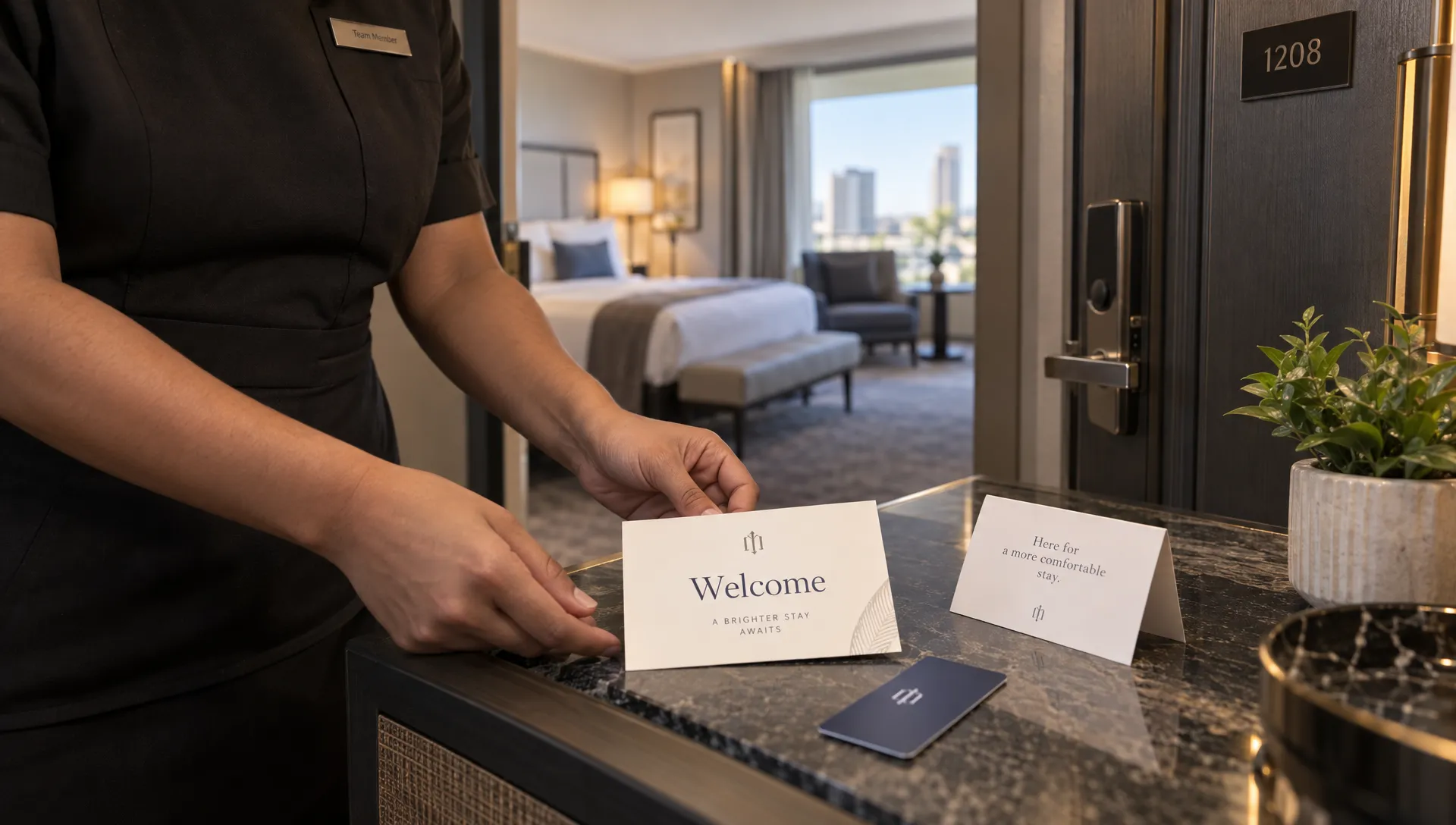
For a hotel group, that could mean a room presentation, a guest welcome ritual and a culinary interpretation of the positioning. For a corporate business, use customer stories, product demonstrations or examples of better client communication.
When comparing internal brand launch ideas, favor experiences that make an abstract promise tangible rather than simply decorating a room with brand colors.
Give each station a clear question: “What would this change in your role?” Capture the answers. They can reveal implementation gaps that a polished presentation would otherwise hide.
3. Let teams interpret the brand through real work
Invite departments to contribute examples before the event. Ask each team to show one decision, interaction or process that expresses the new positioning.
A reservations team might rewrite a booking response. A concierge team could explain how it would personalize a recommendation. Finance or procurement could demonstrate how the brand’s standards influence supplier decisions.
Display selected contributions with the employees’ names and a short explanation. This gives less visible teams a place in the launch and prevents the brand from appearing to belong only to marketing.
Keep the exercise focused. Employees should not be expected to invent the strategy themselves. Give them the agreed principles, appropriate working time and a clear approval process so their contributions can become usable examples after the event.
4. Rehearse the moments customers will notice
Use short, facilitated scenarios to translate the brand into behavior. Present a realistic situation, allow teams to discuss their response and compare it with the intended standard.
For a premium hospitality brand, a useful scenario might involve recovering a disappointing arrival experience while protecting the guest’s privacy. For a professional services organization, it could involve explaining a new offer without relying on internal jargon.
The most useful internal brand launch ideas create room to practice before employees face real customer expectations.
Avoid turning the session into a performance test. Mixed-role groups and supportive facilitators make it easier to identify uncertainty without embarrassing anyone. Finish with a concise reference employees can use afterward, including an example response and a route for escalating difficult cases.
5. Create a signature reveal with a clear role
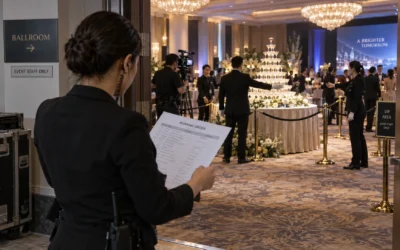
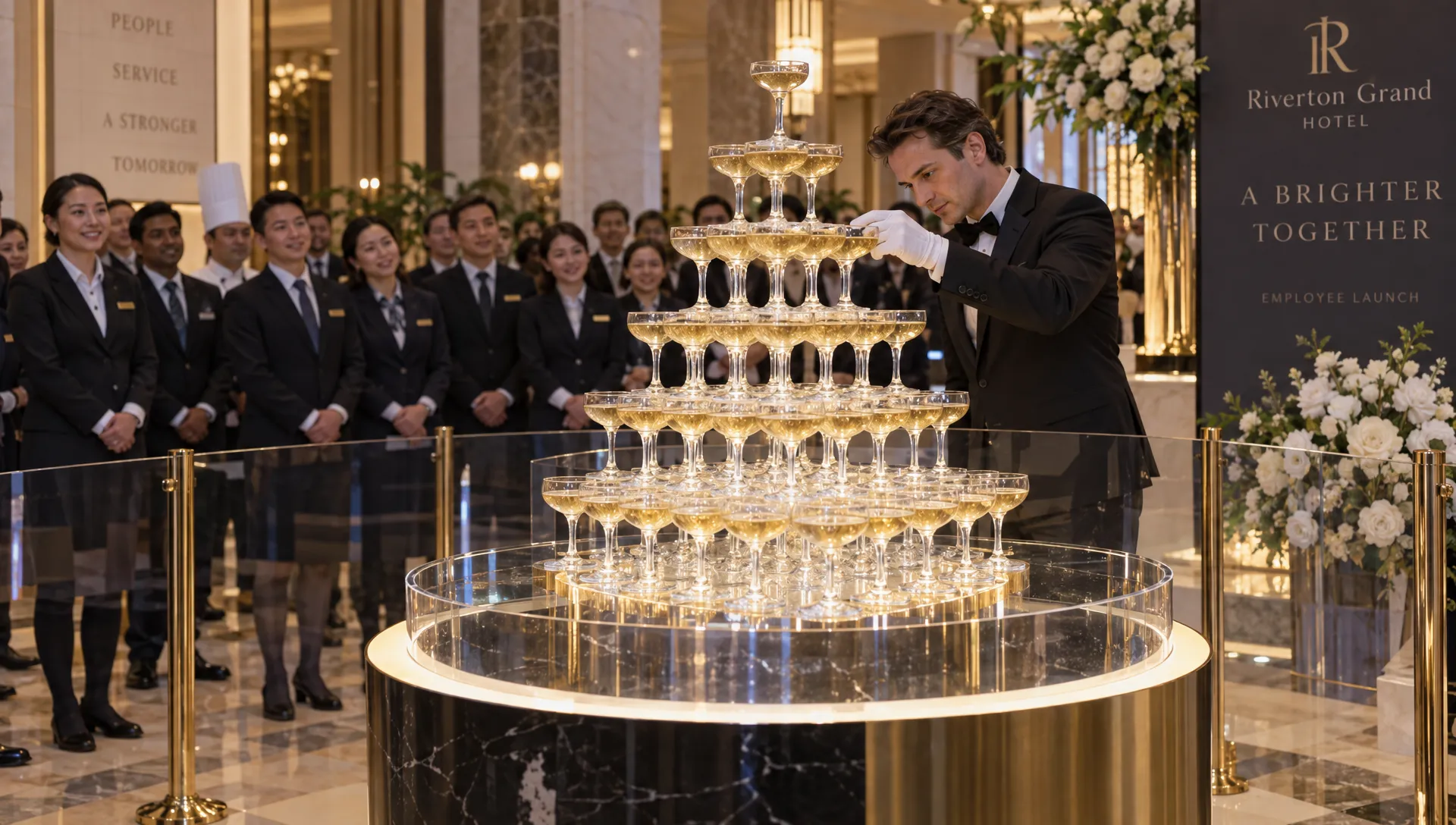
A carefully staged reveal can give the launch a shared emotional peak. A professionally built champagne pyramid is one option for organizations whose identity and occasion suit a celebratory, luxury setting.
Connect the moment to something concrete: the opening of a property, the completion of a major transformation or recognition of the team that made the launch possible. Let the explanation remain brief so the spectacle does not become an elaborate metaphor.
Among internal brand launch ideas for premium events, a champagne pyramid offers a distinctive centerpiece, but it should support the employee story rather than replace it.
Luuk Broos Events specializes in champagne pyramids, from smaller towers to world-record-scale projects. A record attempt is a separate production decision, not a requirement for impact. Understanding when a corporate world record event makes strategic sense can help distinguish ambition from unnecessary complexity.
Keep construction with specialists. Confirm venue permissions, floor suitability, access, guest separation and the service plan before approving the concept.
6. Recognize the people already delivering the promise
Use the launch to acknowledge employees whose work already reflects the new direction. Choose specific stories, not generic awards for “living the values.”
A team that quietly solved a difficult guest problem or improved a handover process gives colleagues a credible example of the brand in action. Explain what happened, why it mattered and what others can learn from it.
Include operational teams, overnight staff and support functions in the selection process. Obtain consent before sharing personal stories or photographs.
Credible internal brand launch ideas recognize existing strengths as well as introducing change. That balance helps the new identity feel connected to the organization’s people rather than imposed over their work.
7. Give teams one useful challenge to complete together
Follow the reveal with a focused collaboration session. Ask each team to identify one customer-facing improvement it can deliver within the next month, then name an owner and agree on the first step.
Keep the task within the team’s authority. Asking employees to redesign a service without time, resources or approval creates frustration rather than momentum.
For organizations adding a broader social experience, these luxury team-building activities offer complementary options. The activity should strengthen working relationships without displacing the launch’s central purpose.
End by recording the commitment somewhere managers will revisit. A photograph of a workshop board is not an implementation plan; a named action with a review date is.
8. Design an equivalent experience for every location and shift
An internal launch should not privilege headquarters while everyone else receives a recording. Plan for remote teams, different time zones and employees who cannot leave operational roles simultaneously.
For distributed organizations, internal brand launch ideas need a shared message with enough local flexibility to remain relevant.
Create a repeatable core: a concise leadership message, a guided discussion, a practical activity and access to the same resources. Local hosts can adapt examples without rewriting the positioning.
Provide captioning, accessible materials and translations where needed. For hospitality teams, consider repeated small-group sessions and protected attendance time rather than expecting participation outside scheduled hours.
If alcohol is part of a celebration, offer equally considered non-alcoholic hospitality and avoid making drinking the central form of participation.
Match the experience to the actual constraint
A premium launch does not need the largest production. It needs the right investment for the change employees are being asked to make.
| Launch situation | Prioritize | Protect against |
|---|---|---|
| Visual identity refresh | A clear explanation and updated working materials | An expensive reveal with little practical value |
| New service positioning | Demonstrations, scenarios and manager coaching | Promising standards employees cannot yet deliver |
| Merger or major transformation | Honest leadership dialogue and team recognition | Celebrating before addressing uncertainty |
| Flagship opening or major milestone | A signature moment supported by role-specific briefings | Spectacle overshadowing readiness |
Once that priority is clear, brief production partners on the audience, employee outcome, venue restrictions, accessibility needs and approval process. Separate essential delivery costs from optional enhancements so stakeholders can make informed choices without weakening the core experience.
Build the rollout around the event
Treat internal brand launch ideas as the beginning of an adoption process, not a substitute for one. The following sequence is a planning model, not a fixed supplier lead time.
Before the launch: prepare managers and remove friction
Brief managers before the wider reveal so they can answer predictable questions. Give them the launch narrative, role-specific implications, approved materials and an escalation contact.
Check that templates, signage, uniforms, digital assets and service guidance will be ready when employees are expected to use them. If implementation is phased, publish the sequence clearly rather than presenting everything as an overnight change.
On launch day: protect the message
Keep leadership remarks focused on why the change matters, what employees contributed and what happens next. Build genuine discussion into the running order, not just a rushed question at the end.
For a signature reveal, assign clear production responsibilities and approve the cue sequence. Keep a fallback communication plan so a technical delay does not prevent employees from receiving the core message.
During the next month: show visible follow-through
Revisit team commitments, resolve unanswered questions and share examples of the brand being applied well. Managers should use existing team meetings where possible rather than adding a separate communication burden.
Employees should be able to see which suggestions led to action and which require further decisions.
Measure adoption, not just applause
Judge internal brand launch ideas by what employees understand and do afterward. Attendance and positive event feedback are useful delivery measures, but they do not establish that the brand has taken hold.
Before the launch, establish a simple baseline using the same questions you will ask later. Can employees explain the positioning? Do they know what changes in their role? Can they find the resources they need?
Revisit those questions after the event and during the following month. Pair the responses with a few observable checks, such as whether teams use approved materials or apply the new service guidance.
Report the findings by relevant team or location where participation and privacy allow. An organization-wide average can hide a department that needs support.
For an employee-first launch, external publicity is optional. Any photography, public sharing or media activity should respect consent, confidentiality and the agreed announcement schedule.
Frequently asked questions
Which internal brand launch ideas work with a limited budget? Prioritize a candid leadership preview, employee-created examples and facilitated team discussions. Invest first in useful materials and protected participation time. A smaller, well-run launch can support adoption better than a large event with no follow-through.
Should an internal launch happen before the public announcement? Usually, employees benefit from understanding the change before customers ask about it. Confidentiality, regulatory obligations or market-sensitive information may require a tightly coordinated announcement instead.
Is a champagne pyramid appropriate for an employee launch? It can suit a luxury hospitality brand, significant opening or celebratory milestone. The decision should reflect organizational culture, venue feasibility and employee inclusion. Professional construction and an appropriate non-alcoholic hospitality offer should be part of the planning.
Give the launch a moment worth sharing
When the occasion calls for a distinctive centerpiece, Luuk Broos Events can help explore a champagne pyramid concept suited to your ambitions and event setting.
Start the conversation with your employee audience, venue, timing and desired outcome. The right scale is the one that gives the team a memorable shared moment while leaving the brand message clear and the production professionally considered.