


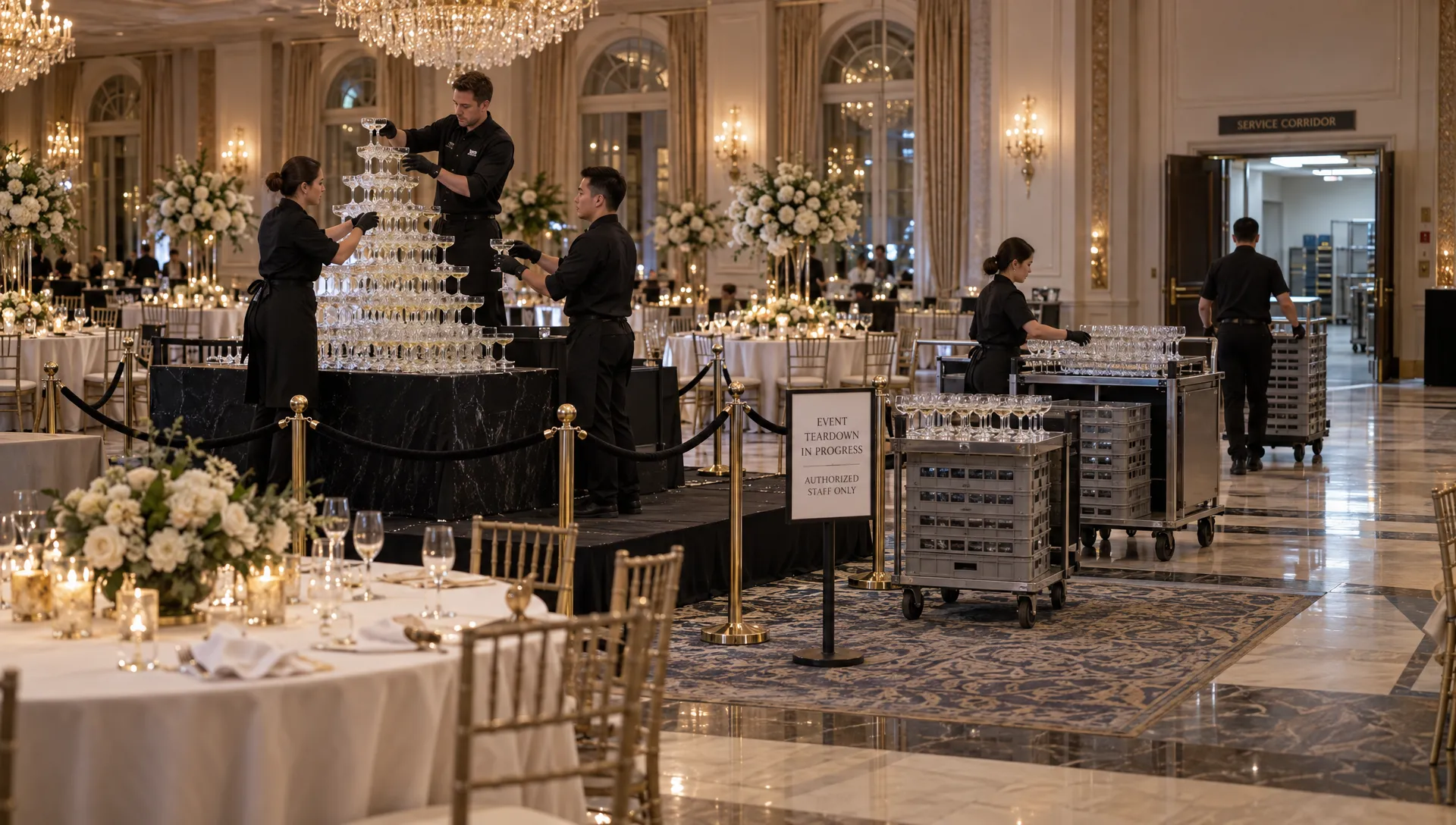
Dismantling a champagne glass pyramid deserves the same precision as building it. Once the final photographs are taken, the priorities change: protect guests, remove the glassware without disturbing the remaining structure and return the venue in an orderly condition. A rushed breakdown can put all three at risk.
For a conventional, intact stacked-glass tower, the basic principle is top down, one complete tier at a time. That principle does not replace the builder’s instructions. Large, elevated, custom-supported or record-scale installations need a specialist-led dismantling plan, appropriate access equipment and a controlled working area.
For luxury event planners, the objective is a discreet, well-managed transition from centerpiece to cleared space, not simply the fastest possible removal.
Before dismantling a champagne glass pyramid
Confirm who owns the breakdown before the event begins. The installation team, caterer, venue and glassware supplier should not discover their responsibilities at the end of the evening.
Name one person to direct the work. That lead should confirm when service has ended, who may handle the glasses, where they will go and when other suppliers can enter the area. If the original builder is leaving before removal, obtain clear dismantling instructions and an agreed handover.
Use the installation’s condition to decide whether work can begin:
| Condition | Appropriate action |
|---|---|
| Intact conventional tower with every tier safely accessible | Follow the builder-approved top-down sequence with trained handlers |
| Large, elevated or custom-supported installation | Use the specialist crew and installation-specific access plan |
| Visible movement, cracked glass or uncertain support | Stop, exclude people from the area and request specialist assessment |
| Guests or other suppliers still moving through the workspace | Delay removal until the work zone and return route are controlled |
A small tower is not automatically suitable for untrained staff. Familiarity with carrying individual glasses is different from understanding how stacked glassware supports the levels above it.
A controlled, top-down dismantling sequence
The sequence below applies to an intact, conventional installation after the responsible builder has approved the method. Any bespoke supports, access restrictions or structural concerns take precedence over this general guidance.
1. End service and secure the working area
Stop pouring and tell the service team that the display is no longer available for guest access. Guests should not take glasses directly from the stack, even if the event has become informal.
Before anyone touches the champagne glass pyramid, establish a work zone that accounts for its height, possible falling glass and the handling route. Its size should follow the installation-specific risk assessment rather than an arbitrary distance.
Keep guests, photographers and unrelated crew outside that zone. If the room remains occupied, coordinate a discreet barrier and a venue-approved diversion around the work.
Maintain adequate working light. Atmospheric lighting that suited the reveal may conceal wet glass, small cracks or fragments on the floor. Do not let the lighting team disconnect essential illumination while removal is underway.
2. Prepare the receiving area and return route
Set up a stable receiving station away from the display. It should accommodate removed glasses, controlled liquid disposal and suitable racks without creating another crowded workspace.
Have the agreed handling equipment ready: compatible glass racks, stable trays where appropriate, non-slip footwear and task-appropriate protective equipment. Gloves must provide suitable grip and dexterity for wet glass; no glove makes broken glass harmless.
Keep transport carts outside the immediate working area so they cannot strike the platform. Do not lean racks, trays or cleaning equipment against its supports.
Separate removal from washing and packing where staffing allows. The person working at the structure should not also be searching for empty racks or carrying glasses through a busy service corridor.
Check the route to the wash area or collection point, including doorways, thresholds and any shared loading access. Clear accessible floor spills without touching or disturbing the installation.
3. Remove the highest tier first
Start with the highest glass or highest tier identified in the builder’s sequence. Do not remove a lower glass to create space or make the upper levels easier to reach.
Each glass must be lifted clear of its contact points before being moved away. Avoid dragging a foot across supporting rims, twisting against neighboring glasses or making sideways movements that could transfer force through the stack.
Never reach beyond a stable working position. If the highest tier cannot be reached comfortably using the approved access arrangement, stop. Chairs, tabletops and improvised platforms are not substitutes for suitable access equipment.
For a champagne glass pyramid containing residual liquid, remove glasses upright and empty them at the designated receiving station. Do not tip glasses while they are still resting on the structure or attempt to drain the display by tilting its base.
Keep removed glasses separate from drinks intended for service. Any proposal to serve from the display should already be covered by the caterer’s hygiene and service procedure, not improvised during breakdown.
4. Finish each tier before moving down
After the top level is clear, work through the next tier using the agreed removal order. For a conventional stacked arrangement, complete that level before disturbing the glasses beneath it.
There is no universal instruction to start every tier from a particular corner or to remove several glasses at once. Geometry, access and the original installation method determine the detailed sequence.
Avoid having handlers reach across one another or work from opposing sides without coordination. One person should control the pace, with a clear instruction to pause if anything changes.
As the champagne glass pyramid gets lower, do not accelerate simply because it looks less imposing. Wet glassware, fatigue and crowded return stations can still cause incidents. Pause when racks need changing or the receiving area needs clearing rather than allowing a backlog beside the structure.
5. Remove the base layer before clearing the platform
Remove the remaining base glasses individually, following the same controlled handling method. Do not slide a collection of glasses across the surface or try to move them together on a table covering.
Leave structural supports, trays, coverings and any installation-specific fittings undisturbed until the glasses they support have been removed. Follow the builder’s instructions for any integrated collection or drainage system.
Never attempt to relocate a partly dismantled tower by pushing its table or platform. If the venue needs the space sooner, change the room schedule rather than moving the loaded structure.
Once the final glass is off, check the surface for liquid and fragments before removing fittings or transferring the platform. Keep the work zone in place until the immediate floor area has also been inspected and made safe.

What to do if glass cracks, breaks or shifts
Stop handling immediately if you hear cracking, see movement or discover damaged glass. Do not pull out the affected glass, reach into the structure or ask someone to hold the stack steady while removal continues.
Keep people clear and notify the breakdown lead. A damaged champagne glass pyramid needs assessment by the responsible specialist before anyone resumes work. If the crew cannot establish a safe method, maintain the exclusion zone and escalate through the venue’s incident procedure.
Broken glass also changes the surrounding service conditions. Isolate potentially affected drinks, ice, food and equipment and follow the caterer’s contamination procedure. Do not assume fragments are confined to the spot where a glass landed.
For accessible fragments outside the structure, use the venue-approved cleanup equipment and procedure rather than bare hands. Do not wipe shards into a linen bundle or place them in an ordinary glass-return rack. Use the designated broken-glass container.
A final floor inspection matters even when the visible pieces have been collected. Keep guests and transport carts away until cleanup has been completed and the area released by the responsible person.
Cleaning, packing and accounting for the glassware
Move removed glasses through a defined process: liquid disposal, washing where required, drying, inspection and packing. Follow the glassware supplier’s instructions, especially for crystal, decorated pieces or rented stock.
Do not assume every coupe is dishwasher-safe or suitable for the same wash cycle. Avoid sudden temperature changes and use compatible racks that keep glasses from striking one another.
The champagne glass pyramid may be gone, but the return process still needs supervision. Check rims, bowls, stems and feet for visible damage before packing. Keep suspect items separate rather than returning them to service or concealing them among intact stock.
Pack clean glasses in the orientation and compartment sizes specified by the supplier. Do not nest them or force them into unsuitable dividers. Confirm whether the rental agreement calls for washed returns or another agreed condition.
Reconcile the inventory before collection. Record intact returns, breakages and missing items separately, with photographs where useful. This creates a clear handover between the event team, venue and rental supplier without relying on recollections the following morning.
Build breakdown into the production schedule
There is no responsible universal removal time. Glass count matters, but so do height, remaining liquid, access, staffing, packing requirements and the distance to the wash area or loading dock.
Ask the specialist to estimate dismantling time separately from cleaning, packing and load-out. Include contingency for restricted access or a delayed end to guest service. A room that must reopen for breakfast presents a different constraint from a ballroom available until the following afternoon.
The champagne glass pyramid should have a protected breakdown window in the production schedule. Other crews should not simultaneously pull nearby cables, move staging or roll flight cases through its working area.
This belongs in the initial champagne pyramid planning process, alongside the reveal and service arrangements. Confirm access hours, responsibilities and return conditions before approving the final production plan.
Finish with a venue handover that covers the platform, floor condition, waste removal and outstanding equipment. The work is complete when the space is ready for its next agreed use, not merely when the last glass leaves the stack.
Frequently asked questions
Can catering staff dismantle the tower? Only when the responsible builder and venue have agreed that the staff are trained and equipped for that particular installation. Large, elevated, bespoke or compromised structures should remain under specialist control.
Can guests take glasses from the pyramid after the pour? Guests should not remove glasses directly from the stack. If display glasses will be served, trained staff should remove them through the approved sequence and follow the caterer’s service procedure.
Should the glasses be emptied before removal? Do not tip or drain glasses while they remain stacked. Under the approved handling plan, remove them upright and transfer them to a separate station for controlled emptying.
Can a champagne glass pyramid stay in place overnight? Only if the builder and venue approve the arrangement, including restricted access, responsibility for the area and the next day’s removal plan. A quiet room is not the same as a secured installation.
Plan the finish with your specialist
Luuk Broos Events creates custom champagne towers and record-breaking pyramids for premium celebrations and brand events. When discussing your installation, include the complete event lifecycle: reveal, service, dismantling and venue handover.
Bring your venue access rules, production schedule and glassware arrangements to the conversation. Discuss your event with Luuk Broos Events so the practical finish receives the same attention as the spectacle your guests came to see.