

The strongest activation ideas for brands at motorsport hospitality events give guests something worth stepping away from the racing for, without competing with the race itself. A memorable concept might celebrate a partnership, reveal exceptional craftsmanship or create a shared moment around a champagne pyramid. Its success depends on timing, relevance and precise execution.
For luxury agencies and hospitality managers, the challenge is to combine spectacle with a demanding live environment. These seven concepts are designed for premium lounges, hotel terraces and race-weekend receptions, with practical considerations for guest engagement, permissions and commercial value.
What makes a motorsport hospitality activation effective?
A brand activation turns a brand promise into an experience guests can participate in or witness. At a motorsport event, that might mean exploring precision engineering through a watchmaker’s demonstration or joining a carefully staged celebration of a commercial partnership.
The distinction from ordinary hospitality is purpose. Good food and comfortable seating support the occasion; an activation gives guests a specific reason to remember the host.
Motorsport audiences also have competing priorities. Some guests follow every session, while others attend primarily to build relationships. The experience should accommodate both, offering worthwhile engagement without making participation feel compulsory.
Set the objective before choosing the spectacle
Shortlist activation ideas for brands only after deciding whose behavior you want to influence and what should happen next. A distributor reception needs a different experience from a consumer-facing sponsor lounge or a private gathering for prospective clients.
Choose one primary objective, such as securing qualified meetings, strengthening partner relationships or generating usable campaign content. Secondary benefits are welcome, but they should not make the concept harder to understand.
Before creative development, establish four boundaries:
- Access and rights: Confirm where the activation can operate and which event names, team identities, footage and commercial categories may be used.
- Venue feasibility: Check load-in windows, floor loading, power, fire routes, sound limits and indoor alternatives for exposed spaces.
- Guest experience: Provide accessible routes, seated participation where appropriate and an enjoyable option for guests who decline photography or alcohol.
- Operational ownership: Name the person responsible for production approval, safety decisions and communication with hospitality management.
Keep the published sporting schedule at the center of the run of show. Build in flexibility for delays and agree on a clear cancellation point rather than letting a reveal drift into a session guests came to watch.
7 activation ideas for brands that suit race-weekend hospitality
1. A champagne pyramid celebration with a clear brand story
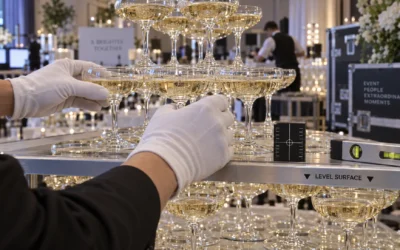
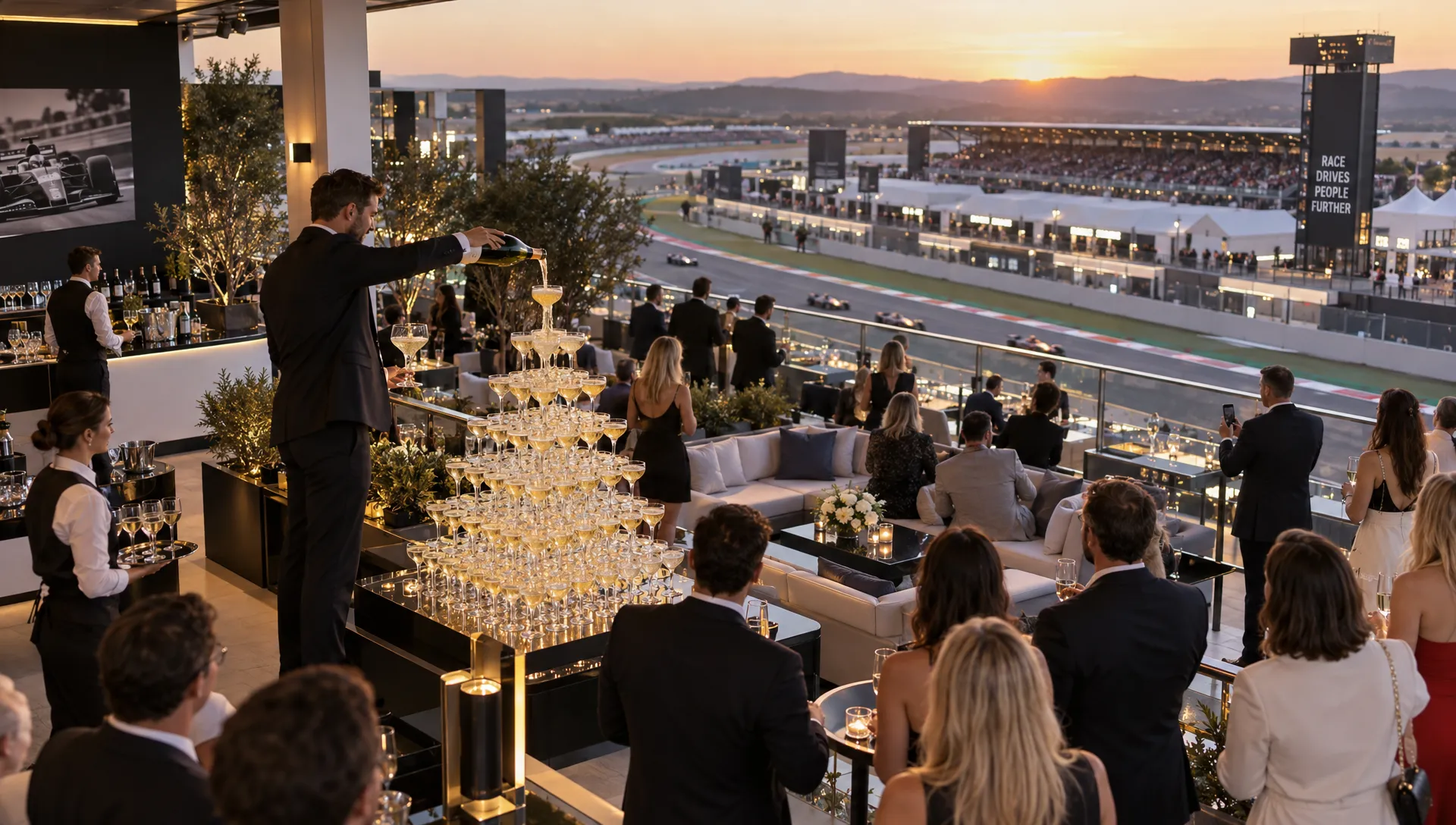
A professionally built champagne pyramid creates a focal point that an entire hospitality space can share. It works particularly well for partnership anniversaries, hotel-hosted receptions and milestone celebrations surrounding a race weekend.
Give the moment a specific narrative. A host might introduce a newly signed partnership before the ceremonial pour, with approved lighting and a restrained brand backdrop supporting the scene. The pyramid should express the occasion, not simply occupy the room.
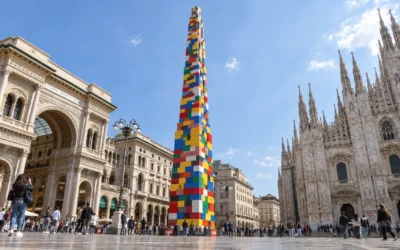
Luuk Broos Events specializes in both record-scale champagne pyramids and smaller towers, allowing the concept to be discussed around the venue and event objectives. Its approach to a world record brand activation also explains how a visible achievement can support a wider publicity story.
Separate the installation from circulation routes and agree on guest boundaries, spill management and service arrangements. Offer an equally considered nonalcoholic toast. A spectacular tower does not need to become an unrestricted self-service point.
2. A precision atelier that connects the product to performance
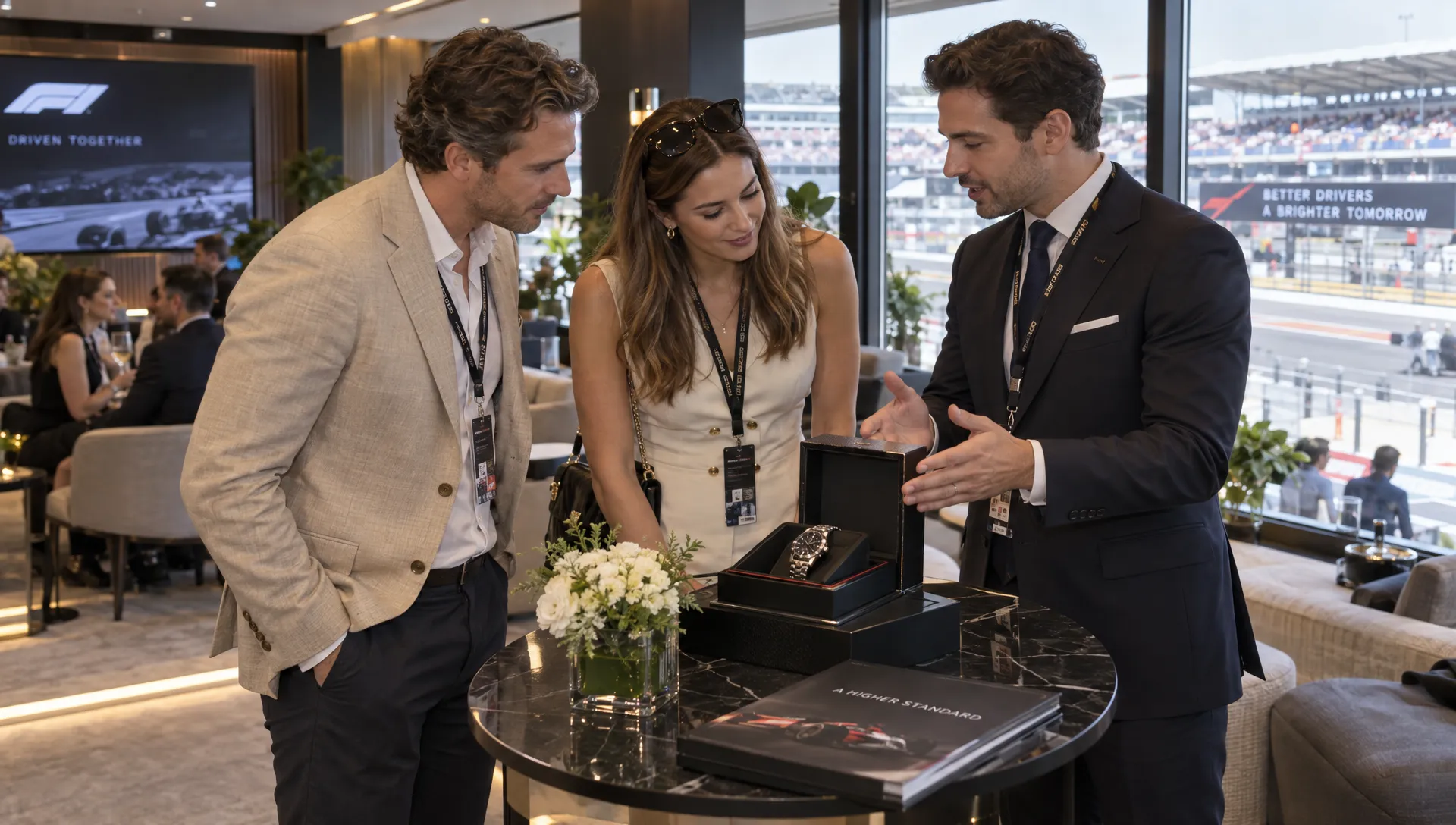
Among activation ideas for brands, a live craftsmanship demonstration can create a particularly credible connection with motorsport. A watchmaker, leather specialist or audio engineer can make precision tangible without borrowing a team’s intellectual property.
Build the experience around one observable transformation: a component being assembled, a material being finished or an adjustment changing performance. A short hosted explanation is more effective than a crowded display of technical information.
Guests should be able to watch briefly or stay for a deeper conversation. Position the workbench where people can see comfortably, with an accessible viewing position and suitable lighting. Protect delicate tools and materials from casual handling.
This format can scale from one specialist at a compact counter to several appointment-led stations. Its commercial value comes from informed conversations and relevant follow-up, particularly when the product requires explanation before purchase.
3. A race-strategy challenge designed for conversation
A strategy experience can bring guests together without requiring the footprint or physical demands of a full simulator. Small groups respond to a fictional race scenario, choosing when to change tires or how to react to changing conditions.
Use original scenarios and properly licensed assets. A knowledgeable facilitator should explain the trade-offs in accessible language, allowing occasional viewers to contribute alongside committed fans.
The exercise becomes more valuable when it reflects a genuine brand characteristic, such as decision-making under pressure or balancing performance with resource use. Avoid attaching an unrelated sales message to the end.
The most useful activation ideas for brands also leave room for different participation styles. Offer a seated format and a noncompetitive option rather than relying entirely on a public leaderboard. If prizes are involved, have the mechanic and eligibility conditions reviewed for the relevant jurisdiction before promotion.
4. An engineering-led product reveal
For an automotive, technology or premium equipment brand, a product reveal can connect directly with the setting through materials, testing and design decisions.
Instead of playing a long launch film, create a compact sequence: an intriguing physical detail, a concise explanation from a product specialist and a controlled reveal. Guests should quickly understand what makes the product distinctive and why they are seeing it here.
Keep the sporting environment visible in the planning. Avoid reveal times that conflict with qualifying or the race, and do not depend on a guest speaker whose trackside commitments may change.
For a smaller venue, a beautifully lit component or prototype can support the story without bringing in a full-size vehicle. Any vehicle display requires venue approval covering access, loading and applicable safety restrictions. The intimate version should feel deliberately curated, not like a reduced substitute for an arena-scale launch.
5. An editorial portrait experience with a motorsport perspective
A portrait experience can produce a more desirable keepsake than a conventional logo-wall photograph. Consider a composition inspired by precision, movement or the architecture of the hospitality setting, using original creative assets rather than unlicensed racing imagery.
The strongest activation ideas for brands make the guest the subject while keeping the brand identifiable. A distinctive material palette or approved product detail can do more than repeating a logo across every surface.
Use short appointment windows or discreet queue management so the experience does not obstruct the lounge. Offer seated portraits and explain how images will be delivered before the session begins.
Permission to take a portrait should be distinguished from permission to publish it in advertising. State who will receive the files, how long they will be retained and whether commercial reuse is requested. Guests should be able to receive their portrait without being required to join unrelated marketing communications.
6. A hosted pairing salon for deeper relationship-building
A small tasting or pairing salon gives relationship managers a reason to bring selected guests together. The experience could explore chocolate and coffee, regional ingredients or alcoholic and nonalcoholic drinks with equal attention to presentation.
Connect the menu to a legitimate brand story, such as provenance, craftsmanship or the host destination. A specialist host can guide the experience while leaving room for conversation between guests.
This works best as a short, bookable session rather than a long seated commitment. Coordinate it with catering so guests are not choosing between the activation and the main hospitality service.
Alcohol-led activation ideas for brands need particular care in a motorsport setting. Keep consumption separate from driving or simulator challenges, follow local age and service requirements and make alcohol-free participation feel fully included. Success should be judged by the quality of engagement, not the number of drinks served.
7. A private preview salon with a meaningful next step
For audiences with purchasing influence, a private preview may generate more value than a high-volume attraction. Invite small groups to explore a forthcoming collection, limited-edition product or service proposition with a knowledgeable host.
Make access purposeful rather than artificially exclusive. The invitation should explain what guests will see and why it relates to their interests. Avoid implying access to drivers, garages or restricted areas unless those arrangements are explicitly secured.
A quiet hospitality room can be more suitable than the busiest terrace. Allow enough privacy for questions without making the space feel inaccessible or unwelcoming.
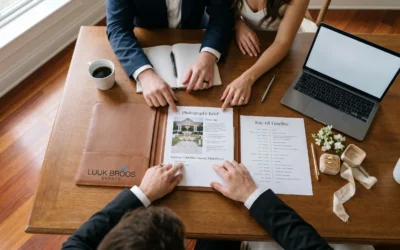
End with a useful next step: a showroom appointment, technical consultation or tailored proposal. Record that preference with permission and assign a relationship owner. The objective is not to capture every attendee’s details, but to make a smaller number of relevant conversations progress naturally.
What established hospitality formats can teach planners
Real-world references are useful when the transferable lesson is clear. Official programs offered through F1 Experiences demonstrate the appeal of combining hospitality with access-led experiences. An independent brand event can learn from that sense of occasion, but must not imply equivalent access or official affiliation.
Luuk Broos Events’ experience with names such as Moët & Chandon and Atlantis Dubai provides a different reference point: the role of a carefully executed visual centerpiece in a luxury setting. That context does not mean the same installation will suit every race venue.
Use these references to evaluate activation ideas for brands through two questions: what makes the experience desirable, and what must be professionally controlled to deliver it? Copying the surface appearance of an established concept without its permissions, staffing or production discipline creates unnecessary risk.
A credible supplier proposal should explain the relevant experience behind the concept, the scope being offered and which responsibilities remain with the agency, venue or organizer.
Measure outcomes beyond attendance and social reach
Agree on measurement before production begins. A beautiful installation may attract attention, but attention alone does not establish commercial return.
Match the reporting to the objective:
| Objective | Useful measure | Collection approach |
|---|---|---|
| Develop business opportunities | Qualified meetings and agreed next steps | Relationship-manager notes entered with appropriate permissions |
| Strengthen partner relationships | Follow-up engagement and account feedback | Structured post-event conversations |
| Generate campaign assets | Approved content suitable for intended channels | Asset review against the original creative brief |
| Improve brand understanding | Recall of the intended message | Short, voluntary follow-up survey |
| Support sales | Opportunities and conversions influenced | CRM tracking with a defined attribution window |
When comparing activation ideas for brands, include the full delivered cost: production, venue requirements, staffing, transport, approvals, content capture and follow-up. A smaller experience that advances valuable relationships may outperform a more photogenic installation with little connection to the commercial brief.
Treat pipeline value and realized revenue as different measures. Neither should automatically be attributed entirely to one event. Where a defensible financial return cannot yet be calculated, report cost per qualified conversation and progress toward agreed objectives instead.
Plan the next touchpoint while the experience is still being designed. These approaches to keeping guests engaged after a gala can also inform considered race-weekend follow-up, particularly personalized content and relevant private invitations.
Common mistakes that reduce the impact
The most avoidable mistake is overprogramming. Guests should not have to choose repeatedly between a host’s activation and the sporting action. One well-timed centerpiece, supported by optional smaller experiences, often creates a more coherent visit.
Another is assuming hospitality access includes activation rights. Confirm sponsor-category restrictions, signage permissions, filming conditions and any proposed use of event or team identities with the appropriate rights holders.
Record language also needs precision. A large champagne pyramid is not automatically an official record attempt. If recognition is part of the brief, establish the relevant rules, evidence requirements and verification route early. Never promise a successful record outcome.
Finally, distinguish essential production from optional embellishment. Protect specialist staffing, safe installation and guest management before adding extra scenic elements. When space, time or budget is restricted, reduce the scope rather than weakening the delivery standard.
Frequently asked questions
Which activation ideas for brands work best in a small hospitality suite? A single artisan demonstration, appointment-led portraits or a private preview can work well when carefully fitted to the room. Confirm circulation and service requirements before deciding how much space is genuinely available.
Can a brand activate around a race without being an official sponsor? Potentially, but permission depends on the venue, contracts and proposed activity. An off-site reception does not automatically permit the use of race trademarks, team branding or language suggesting an official partnership.
Does a champagne pyramid need to be record-sized? No. A smaller, professionally built tower can create a strong focal point for an intimate reception. The appropriate scale depends on the venue, audience, sightlines and purpose of the celebration.
How early should planning begin? Start before the venue layout and supplier schedule are fixed. Complex installations, restricted access and record ambitions require more coordination than a compact hosted experience. Confirm the actual lead time with the specialists and venue rather than relying on a generic deadline.
Create a centerpiece worthy of the occasion
If a champagne pyramid fits your hospitality brief, discuss the setting, guest profile and desired impact with Luuk Broos Events. Its specialist team can explore a tailored scale and approach, from a smaller tower to an ambitious record-focused concept.
Bring the sporting schedule, venue restrictions and publicity objectives into that first conversation. Those details help turn a striking idea into a well-planned moment that belongs within the race weekend.