

The best luxury events are not remembered because every detail was expensive. They are remembered because one moment felt impossible to ignore. A reveal, a toast, a record attempt, a performance, or a perfectly timed centerpiece can turn an elegant gathering into a story guests repeat for years.
Choosing a luxury event management company for spectacle is therefore a high-stakes decision. You are not only hiring a team to organize suppliers. You are trusting them with reputation, guest perception, brand image, safety, timing, and the emotional peak of the event.
For luxury agencies, corporate event managers, hotel openings, F1 hospitality programs, anniversary galas, and premium wedding planners, the right partner should bring more than creativity. They should combine imagination with discipline, theatre with control, and beauty with measurable impact.
Spectacle is a strategic decision, not an add-on
Spectacle fails when it is treated as decoration. A large installation or dramatic moment may look impressive on paper, but if it has no purpose, no story, and no connection to the audience, it becomes a distraction.
The strongest luxury event concepts are intentional. They create a clear emotional peak, support the brand message, and give guests something easy to remember and share. Before evaluating suppliers, define what the spectacle is supposed to achieve.
Is the goal to impress VIP clients? Attract press? Launch a new destination? Create social visibility? Reward internal teams? Position a brand as ambitious and world-class? Each objective calls for a different level of scale, risk, choreography, and investment.
This matters because guests rarely remember every element equally. They remember the arrival, the atmosphere, and the one moment that felt extraordinary. If you want to understand how those moments shape perception, this article on what luxury corporate event guests remember most offers useful strategic context.
Begin with the moment guests must remember
A premium spectacle should be built around one defining question: what should guests say afterward?
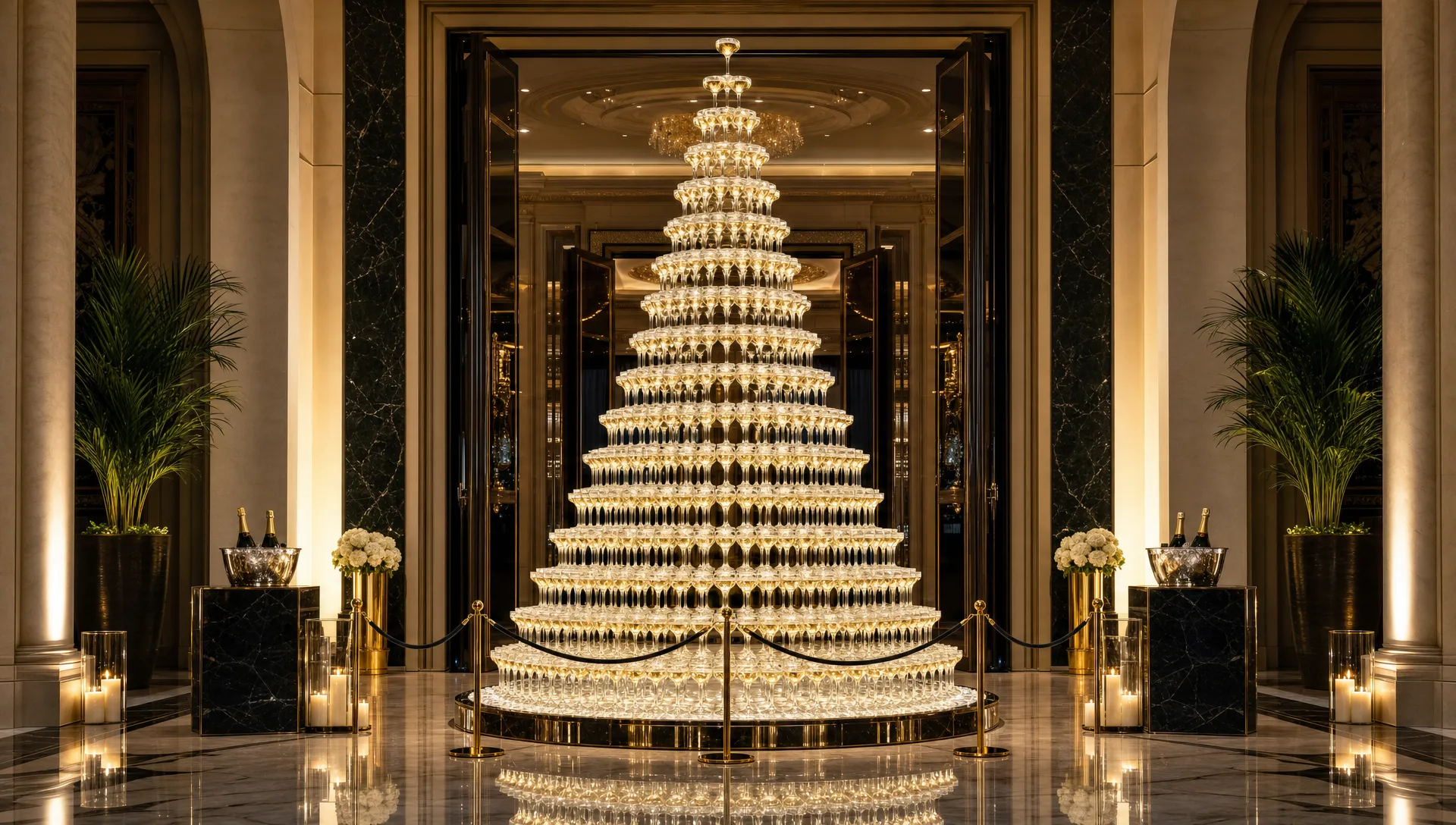
Not simply that the event was beautiful. Not only that the food was excellent. The goal is a sentence with energy, such as: they built a record-breaking champagne pyramid in the middle of the ballroom, or the product reveal felt like a live cinematic moment.
A strong event management partner will ask about this desired memory before discussing materials, dimensions, or technical options. They will want to understand the guest profile, venue prestige, brand values, cultural context, photo opportunities, and the level of surprise that feels appropriate.
For a luxury wedding, the moment may need to feel romantic, graceful, and intimate. For a corporate anniversary, it may need to communicate legacy and ambition. For a hotel opening, it may need to place the venue at the center of the story. For a sponsor-driven hospitality event, it may need to generate visual assets and social proof.
If a company starts by selling a standard package before understanding this purpose, that is a warning sign. Spectacle should never feel copied from another client.
Look for evidence of specialist execution
Beautiful mood boards are not enough. When an event concept involves scale, glass, liquid, height, timing, press, VIP movement, or live audience attention, experience matters.
Ask to see proof of comparable work. Not only polished highlight photos, but evidence that the company has executed complex moments under real event pressure. Look for prestigious venues, premium brand collaborations, international experience, and projects where timing and precision were essential.
A general luxury event agency may be excellent at overall production, hospitality, styling, and guest flow. But for a highly specialized spectacle, the safest model is often collaboration between a lead agency and a specialist. For example, a champagne glass pyramid requires a very different skill set than floral design, entertainment booking, or catering production. It depends on patience, symmetry, structure, controlled movement, and absolute attention to detail.
The more ambitious the concept, the more important it becomes to choose a team that has already worked at that level. In luxury, the margin for error is small. Guests may not notice every success, but they will notice hesitation, delays, instability, or visible stress.
Test the creative idea against the brand
The most expensive idea is not always the most luxurious. True luxury is selective. It feels considered, appropriate, and aligned with the environment.
When assessing a luxury event management company, look at how they protect brand fit. A good partner will not push spectacle for spectacle’s sake. They will adapt the concept to the tone of the event, whether that means dramatic and record-breaking, refined and ceremonial, or discreet but visually unforgettable.
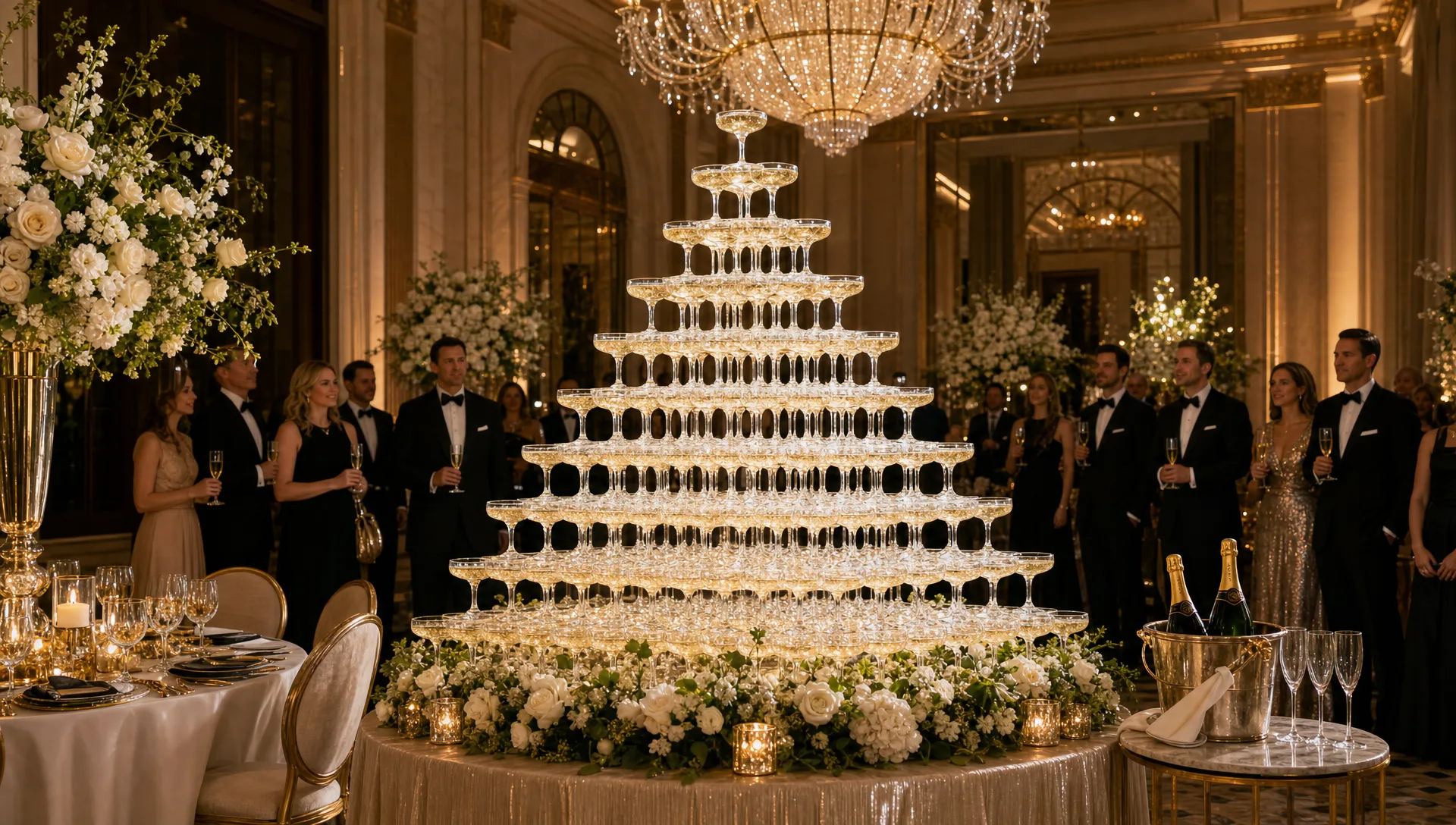
For premium brands, this alignment can include the choice of materials, lighting, music, timing, guest participation, service ritual, and photography angles. A champagne pyramid at a gala dinner may become the elegant centerpiece of the evening. At a product launch, it may serve as a symbol of achievement and scale. At a destination opening, it may become a visual statement that connects the venue, the audience, and the brand moment.
The right company should be able to explain why the spectacle belongs at your event, not just how it will look.
Scrutinize technical planning and risk control
Luxury guests should only see the magic. Behind the scenes, the company must be focused on feasibility, structure, access, timing, and safety.
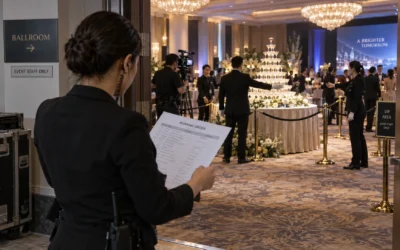
For large-scale spectacle, technical planning should begin early. The company should ask about venue dimensions, floor levelness, ceiling height, load-in routes, setup windows, climate conditions, lighting positions, guest circulation, local regulations, insurance requirements, and emergency access. If the concept includes delicate materials, liquid, pyrotechnic-style drama, live pouring, elevated structures, or large crowds, the planning must become even more precise.
This is where premium execution separates itself from visual ambition. A company may have a beautiful concept, but if it cannot explain how it will be installed, protected, rehearsed, staffed, and removed, the risk is too high.
Use this simple comparison when evaluating potential partners:
| Evaluation area | Strong signal | Warning sign |
|---|---|---|
| Strategic understanding | They ask what the event must achieve and who must be impressed | They immediately offer a standard package |
| Specialist experience | They show comparable high-pressure, high-visibility projects | Their portfolio looks beautiful but unrelated |
| Safety and feasibility | They discuss venue conditions, timing, structure, staffing, and contingency | They minimize practical risks too quickly |
| Brand alignment | They adapt the spectacle to the tone, audience, and story | The idea feels visually impressive but generic |
| Collaboration | They can work with agencies, venues, production teams, and sponsors | They operate in isolation from the wider event plan |
| Publicity value | They understand photography, social sharing, press timing, and sponsor visibility | They focus only on the live moment |
Evaluate collaboration style, not only creativity
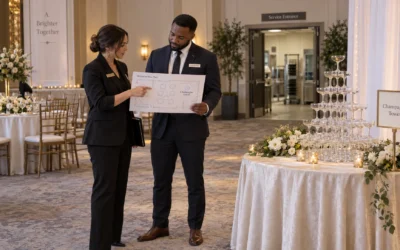
Spectacular events involve many stakeholders. A luxury event manager may be coordinating the client, venue, caterer, technical production, entertainment, security, brand team, PR agency, sponsors, and VIP protocol. The company responsible for the signature spectacle must fit smoothly into that ecosystem.
During early conversations, pay attention to communication. Do they respond clearly? Do they ask precise questions? Do they understand approval layers? Can they provide information that helps you brief internal stakeholders? Are they comfortable working under the direction of a lead agency, or do they need full control?
The best partners reduce complexity. They do not add uncertainty. They know when to advise, when to adapt, and when to protect the integrity of the concept. For luxury agencies, this is especially important because your own reputation is attached to every supplier you recommend.
A premium specialist should make the wider team feel more confident, not more exposed.
Consider PR, sponsor, and record value
Some spectacle is designed only for the room. Other spectacle is designed to travel beyond it.
If your event needs media attention, sponsor value, or social visibility, choose a company that understands the difference. The spectacle should be planned with camera positions, reveal timing, lighting, brand visibility, audience sightlines, and press moments in mind. It should generate assets that feel elegant rather than forced.
World-record concepts can be especially powerful when there is a strategic reason behind them. They can signal ambition, precision, scale, and achievement. However, official record attempts require careful planning, rules, documentation, and lead time. If this route is being considered, it is worth understanding the official Guinness World Records application process early.
A record attempt should not be chosen only because it sounds impressive. It should serve the event’s commercial or reputational goal. For launches, anniversaries, destination openings, and high-profile hospitality moments, this guide on when a corporate world record event makes strategic sense explains when the investment can create meaningful value.
Confirm scale and feasibility before selling the idea internally
One common mistake is presenting a spectacular concept to stakeholders before feasibility has been checked. Once senior decision-makers become attached to an idea, it becomes much harder to adjust expectations.
Before internal approval, confirm the practical basics. Can the venue support the concept? Is there enough time for setup and dismantling? Does the guest flow allow the moment to be seen properly? Will lighting and photography capture it well? Is the desired scale suitable for the audience size? Are there restrictions on glass, alcohol, staging, or access?
With champagne pyramids, for instance, bigger is not automatically better. The right size depends on the event’s objective, venue proportions, audience distance, and desired level of ceremony. A smaller tower can feel beautifully refined in an intimate luxury setting, while a world-record attempt can transform a major launch or gala into a press-worthy moment.
For a deeper planning perspective, this guide to champagne pyramid planning for high-impact luxury events explores how scale, timing, photography, and venue conditions influence the final experience.
Questions to ask before choosing a partner
A polished proposal is useful, but the conversation around it reveals much more. Before signing, ask questions that expose the company’s process, experience, and ability to protect the event.
- What similar luxury or high-visibility events have you delivered?
- How do you adapt the spectacle to our brand, audience, and venue?
- What are the main technical risks, and how do you control them?
- Who will be on-site, and what experience does the team have?
- How much setup time, rehearsal time, and access do you need?
- How can the moment support photography, social media, press, or sponsors?
- What information do you need from our venue or production team before confirming feasibility?
The quality of the answers matters more than the speed. A premium company should be confident, but not casual. They should welcome detail because detail is what protects the final result.
Red flags to avoid
Be cautious if a company promises an ambitious spectacle without asking for venue information. Be cautious if they cannot explain the operational plan clearly. Be cautious if their visuals look impressive, but their process feels vague.
Another red flag is a supplier who treats luxury only as aesthetics. Premium events require discretion, timing, guest awareness, and calm execution. A centerpiece may be physically large, but the team behind it should never feel chaotic.
Also be careful with companies that imitate a specialist concept without the same track record. In a simple event, imitation may be acceptable. In a high-profile luxury event, the difference between similar and proven can determine whether the moment feels flawless or risky.
The final decision: choose controlled ambition
The right luxury event management company for spectacle is not necessarily the loudest, largest, or most theatrical option. It is the partner that can prove three things at once: they understand the strategic value of the moment, they can execute it with precision, and they can protect the premium atmosphere from beginning to end.
Choose a team that elevates your vision without overwhelming it. Choose a company that respects the venue, the audience, the brand, and the pressure involved. Most importantly, choose a partner whose ambition is matched by craftsmanship.
That is where true spectacle lives, not in excess, but in the rare combination of beauty, control, and unforgettable impact.
Frequently asked questions
What should I look for in a luxury event management company for spectacle? Look for proven experience with high-visibility events, a clear creative process, strong technical planning, safety awareness, brand sensitivity, and the ability to collaborate with agencies, venues, and production teams.
Is a specialist better than a full-service event agency? It depends on the event. A full-service agency may manage the overall experience, while a specialist may be the best choice for a complex signature moment such as a champagne pyramid, record attempt, or large-scale centerpiece. Many premium events benefit from both working together.
How early should I involve a spectacle specialist? As early as possible, especially if the concept affects venue choice, floor plans, guest flow, press planning, or technical production. Early involvement helps avoid expensive revisions and protects feasibility.
How do I know if a spectacular concept is worth the investment? It is worth considering when the concept supports a clear goal, such as VIP impact, media attention, sponsor value, brand prestige, or a memorable emotional peak. If the moment has no strategic purpose, it may not justify the complexity.
Can a champagne pyramid work for smaller luxury events? Yes. A champagne pyramid does not always need to be a world-record scale installation. Smaller towers can create an elegant ceremonial moment for weddings, private celebrations, boutique launches, and intimate VIP dinners.
Create a spectacle with proven precision
If your event needs a centerpiece that feels luxurious, memorable, and impossible to ignore, Luuk Broos Events offers a highly specialized approach to champagne pyramid experiences. From smaller-scale towers to world-record champagne pyramids, the team focuses on precision, patience, visual impact, and close collaboration with clients and event partners.
For luxury agencies, brand teams, and event managers who want more than a standard production element, a record-breaking champagne pyramid can become the moment that defines the entire occasion.
Explore how Luuk Broos Events can help create a spectacular champagne pyramid experience for your next premium event.