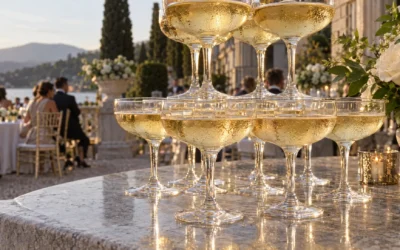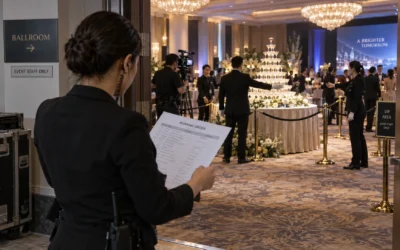


Outdoor events have a kind of magic that ballrooms cannot fully replicate. A skyline at golden hour, a garden reception, a poolside launch, a beach club celebration or a private terrace dinner can instantly make an occasion feel expansive and cinematic. But the same open-air setting that creates atmosphere also introduces production realities: wind, uneven ground, heat, guest movement, venue restrictions and changing light.
That is where the question of an acrylic champagne tower becomes relevant. Acrylic is not the right choice for every luxury event, and it should never be treated as a simple substitute for glass. Used well, however, it can be a refined and practical solution for outdoor moments where safety, durability and visual control matter as much as elegance.
For event agencies, wedding planners and brand teams, the decision is less about whether acrylic can look premium. It can. The real question is whether acrylic helps protect the experience you want to create, while still delivering the ceremony, spectacle and guest reaction that a champagne tower is known for.
What an acrylic champagne tower usually means
In event production, an acrylic champagne tower can refer to several different choices. Sometimes it means the coupe glasses are made from high-quality acrylic. In other cases, it refers to acrylic support elements, risers, trays or structural display components used around the tower. For outdoor events, planners are usually considering acrylic because it offers greater resistance to shattering than traditional glass.
That distinction matters. A premium acrylic setup should not look disposable, cloudy or casual. It should be carefully selected for clarity, proportion, weight, rim shape and overall finish. When the material is chosen correctly and paired with thoughtful lighting, staging and choreography, acrylic can support a luxury atmosphere instead of weakening it.
It is also important to understand the compromise. Glass and crystal still offer a distinctive sparkle, sound and sense of tradition. Acrylic offers resilience, control and flexibility. The right choice depends on the venue, event format, guest profile and level of exposure to outdoor conditions.
Why outdoor events require a different decision framework
A champagne tower is never just a decorative object. It is a live event moment. Guests gather, cameras come out, hosts prepare for the first pour, and the tower becomes a focal point for the room or outdoor space. Outdoors, that moment must be planned around variables that are easier to control indoors.
Wind is one of the biggest considerations. Even a beautiful light breeze can affect napkins, florals, table styling and liquid movement. Stronger gusts can create genuine safety issues. The National Weather Service advises treating wind seriously because it can turn unsecured objects into hazards. For champagne towers, that means stability, location, anchoring, timing and contingency planning need to be addressed early.
The ground surface matters as well. A marble hotel terrace is different from a lawn, a temporary deck, a beach platform or a poolside area. Slight gradients, soft flooring, vibration from guests walking nearby and access routes for service teams can all influence whether a tower performs flawlessly.
This is why outdoor champagne tower planning should begin with the environment, not the glassware. If your event involves significant scale, guest density or a high-profile ceremonial pour, it is worth reviewing the principles behind planning a large champagne tower without compromising safety before deciding which material best suits the occasion.
When an acrylic champagne tower is the right choice
An acrylic champagne tower is most appropriate when the event needs the visual impact of a tower, but the environment makes traditional glass more complicated. This does not mean acrylic is less premium. It means the material is serving the needs of the production.
Poolside and water-adjacent events
Pool decks, beach clubs, spa terraces and marina-side venues often have strict glass policies. This is one of the clearest situations where acrylic makes sense. Broken glass near water is a serious operational issue, and many venues will not allow it at all.
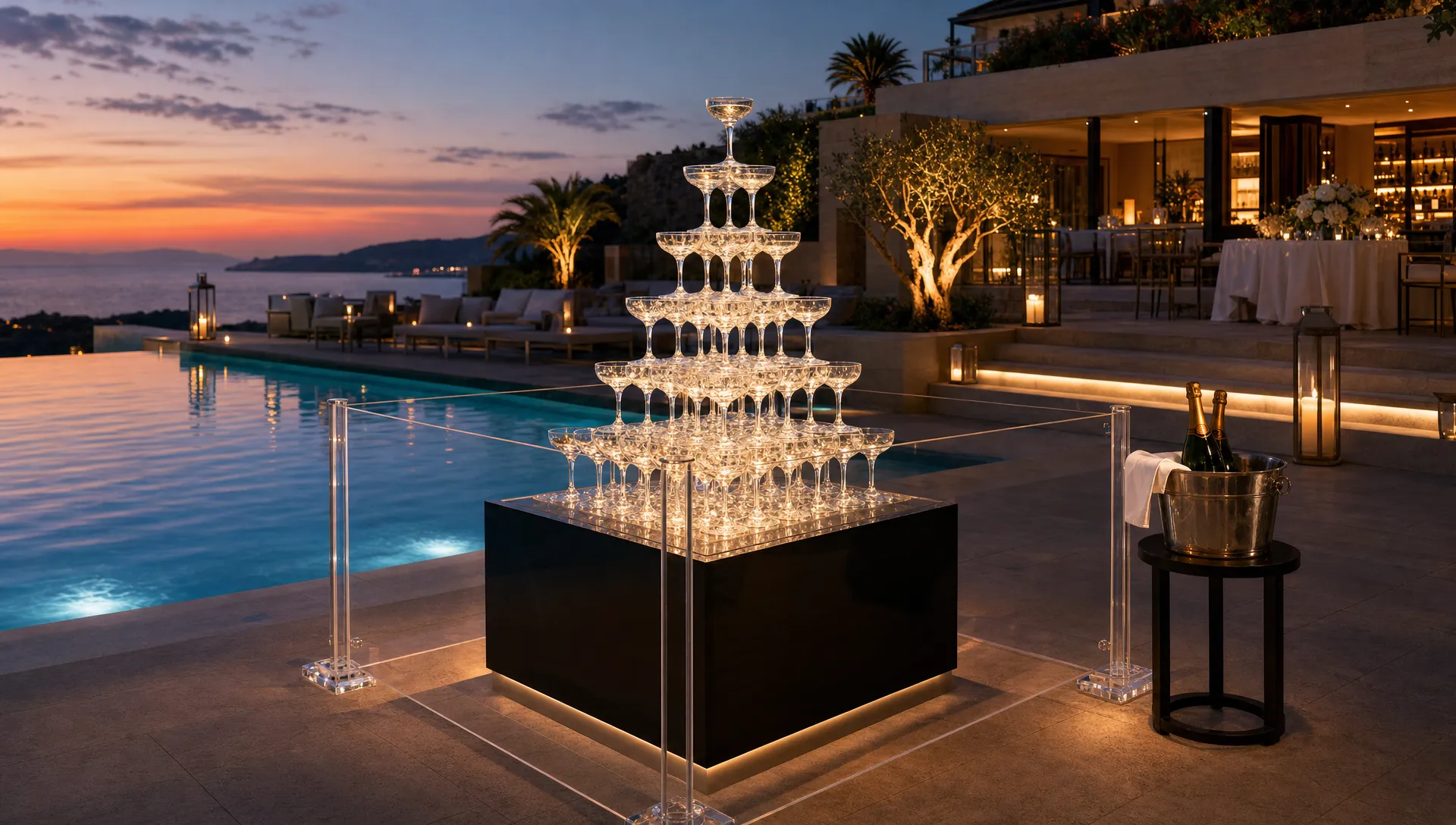
For luxury hospitality events, resort openings and destination weddings, acrylic can allow the champagne tower moment to happen in a location that would otherwise be restricted. The key is to elevate the surrounding design: a clean plinth, intentional lighting, elegant florals, branded trays or a sculptural backdrop can make the tower feel designed rather than compromised.
Outdoor brand activations with high guest movement
Brand activations, F1 hospitality spaces, sponsor events and launch parties often involve guests moving through the space rather than remaining seated. There may be press, influencers, VIPs, staff, photographers and hospitality teams all operating around the same focal points.
In these situations, acrylic can reduce the risk associated with accidental contact. It is still essential to create a controlled perimeter and clear service choreography, but the shatter-resistant nature of acrylic can make the setup more suitable for dynamic environments.
Venues with strict insurance or safety requirements
Some outdoor venues, especially heritage properties, rooftops, pool venues and temporary event structures, may impose limitations on glassware. Acrylic can help satisfy operational requirements while preserving the idea of a ceremonial champagne moment.
This is particularly valuable when internal stakeholders are concerned about risk. A well-presented acrylic option can make the concept easier to approve because it addresses practical concerns without removing the sense of spectacle.
Events where the tower is part of a larger visual installation
If the champagne tower is one element within a broader scenic design, acrylic can integrate beautifully. For example, a transparent tower on a mirrored base, surrounded by candlelight, florals or brand-colored lighting, can create a striking visual effect outdoors.
Acrylic also works well when the overall design language is modern, architectural or minimal. Think hotel openings, luxury retail activations, fashion events, rooftop receptions and contemporary gala dinners. In these settings, the clarity and clean lines of acrylic can feel intentional.
| Outdoor event condition | Why acrylic may be suitable | What still needs expert planning |
|---|---|---|
| Poolside or beach club venue | Reduces risk associated with broken glass near water | Stable base, venue approval and guest perimeter |
| Rooftop or terrace event | Can support safety requirements in exposed settings | Wind assessment, ballast and contingency plan |
| High-traffic brand activation | More resilient in dynamic guest environments | Flow control, staff positioning and pour timing |
| Resort or destination wedding | Practical for open-air luxury settings | Styling, lighting and premium material selection |
| Temporary outdoor structure | May satisfy venue or insurance restrictions | Flooring, leveling and access route planning |
When acrylic is not the best choice
Acrylic is not automatically the safest or most luxurious answer. There are moments when traditional glass may be more appropriate, especially when the environment is controlled and the event relies heavily on classic elegance.
If the champagne tower is the central ceremonial feature of a black-tie gala inside a grand ballroom, glass may offer a richer sense of tradition. The way light catches glass, the delicacy of the coupes and the tactile feeling of the pour can be part of the experience.
Acrylic may also be less suitable when the tower will be filmed in very tight close-up shots and the surrounding design is highly formal. Premium acrylic can look excellent, but lower-grade or scratched acrylic will be unforgiving under strong lighting and high-resolution photography.
Finally, very large outdoor towers require careful consideration. Acrylic glasses may be lighter than glass, which can be helpful for handling but challenging in wind. The larger the tower, the more important the complete engineering of the moment becomes: base, level surface, glass profile, pour direction, guest distance and weather backup.
How to make acrylic feel premium instead of practical
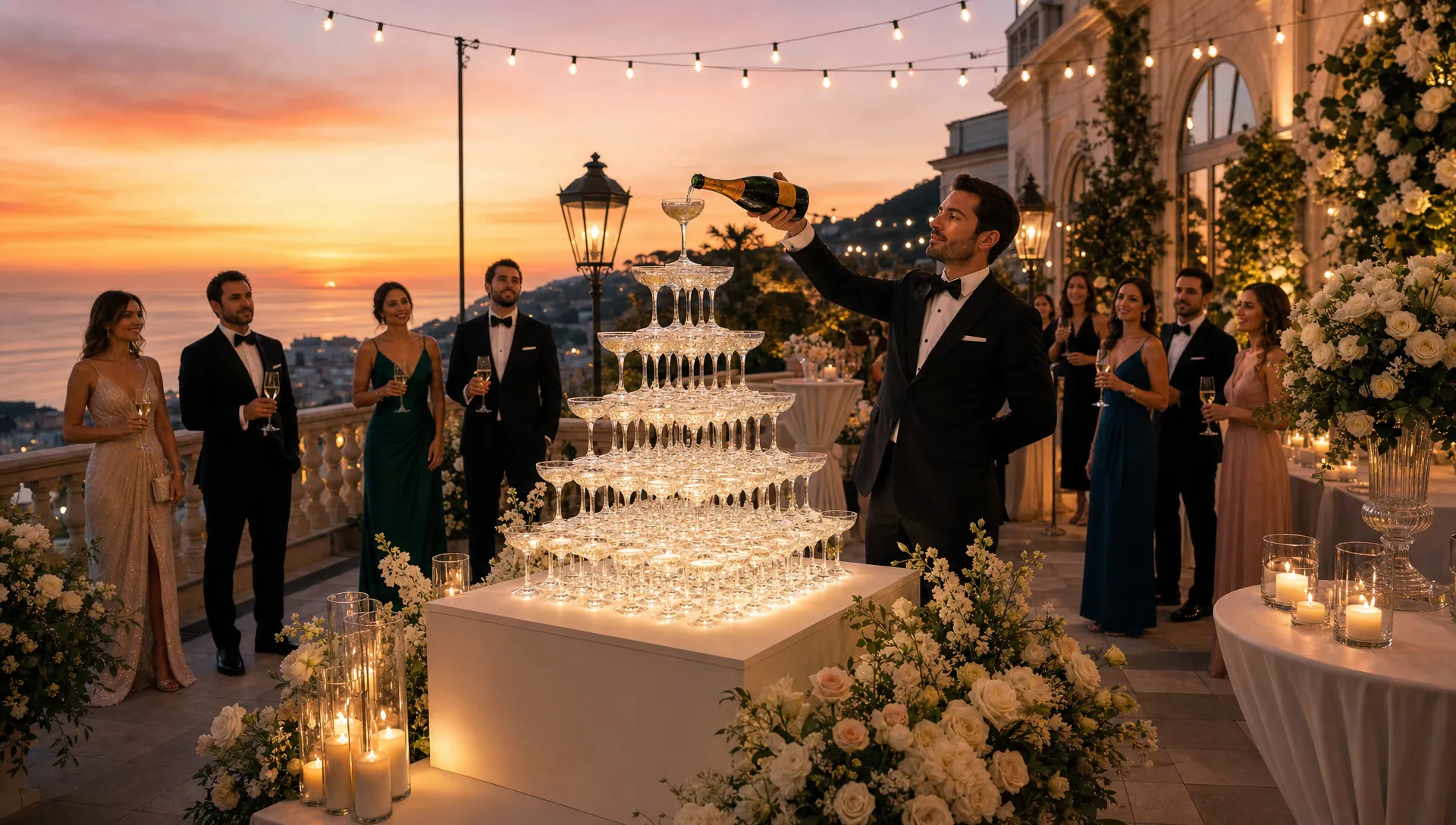
The success of an acrylic champagne tower depends on whether guests experience it as a design choice. If it looks like a last-minute safety compromise, it will reduce the perceived luxury of the event. If it is styled with precision, it can become a memorable centerpiece.
The first requirement is optical quality. Acrylic should be clear, polished and consistent. Cloudy, scratched or visibly lightweight pieces will not meet the expectations of a luxury audience. The shape also matters. Coupe-style silhouettes often feel more ceremonial than basic disposable flute shapes, especially when the tower is designed for a first pour moment.
Lighting is equally important. Acrylic responds differently to light than glass. Soft directional lighting, warm reflections, candlelight, mirrored surfaces and carefully positioned uplighting can give the tower depth and dimension. Harsh overhead light may reveal scuffs or flatten the visual effect.
The surrounding materials should also elevate the tower. A refined base, premium linens, sculptural florals, polished service trays and discreet branding can transform the setup from functional to cinematic. For more inspiration on perspective, staging and visual precision, the principles behind building a champagne tower that feels flawless from every angle apply especially well outdoors.
A few details make a significant difference:
- Choose premium acrylic with strong clarity and a refined silhouette.
- Avoid scratched, cloudy or overly flexible pieces.
- Use a stable plinth that visually belongs to the event design.
- Control the guest perimeter without making the area feel restricted.
- Plan the pour as a photographed and choreographed moment, not a casual service action.
There is also a useful distinction between acrylic and lower-end plastic options. If your team is comparing materials, it may help to understand how a champagne tower with plastic glasses can still look luxe when the right decisions are made around shape, styling and context.
The production questions to ask before choosing acrylic
Before committing to an acrylic champagne tower, planners should align the creative ambition with operational realities. This is where an experienced specialist can protect both the look of the event and the comfort of the client.
Start with the venue rules. Does the venue allow glass outdoors? Are there restrictions near pools, rooftops, lawns or historic surfaces? Are there wind exposure concerns at the exact location and time of day? A terrace that feels calm during a morning site visit may behave differently during an evening reception.
Next, assess the surface. The tower needs a level, stable foundation. Temporary flooring, grass, decking and stone surfaces all need different preparation. Small imperfections may not be visible to guests, but they can matter when dozens or hundreds of glasses are stacked into a precise form.
Then consider the ceremony itself. Who will pour? How many people will be involved? Where will photographers stand? How close will guests be allowed to gather? Will the tower be revealed, built live, used as an arrival feature or reserved for a single hero moment?
| Planning question | Why it matters outdoors |
|---|---|
| Is glass permitted at the location? | Acrylic may be required by venue policy or insurance conditions. |
| How exposed is the site to wind? | Lightweight materials and liquid movement need a clear contingency plan. |
| Is the surface perfectly level? | Even slight instability can affect the tower’s precision. |
| Where will guests gather? | Guest flow influences safety, sightlines and filming angles. |
| What is the visual role of the tower? | The design should match the event goal, from ceremony to brand spectacle. |
| Who manages setup and the pour? | Specialist execution reduces risk and protects the luxury experience. |
These questions are not meant to make the concept feel difficult. They are what allow a champagne tower to feel effortless on the day. Luxury often looks simple from the guest perspective because the technical decisions have already been made with care.
Acrylic for weddings, corporate events and high-profile hospitality
For luxury weddings, an acrylic champagne tower can be a strong choice when the celebration takes place outdoors and the design language is modern, coastal or garden-led. It can create the same gathering point as a glass tower while respecting venue limitations, especially at poolside estates, beach venues and destination resorts.
For corporate events, the value is often strategic. The tower can become a branded photo moment, a launch cue, a hospitality highlight or a sponsor asset. If acrylic makes the concept possible in a challenging outdoor venue, it may protect the event’s media value rather than reduce it.
For high-profile hospitality, including sports weekends, hotel openings and VIP receptions, acrylic can be especially useful when the event space is temporary or exposed. It allows planners to create a polished champagne ritual in places where traditional glass might be too risky or impractical.
The strongest results come when material choice, event purpose and brand image are aligned. Acrylic should not be chosen only because it is convenient. It should be chosen because it allows the event team to deliver a controlled, beautiful and memorable moment in an environment where control is otherwise limited.
Frequently asked questions
Is an acrylic champagne tower suitable for a luxury event? Yes, if the acrylic is high quality and the tower is styled with intention. The material should look clear, polished and proportional, and the surrounding design should reinforce the premium atmosphere.
Is acrylic safer than glass for outdoor champagne towers? Acrylic is more shatter-resistant than glass, which can make it more suitable for poolside, terrace, beach club or high-traffic outdoor settings. However, safety still depends on the base, surface, wind conditions, guest flow and professional setup.
Does acrylic look as good as glass in photos? It can look excellent, especially in outdoor designs with strong styling, soft lighting and a refined base. Glass typically offers more sparkle and tradition, while acrylic offers a cleaner and more practical appearance for exposed environments.
When should I avoid acrylic? Avoid acrylic if the event specifically requires a classic crystal or glass aesthetic, if the tower will be filmed in extreme close-up under harsh lighting, or if the available acrylic pieces do not meet premium visual standards.
Can an acrylic champagne tower be used for a large event? It can, but scale increases the need for expert planning. Large towers require careful attention to stability, surface quality, wind exposure, guest distance and choreography, regardless of material.
Create an outdoor champagne moment with confidence
An acrylic champagne tower is right for an outdoor event when it helps preserve the spectacle while solving real production challenges. It is especially valuable for poolside venues, terraces, destination celebrations, outdoor brand activations and high-traffic hospitality environments where glass may be restricted or impractical.
The difference between ordinary and unforgettable is not only the material. It is the precision of the build, the elegance of the styling, the confidence of the pour and the way the moment is integrated into the wider event story.
If you are planning a luxury outdoor event and want a champagne tower that feels spectacular, controlled and worthy of your audience, Luuk Broos Events can help you explore the right format, scale and execution for your occasion.