

A luxury corporate event should do more than impress guests for one evening. At the highest level, it should strengthen how people perceive the host: more ambitious, more refined, more trusted and more memorable than before they arrived.
That is the difference between entertainment and prestige. Entertainment fills a program. Prestige adds meaning, status and story. For luxury event agencies, brand teams and corporate event managers, the strongest concepts are not chosen because they are simply beautiful. They are chosen because they make the organization feel exceptional.
Below are luxury corporate event ideas designed for lasting prestige, with a focus on spectacle, ceremony, guest psychology and strategic brand impact.
Start with the prestige you want to create
Before choosing the entertainment, venue or centerpiece, define what the event needs to prove.
A luxury car brand may want to communicate engineering precision. A new hotel opening may need to signal international relevance. A family office anniversary may want understated legacy. A global sponsor activation may need visibility, exclusivity and media appeal.
Prestige is strongest when every detail supports one clear message. If the message is ambition, the event should feel bold and cinematic. If the message is heritage, the event should feel refined, timeless and deeply considered. If the message is innovation, the experience should reveal something guests have never seen before.
This is why the best luxury corporate event ideas are not isolated features. They are signature moments within a larger narrative.
Create a signature moment guests can retell
Prestigious events are remembered through moments, not schedules. Guests may forget the exact menu or sequence of speeches, but they remember the instant the room went silent, the reveal began, the lights shifted and everyone understood they were witnessing something special.
A signature moment should be visually clear, emotionally charged and easy to describe afterward. It should give guests a story they can repeat to colleagues, partners and friends.
Examples include:
- A champagne pyramid pour that becomes the ceremonial climax of the evening
- A world record attempt tied to a company milestone or launch
- A cinematic product reveal with a live countdown and VIP participation
- A private performance created specifically for the brand
- A symbolic toast led by founders, partners or international guests
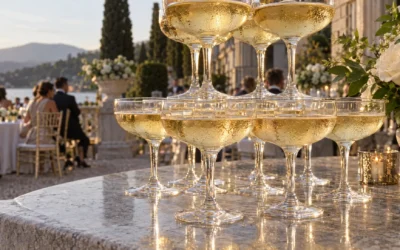
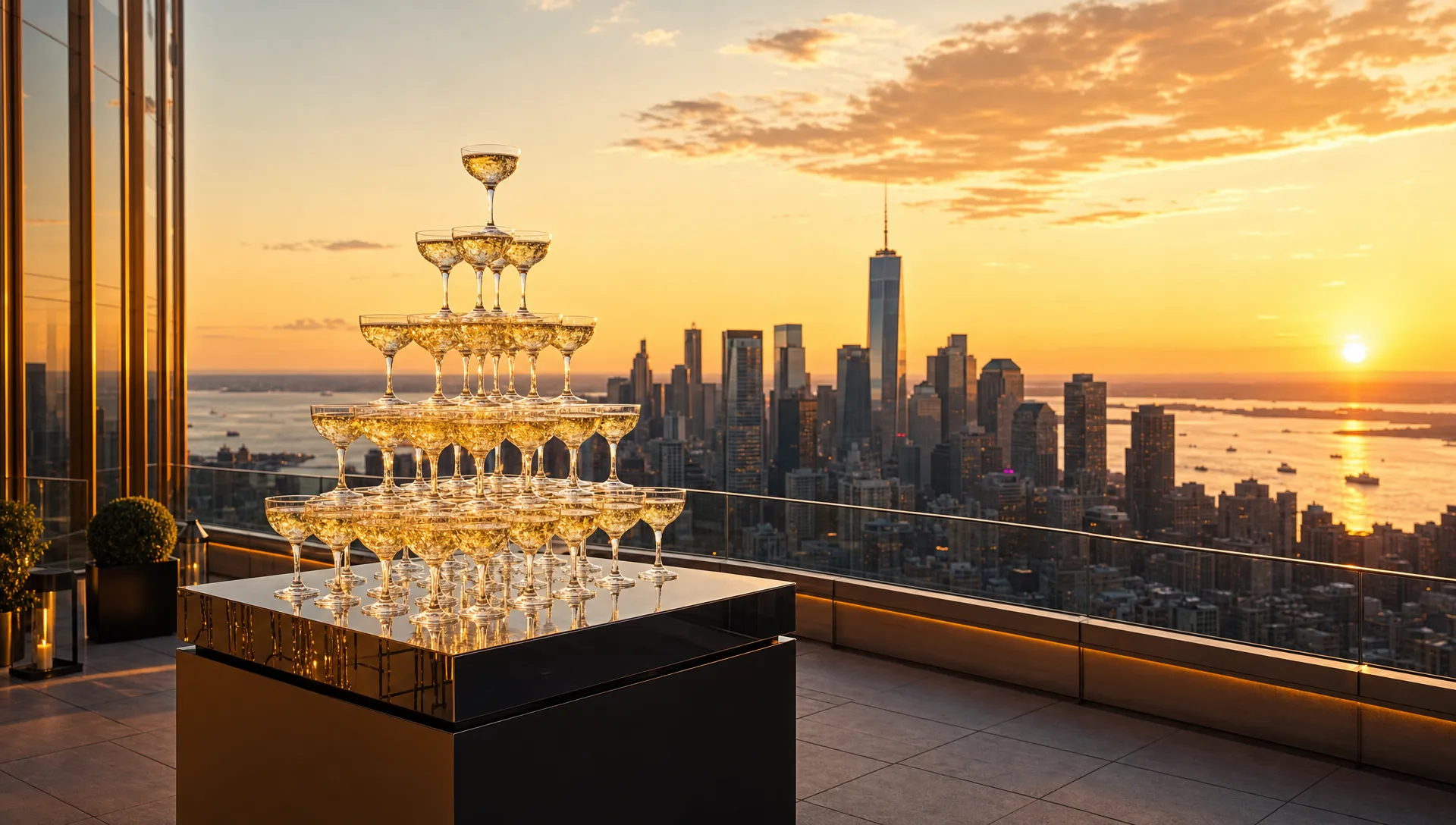
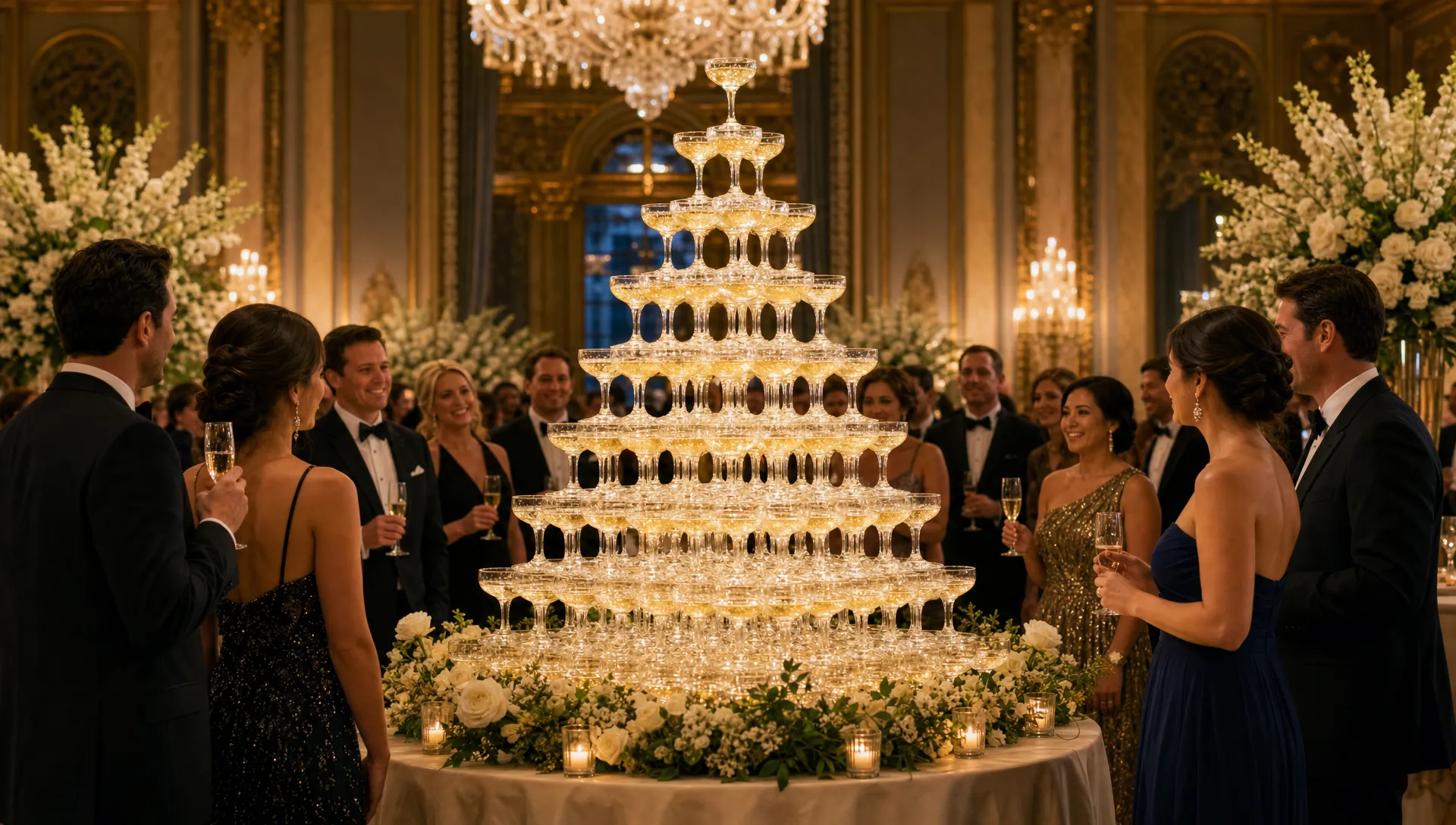
The goal is not simply spectacle. It is spectacle with purpose. A champagne pyramid, for example, works because it combines luxury, precision, height, anticipation and celebration in one visual act. When designed well, it becomes both a centerpiece and a brand statement. For a deeper look at the impact of this format, Luuk Broos Events explains why a champagne tower for corporate event creates buzz through visual focus, shareability and ceremony.
Build the event around a real milestone
Prestige becomes more credible when the event has a reason to exist. Guests can feel the difference between a party created to fill a calendar and a celebration anchored in a meaningful achievement.
Strong milestones include a company anniversary, international expansion, major partnership, new hotel opening, luxury property launch, flagship store debut, championship hospitality weekend, IPO celebration or leadership transition.
The milestone should influence the entire experience. If a brand is celebrating 100 years, the event might balance heritage and modernity. If a company is opening a landmark hotel, the architecture, views and service journey should become part of the story. If the event marks a global partnership, the guest list, speeches and central moment should make that partnership feel visible and valuable.
A milestone gives the event gravity. It tells guests, press and stakeholders that this is not just another evening. It is a marker in the organization’s history.
Use a world record concept when ambition matters
A world record concept can be powerful for brands that want to communicate scale, confidence and distinction. It turns an event from something guests attend into something they witness.
This type of idea is especially relevant for launches, anniversaries, destination openings, major sponsor activations and high-profile hospitality events. It introduces suspense, a measurable goal and a public reason for attention. It can also create a stronger PR angle than a conventional gala, because the story is not only who attended, but what was achieved.
However, a record attempt should never feel like a gimmick. In a luxury setting, it needs to be beautifully staged, operationally controlled and connected to the brand’s purpose. The attempt must feel inevitable, not random.
A corporate world record concept works best when it supports one of these messages:
| Brand objective | Why a record concept can work | Example event context |
|---|---|---|
| Show ambition | The brand demonstrates it is willing to do something exceptional | Global launch, expansion announcement |
| Create media value | The event has a clear headline beyond attendance | PR activation, public celebration |
| Celebrate scale | The record reflects growth, reach or market leadership | Corporate anniversary, hotel opening |
| Unite guests | Everyone shares the suspense of one collective moment | Gala dinner, VIP hospitality event |
| Build legacy | The achievement becomes part of the brand story | Founder celebration, milestone year |
For brands considering this route, it is worth evaluating whether a record attempt supports the strategic brief, not just the visual brief. Luuk Broos Events explores this question in detail in its article on when a corporate world record event makes strategic sense.
Commission a luxury ritual, not just entertainment
Entertainment is consumed. A ritual is remembered.
Luxury corporate events gain prestige when they include a repeated or symbolic act that feels unique to the brand. This can be a toast, reveal, lighting moment, artistic performance, ceremonial pour, unveiling or founder-led gesture. The key is that it feels intentional and belongs to the event.
A ritual creates structure. It gives the evening a peak. It also helps guests understand where to place their attention. In premium environments, this clarity matters. High-net-worth guests, executives and partners are often attending many events. A strong ritual tells them, “This is the moment you came for.”
The most effective rituals are simple to understand and difficult to replicate. They often involve precision, timing and suspense. A champagne pyramid pour is a strong example because it is elegant, photogenic and live. It is also unforgiving, which is exactly why it creates tension and respect when performed by specialists.
Design VIP hospitality as a sequence of privileges
Prestige is not only created on stage. It is felt through access.
VIP guests notice whether the event journey feels effortless. They notice the greeting, the pace of check-in, the quality of conversation, the discretion of staff, the comfort of the room, the timing of drinks and the confidence of the production team.
The most prestigious corporate events design hospitality as a sequence of privileges. Guests should feel that every step has been considered before they arrive.
This can include private entrances, hosted arrivals, curated seating, reserved viewing positions, personal introductions, limited-access lounges, private tastings or a moment with the founder, artist, athlete or brand ambassador.
The details should never feel forced. True luxury is not overcomplication. It is precision that appears effortless.
Let the venue become part of the status
A prestigious venue does more than provide space. It gives the event context.
A new hotel opening, F1 hospitality suite, museum hall, palace garden, superyacht, private estate, rooftop overlooking a city skyline or landmark ballroom can immediately elevate the perceived importance of a corporate event. But prestige is not only about selecting an expensive location. It is about choosing a venue that strengthens the story.
For example, a heritage brand may feel more credible in a historic venue than in a trend-led space. A technology launch may benefit from architecture that feels clean, modern and futuristic. A luxury hospitality brand should use the property itself as part of the guest experience, allowing service, design and atmosphere to become proof of quality.
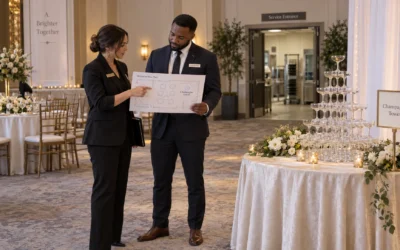
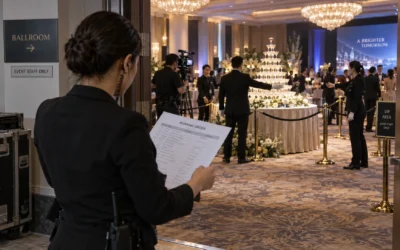
Practical considerations matter just as much as atmosphere. Sightlines, floor loading, access routes, glassware logistics, guest flow, safety, weather planning and production timing all influence whether the final result feels flawless. In luxury events, operational confidence is part of the aesthetic.
Curate moments designed for earned visibility
Luxury corporate events often need to impress the people in the room and reach people beyond it. This is where prestige and publicity meet.
The most shareable moments are visually simple and emotionally clear. A guest should be able to capture the scene in one photograph and communicate the atmosphere immediately. A champagne pyramid, dramatic reveal, record attempt or synchronized toast can all create that kind of clarity.
However, earned visibility should be planned with restraint. Luxury audiences are sensitive to anything that feels overly promotional. The best brand visibility is integrated into the environment, the story and the ceremony rather than forced into every surface.
Consider the difference:
| Generic visibility | Prestige-building visibility |
|---|---|
| Large logos placed everywhere | Subtle brand integration in key focal points |
| A photo wall with no story | A cinematic moment guests naturally want to capture |
| Social content as an afterthought | A planned visual sequence with clear angles and lighting |
| Entertainment unrelated to the brand | Spectacle that supports the event’s purpose |
| Press invited without a headline | A newsworthy concept with a reason to cover it |
When social visibility is designed elegantly, guests become ambassadors without feeling instructed. They share because the moment feels worthy of being shared.
Make participation feel exclusive
Participation can create strong emotional connection, but only if it is handled with taste.
At a luxury corporate event, not every guest needs to be on stage. In fact, too much participation can reduce the sense of refinement. The better approach is to create selective involvement. Invite a small group of executives, partners, clients, founders or VIPs to play a meaningful role in the central moment.
This might mean initiating a toast, placing the final glass in a pyramid, joining a countdown, unveiling a symbolic object or signing a limited-edition piece connected to the event. The act should be brief, elegant and easy to understand.
Selective participation gives important guests a sense of ownership while preserving the overall atmosphere. It also creates a powerful photo opportunity without making the event feel like a performance exercise.
Add craftsmanship guests can observe
Craftsmanship creates quiet prestige. When guests see skill, patience and precision in real time, they instinctively value the experience more.
This could be a master watchmaker demonstration, couture atelier moment, fine art installation, bespoke culinary performance, floral construction or live champagne pyramid build. The point is not to fill time. The point is to reveal excellence.
For luxury audiences, process can be as compelling as result. Watching specialists build something delicate and complex creates anticipation. It signals that the host values mastery, not shortcuts.
This is especially relevant for brands that want to communicate quality, engineering, hospitality or heritage. A live build or ceremonial construction can become a metaphor for the brand itself: precise, patient, refined and ambitious.
Use personalization without making it feel decorative
Personalization is often treated as a name on a menu card. At a prestige level, it should go deeper.
The most meaningful personalization reflects the guest’s status, relationship with the host or role in the event story. This could include a tailored arrival journey for investors, a private host for top clients, a curated pairing based on the evening’s theme, a personalized keepsake connected to the milestone or a handwritten note from leadership.
Personalization should be selective and sincere. Too much customization can feel busy. The goal is for guests to feel recognized, not processed.
A useful test is simple: would the guest keep it, mention it or remember it? If not, it may be decoration rather than prestige.
Choose spectacle that can be executed flawlessly
The greater the spectacle, the more important the specialist.
Luxury event managers often face pressure to create something guests have not seen before, while also ensuring there is no visible risk, confusion or operational weakness. This is why supplier choice matters. The concept may be bold, but the delivery must feel calm.
Before committing to a high-impact idea, evaluate:
- Whether the supplier has proven experience with similar premium events
- Whether the concept can be adapted to the venue and guest profile
- Whether safety, timing and logistics are clear from the beginning
- Whether the visual moment supports the brand story
- Whether the investment creates enough guest, PR or sponsor value
This is where specialist formats such as champagne pyramids stand apart from generic entertainment. The visual idea is instantly understandable, but the execution requires precision. Done well, it feels effortless. Done poorly, it can undermine the entire event.
For event agencies evaluating premium spectacle across Europe, it may also be useful to understand what luxury event agencies in Europe look for in spectacle, from visual clarity to technical reliability.
Connect the event to long-term brand value
A luxury corporate event creates lasting prestige when its value continues after the final guest leaves.
That value might appear in press coverage, sponsor content, social visibility, client follow-ups, recruitment appeal, internal pride, investor confidence or stronger brand perception. The event becomes a reference point. People say, “That was the event where they did something extraordinary.”
To create this effect, plan the afterlife of the event before the event happens. Decide which moments need to be photographed, filmed, quoted, shared and followed up. Prepare the narrative for stakeholders. Give sales, partnership and PR teams material they can use with confidence.
The event itself is the experience. The story afterward is where prestige compounds.
Which luxury corporate event idea fits your objective?
Different goals require different forms of prestige. A strong concept should match the organization’s ambition, audience and tolerance for visibility.
| Event objective | Best-fit idea | Why it works |
|---|---|---|
| Impress VIP clients | Champagne pyramid ceremony | Creates a refined focal point and shared toast |
| Launch a landmark project | Cinematic reveal or world record concept | Gives the launch scale and news value |
| Celebrate an anniversary | Heritage-led gala with a symbolic ritual | Connects past achievement to future ambition |
| Attract press attention | Record-breaking spectacle | Offers a clear, measurable story angle |
| Strengthen partner relationships | Exclusive hospitality sequence | Makes selected guests feel valued and recognized |
| Elevate a hotel or venue opening | Venue-integrated centerpiece | Turns the location into part of the event narrative |
| Reward executives or teams | Private luxury experience with craftsmanship | Signals appreciation through quality and access |
The right idea should feel inevitable for the brand. If it could belong to any company, it is probably not distinctive enough.
Frequently asked questions
What makes a luxury corporate event feel prestigious? A luxury corporate event feels prestigious when it combines a clear purpose, refined hospitality, strong visual identity, flawless execution and a signature moment guests can remember and retell. Prestige comes from meaning and precision, not decoration alone.
Are champagne pyramids suitable for corporate events? Yes, champagne pyramids can be highly suitable for corporate events when the occasion calls for ceremony, luxury and visual impact. They work especially well for launches, anniversaries, gala dinners, VIP hospitality events and premium brand activations.
When does a world record event make sense for a company? A world record event makes sense when ambition, publicity or legacy are important to the brief. It should be connected to a milestone, brand message or strategic objective rather than used as a standalone stunt.
How can event managers justify investment in a high-impact concept? The investment is easier to justify when the concept supports guest experience, earned media, sponsor value, stakeholder perception and long-term content use. A strong centerpiece can create value beyond the event itself.
How early should a luxury spectacle be planned? High-impact luxury spectacle should be discussed as early as possible, especially when venue access, safety, logistics, guest flow, brand integration and press planning are involved. Early planning gives the concept more room to feel effortless.
Create a corporate event people associate with status
Prestige is not created by adding more to an event. It is created by choosing the right moment, executing it with confidence and connecting it to a story that matters.
For luxury corporate events, few concepts combine ceremony, spectacle and craftsmanship as naturally as a champagne pyramid. In the right setting, it becomes more than a centerpiece. It becomes the image guests remember, the moment media can capture and the symbol that gives the event lasting status.
If your next corporate event needs to feel exceptional, Luuk Broos Events can help shape a custom champagne pyramid experience or record-breaking concept around your goals, venue and audience. Explore how Luuk Broos Events brings precision, spectacle and world-record expertise to premium celebrations and corporate occasions.