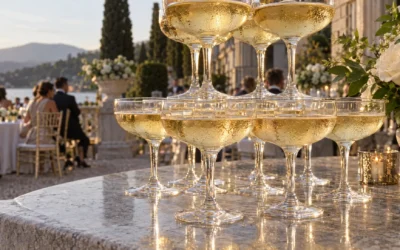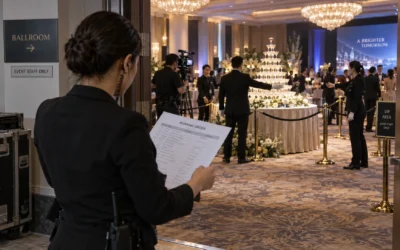


Yes, a champagne tower with plastic glasses can still look luxe, but only when the choice feels intentional. In a premium setting, plastic cannot be treated as a shortcut. It must be part of a refined event design, chosen for safety, venue restrictions, sustainability goals or production practicality, then elevated through shape, lighting, symmetry, styling and choreography.
For luxury event agencies, hotel opening teams, wedding planners and brand experience managers, the real question is not simply whether plastic glasses can look elegant. The better question is: can they support the emotional and visual impact you want guests to remember?
The answer is yes, in the right context. But there are also moments when real glass remains the stronger choice.
Why plastic glassware has a luxury perception problem
Plastic has an immediate association with casual events: pool parties, festivals, fast-service bars and disposable catering. That association matters, especially when the audience includes VIPs, sponsors, luxury clients or press.
Real glass has qualities that guests instinctively recognize. It has weight in the hand, a refined rim, a clear ring when touched and a natural brilliance under light. These details contribute to a sense of ceremony.
Plastic can struggle with three luxury signals:
- Tactile quality: lightweight glasses can feel less premium when guests hold them.
- Optical clarity: low-quality plastic can look cloudy, blue-toned or visibly molded.
- Sound and ritual: the absence of true glass affects the sensory experience of a toast.
However, a champagne tower is different from ordinary table service. The tower is primarily a visual centerpiece and performance moment. Guests often experience it from a distance first, through photography, video, lighting and the drama of the pour. That gives event designers more room to make plastic work beautifully, provided the execution is exact.
When a champagne tower with plastic glasses makes sense
Plastic glasses can be the right choice when the event environment makes glass impractical or unsafe. Luxury does not always mean fragile. In many high-profile event settings, the most premium decision is the one that protects guest safety, venue operations and the flow of the experience.
Common scenarios include outdoor receptions, beach events, poolside hospitality, rooftops, sporting venues, large public brand activations and locations where broken glass is strictly prohibited. In these settings, a champagne tower with plastic glasses can preserve the visual spectacle while respecting the practical realities of the venue.
For example, a luxury activation during a motorsport weekend may involve polished branding, celebrity guests, live media and a high-energy crowd. If the venue does not allow glass near certain zones, insisting on traditional glassware may create unnecessary risk. A high-quality plastic solution, designed with precision, may be the smarter route.
Sustainability can also influence the decision. If plastic is used, it should be part of a responsible material plan, not an afterthought. Reusable, recyclable or carefully managed alternatives should be discussed with the venue and production team in advance. For Dutch organizations aligning event production with broader environmental goals, resources such as independent sustainability and energy guidance can help businesses think beyond one event and plan practical next steps around responsible operations.
What makes plastic glasses look premium in a champagne tower
A luxe result depends less on the material alone and more on the complete visual language around it. Plastic must be chosen, staged and handled with the same discipline as glass.
The silhouette must be elegant
The wrong plastic glass will instantly lower the tone. Thin, flexible party cups or visibly disposable flutes are rarely suitable for a luxury champagne tower. They may bend, reflect poorly under light and create an uneven structure.
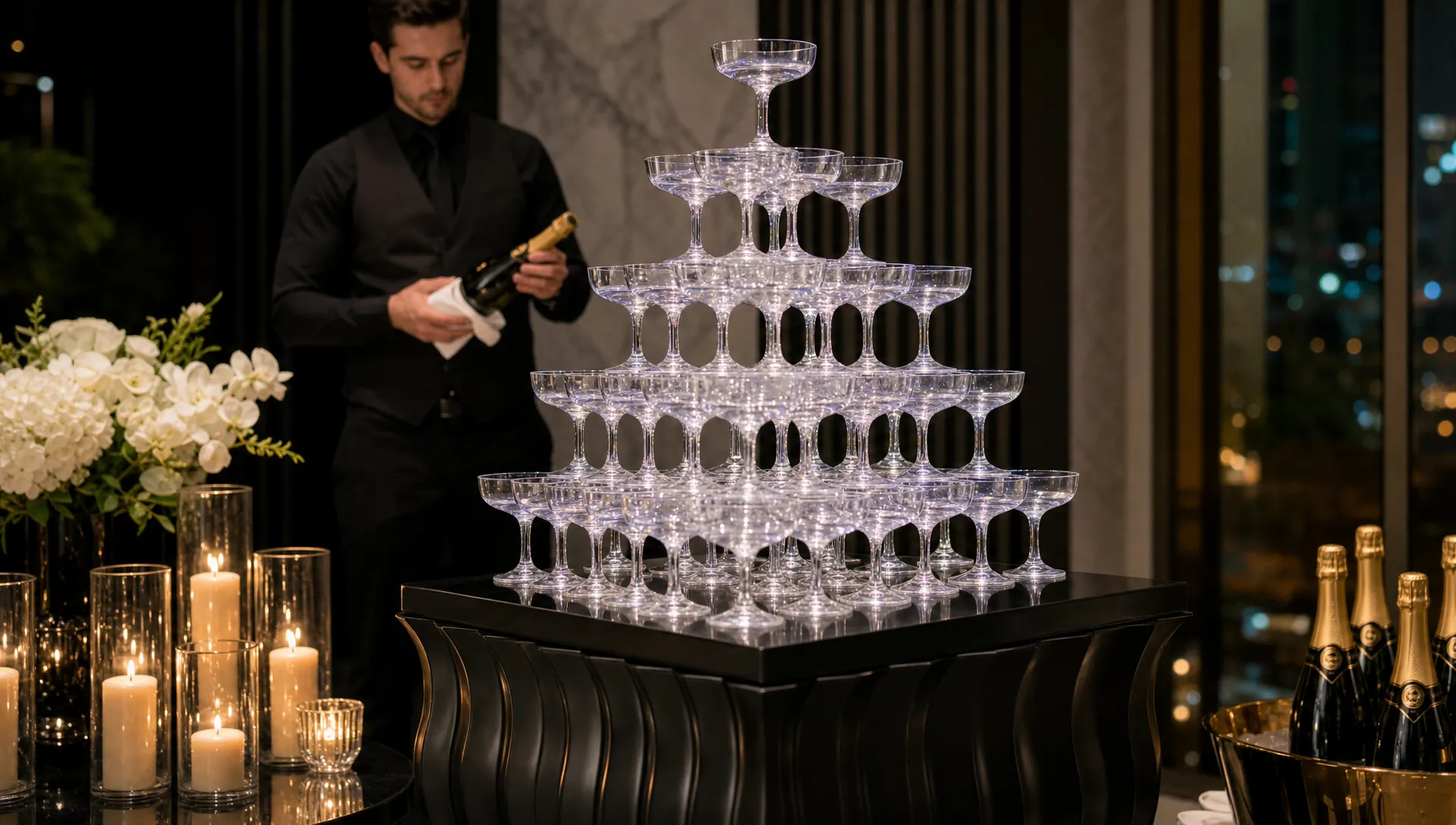
For a premium effect, the glassware should be crystal-clear, rigid and consistent in shape. Coupe-style glasses often photograph better than tall flutes in stacked tower arrangements because their wider bowls create a more sculptural, layered silhouette. The tower should read as an architectural object, not a pile of catering items.
Seams, rim thickness and base stability matter. From a guest’s perspective, these details may be subconscious. From a camera’s perspective, they are unforgiving.
The lighting must do the heavy lifting
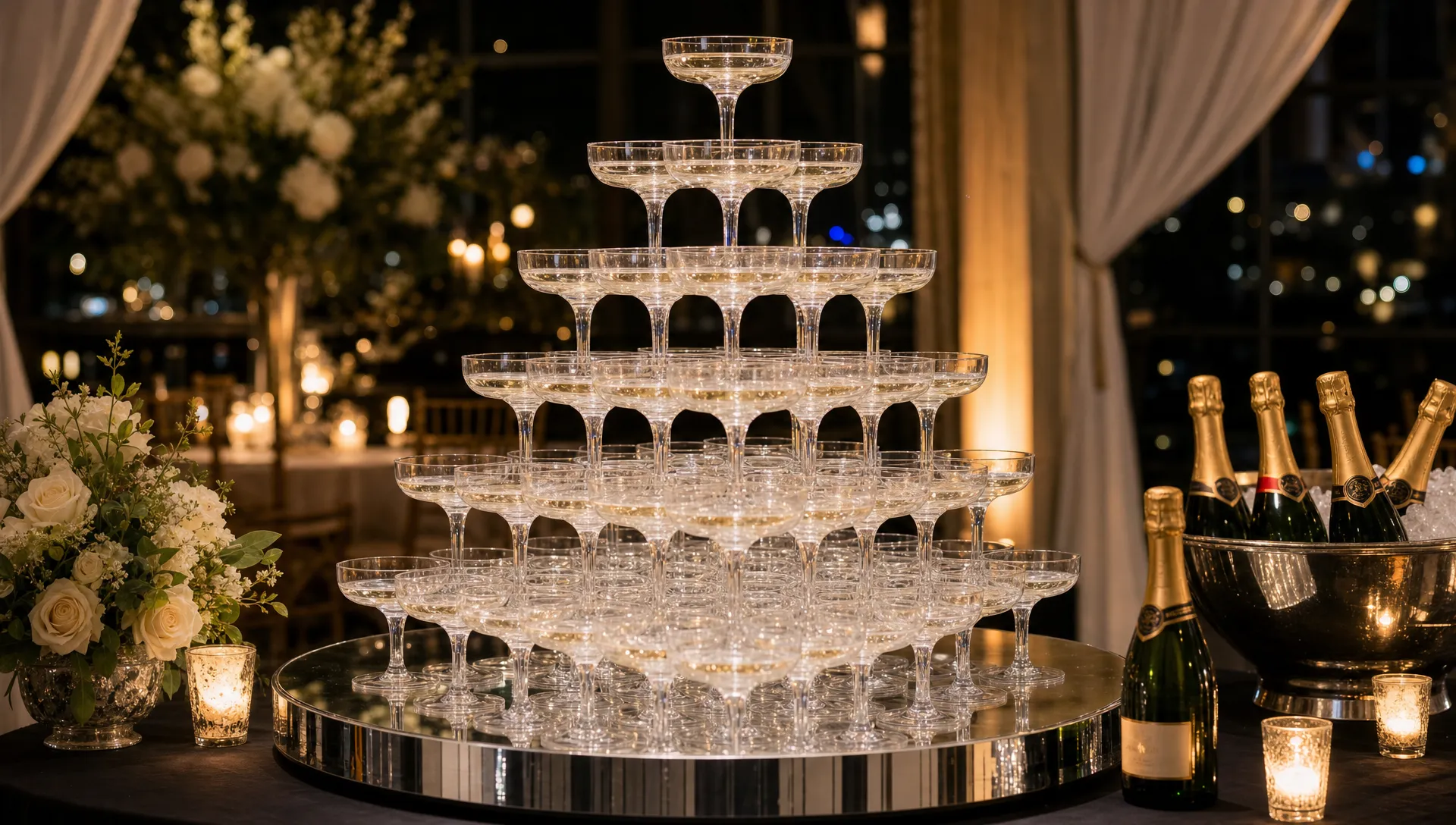
Plastic needs excellent lighting. Harsh overhead light can reveal imperfections, while thoughtful side lighting, candlelight, warm uplighting or reflective surfaces can create depth and brilliance.
The goal is not to hide the material, but to frame it beautifully. A champagne tower should have a clear focal point, controlled reflections and a lighting temperature that flatters both the glasses and the champagne. Warm gold tones often work well for evening galas, hotel openings and anniversary celebrations, while crisp white lighting can suit contemporary brand launches.
If the tower is part of a larger production, lighting should be tested before guests enter the room. A tower that looks impressive during setup can look very different once the house lights change, LED walls start moving or photographers begin using flash.
The base and surroundings must feel intentional
A plastic-glass tower needs a premium environment around it. The table, platform, linens, florals, bottles, trays and uniforms all influence how the glassware is perceived.
Minimalism often works better than excess. A clean mirrored base, a dark lacquered surface or a sculptural platform can make the tower feel designed rather than improvised. Branded elements can be effective, but only if they are integrated with restraint.
This is where the broader principles of a truly luxury champagne tower experience become essential. Proportion, purpose, choreography and precision are what make the installation feel exclusive.
Plastic vs glass for a luxury champagne tower
The best material depends on the event’s purpose, setting and guest experience. This comparison can help planners make a strategic decision.
| Factor | Plastic glasses | Real glass |
|---|---|---|
| Visual impact from a distance | Can be strong if the quality and lighting are excellent | Naturally elegant and reflective |
| Guest experience in hand | Usually less premium | More luxurious, weighted and sensory |
| Safety in high-traffic areas | Often more practical | Requires stricter controls |
| Outdoor or poolside suitability | Often suitable when wind and stability are managed | May be restricted or risky |
| Photography and video | Can look premium with careful styling | Typically more refined close-up |
| Venue restrictions | Often easier to approve | May not be allowed in some zones |
| Brand perception | Depends heavily on execution | Stronger default luxury signal |
The key takeaway is simple: plastic can perform well visually, but it needs more design control. Real glass brings inherent elegance, while plastic must be elevated through every surrounding detail.
The biggest mistakes that make plastic look cheap
A champagne tower with plastic glasses can fail quickly if the production team treats it as a simple substitute for glass. Luxury audiences notice when a detail feels unconsidered.
The most common mistakes include using flimsy disposable glasses, placing the tower on a basic banquet table, ignoring lighting tests, choosing the wrong scale for the room, allowing visible packaging or service clutter nearby and making the pour feel rushed.
Another mistake is building the tower without considering sightlines. At a luxury event, the tower must look beautiful from the entrance, from guest tables, from the stage, from the photographer’s main angle and from social media clips. A tower that looks impressive from one side but messy from another will weaken the moment.
This is why professional planning is essential. Even if the concept appears simple, the execution requires patience, stability, consistency and calm under live-event pressure. For planners concerned about operational risk, the principles behind champagne pouring into stacked glasses without the stress are especially relevant.
How to make a plastic champagne tower feel intentional
If plastic is the right choice for your event, frame it as a deliberate design and production decision. That means briefing the supplier clearly and aligning every detail around the desired guest impression.
Start with the event’s purpose. Is the tower meant to be a dramatic opening moment, a finale, a press photo, a VIP toast or a branded centerpiece? The answer changes the height, location, lighting, timing and pour choreography.
Then consider the guest journey. Will guests drink from the tower, or is it primarily ceremonial? If guests will be served directly, the tactile quality of the glassware becomes more important. If the tower is a visual feature followed by tray service, the material may be less noticeable.
A premium briefing should cover the glass shape, tower size, base design, bottle presentation, lighting plan, camera angles, venue rules, safety zones, setup time, breakdown plan and contingency options. The more complex or visible the event, the more important it is to involve a specialist early.
For corporate events and brand activations, this decision should also connect to ROI. A champagne tower is not only decoration. It can create a hero image, a social media moment, sponsor visibility and a sense of shared celebration. When planned well, it can help elevate a corporate event from polished to unforgettable.
When real glass is still the better option
There are situations where plastic is possible, but not ideal. If your event is an ultra-luxury wedding, a private dining experience, a high-jewelry presentation, a couture celebration or a champagne-focused tasting, real glass is usually the stronger choice.
In intimate settings, guests see and feel everything up close. They notice the rim, the clarity, the weight and the sound. If the champagne itself is central to the brand story, the glassware should support that level of refinement.
Real glass is also preferable when the tower sits close to seated guests for a long period, when macro photography is important or when the event concept is built around timeless elegance rather than practical spectacle.
That said, luxury is not a fixed formula. A poolside opening at a landmark hotel, a high-energy sports hospitality event or a large-scale public celebration may legitimately call for plastic. The important thing is to make the decision consciously, not apologetically.
The final verdict
A champagne tower with plastic glasses can look luxe when the material is high-quality, the design is restrained, the lighting is controlled and the execution is precise. It works best when plastic solves a real event challenge, such as safety, venue restrictions or outdoor conditions, while the overall experience still feels polished and intentional.
But plastic cannot carry the luxury message alone. It needs craftsmanship around it. The shape, stack, pour, styling, setting and service must all work together.
For a premium audience, the tower must feel like a moment, not a compromise.
Frequently asked questions
Can you build a champagne tower with plastic glasses? Yes, it is possible to build a champagne tower with plastic glasses, especially when venue rules, safety concerns or outdoor conditions make real glass impractical. The result depends heavily on the quality, rigidity and clarity of the glasses.
Will plastic glasses make a champagne tower look cheap? They can if the glasses are flimsy, cloudy or poorly styled. However, high-quality clear plastic glasses can look elegant when paired with strong lighting, a refined base, precise stacking and professional pour choreography.
Is plastic safer than glass for large events? In many settings, yes. Plastic can reduce the risk associated with breakage, particularly at outdoor venues, poolside events, sporting hospitality areas and high-traffic brand activations. Stability and build quality still need professional attention.
Should guests drink from a plastic champagne tower? It depends on the event. For a highly tactile luxury experience, real glass usually feels more premium. For a large visual moment followed by separate tray service, plastic may be perfectly suitable.
When should I avoid plastic glasses for a champagne tower? Avoid plastic if the event is intimate, ultra-formal or centered on the sensory experience of champagne. Real glass is usually better for luxury weddings, private dinners, champagne tastings and close-up editorial photography.
Create a champagne tower that feels premium from every angle
If you are considering a champagne tower with plastic glasses, the best next step is to assess whether it supports the ambition of your event or quietly works against it.
Luuk Broos Events specializes in spectacular champagne pyramid experiences, from smaller towers to world record concepts. With the right planning, precision and creative direction, your champagne tower can become the centerpiece guests photograph, share and remember long after the event ends.