

The most effective in store brand activation ideas give customers a reason to visit that cannot be replicated by scrolling through a campaign. For luxury retailers, that reason should feel connected to the brand: an exceptional reveal, access to specialist knowledge or a carefully hosted encounter with the product.
Attention alone is not enough. A crowded boutique can look successful while making shopping uncomfortable. A premium activation must create a memorable moment, protect the retail experience and give guests a natural next step, whether that is a consultation, a purchase or a return appointment.
What makes an activation feel premium?
Exclusivity comes from the quality of access, not simply a restricted guest list. Meeting a knowledgeable specialist or experiencing a collection in an unusually thoughtful setting can feel more valuable than receiving another gift bag.
Start with one commercial objective and one guest benefit. A flagship opening might need qualified local awareness, while an established boutique might want existing clients to discover a new category. These require different invitations, experiences and follow-up.
Then consider the store itself. The concept should respect its architecture, service culture and normal trading patterns. A spectacle that blocks the entrance or overwhelms conversations at the sales counter undermines the experience it was meant to elevate.
Seven in store brand activation ideas for luxury retail
The following concepts range from a single hosted counter to a statement centerpiece. Select the format around the customer journey rather than choosing the most elaborate production first.
1. A timed champagne pyramid reveal
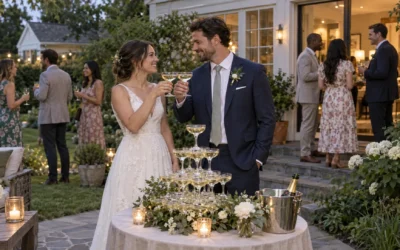
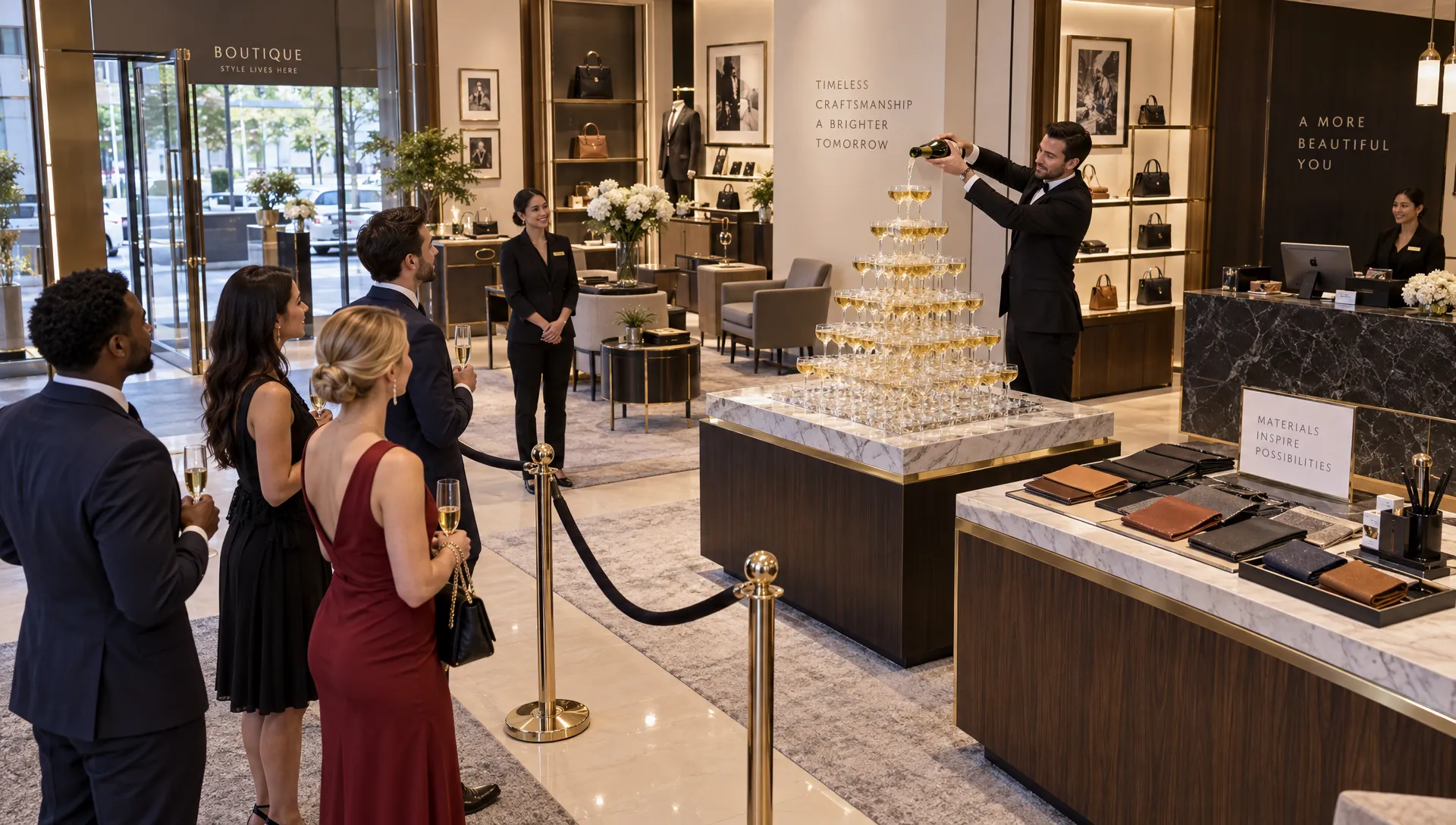
A professionally built champagne pyramid gives a flagship opening, anniversary or major collection launch a clear focal point. Its strength is the shared moment: guests know when to gather, photographers can prepare and the host can connect the celebration to a specific brand milestone.
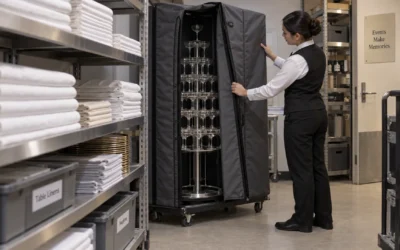
Position the installation where it can be appreciated without obstructing entrances, consultation areas or payment points. Separate the viewing moment from beverage service so guests do not crowd around the structure to collect drinks.
Scale should follow the venue and objective. A smaller tower may suit a boutique better than a record attempt. A world record brand activation needs its own feasibility assessment and communications plan, not simply a larger guest list.
Provide equally considered alcohol-free hospitality and confirm local service requirements before committing to the format.
2. A window reveal that continues inside
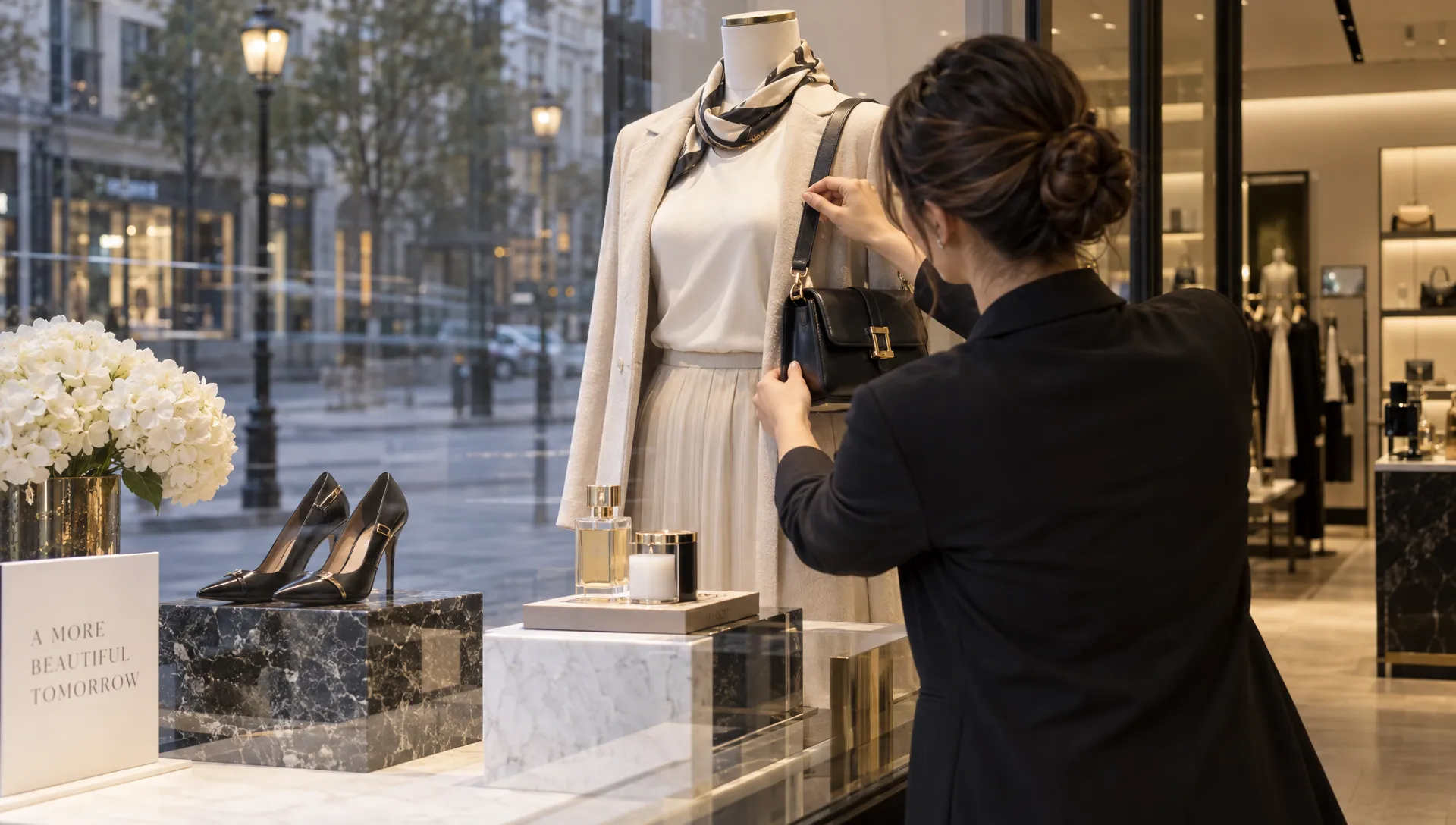
Window displays usually attract attention without asking much of the passerby. Turn the unveiling of a new installation into a scheduled event, then carry its story onto the sales floor.
For example, a leather goods brand could reveal a window centered on one material or design detail. Inside, a host introduces three products that interpret that detail differently, with an associate available for a closer consultation.
These in store brand activation ideas work best when the window creates curiosity and the interior delivers substance. Avoid sending every visitor toward the same doorway at once. Use hosted entry, a clear viewing position and a contingency for pedestrian congestion.
The activation should still make sense the following morning, when the installation becomes part of everyday visual merchandising.
3. A tactile product discovery counter
Create a compact, hosted counter where customers can explore the details that justify a product’s positioning. Depending on the category, this could include material samples, construction components, fragrance notes or examples of different finishes.
Keep the encounter focused. A specialist explaining one meaningful distinction is more compelling than a long presentation covering the entire collection. Connect each demonstration to an available product, then offer a comfortable place for further discussion.
Use approved handling samples rather than exposing delicate stock to repeated contact. For fragrance or beauty, plan hygiene procedures and avoid scenting the whole store by default.
This format suits retailers whose value is easier to understand through touch, comparison or explanation than through campaign imagery alone.
4. An appointment-led styling route
Instead of hosting one crowded reception, offer short appointments that guide guests through a coordinated selection of products. A fashion boutique might connect a key garment, an accessory and a finishing detail around a client’s occasion.
Among in store brand activation ideas, this format is particularly useful when personal advice is central to the purchase. The experience should feel like informed curation, not a compulsory tour through several sales stations.
Ask one or two relevant questions when booking, with the guest’s permission, so the associate can prepare an appropriate selection. Leave room for discovery rather than preselecting everything.
Build realistic buffers between appointments. A premium experience loses credibility when the next guest is waiting beside an unfinished consultation or the promised product is unavailable in the required size.
5. A genuinely limited release with reserved access
A limited release can give an event a clear purpose, provided the scarcity is real. The invitation should explain what is available, who can access it and whether attendance guarantees an opportunity to purchase.
Consider a reservation-led format rather than an uncontrolled queue. Guests can arrive within a defined window, hear the product story and review their selection without competing for an associate’s attention.
Agree the allocation process before invitations go out. Staff need consistent answers about purchase limits, deposits, uncollected reservations and any stock held for later appointments.
Avoid manufacturing urgency around ordinary inventory. In luxury retail, the longer-term relationship is worth more than a dramatic launch evening followed by disappointed clients who misunderstood the offer.
6. A hosted collection and handover evening
The moment a client collects a significant purchase is often treated as an operational task. It can instead become a carefully hosted experience, particularly for bespoke orders, jewelry, watches or important occasionwear.
For retailers evaluating in store brand activation ideas for existing clients, this creates relevance without requiring another product launch. Offer a private appointment, explain care or fitting details and make the handover feel considered.
Keep photography optional. Some clients will welcome a discreet portrait or product image, while others will value privacy more than shareability.
The guest benefit must extend beyond refreshments. Preparation, accurate documentation, appropriate packaging and a knowledgeable host are what make the occasion feel premium. A celebration cannot compensate for an order that is not ready.
7. An ownership and aftercare salon
Invite existing clients back for an event centered on enjoying what they already own. Depending on services the brand actually provides, this could involve care guidance, styling advice, fit reviews or maintenance consultations.
This approach gives the retailer a reason to reconnect without leading with another sales message. It can also reveal questions that clients were reluctant to raise during their original purchase.
Confirm the scope in advance. Do not imply that repairs, alterations or specialist treatments will happen on site unless the appropriate people, equipment and permissions are in place.
Where a new product genuinely complements an existing purchase, introduce it naturally. The event should remain useful even if the guest buys nothing that evening. That distinction helps protect trust and supports a longer client relationship.
Plan the experience around a working store
An activation takes place inside an operational business, not an empty event venue. Review the proposed layout with retail management before approving the creative concept.
Map arrivals, browsing, consultations, hospitality and exits. Check accessible circulation, emergency routes, stockroom access and the ability to complete a normal purchase. For glass installations, agree a suitable location, stable support, guest separation and a response plan for breakage with the specialist builder and venue.
Assign responsibility for installation, service, cleaning, security and strike. Confirm what happens if a delivery runs late or the store must continue trading during setup. The retailer should not discover these dependencies on event day.
Staff preparation matters just as much. A short rehearsal should cover the guest welcome, product story, referral between hosts and associates, plus the intended next step. An internal brand launch can help align the team before the public experience begins.
Even ambitious in store brand activation ideas should leave guests feeling that the visit was effortless.
Build publicity around the moment, not around promises
Decide what is genuinely worth photographing or reporting before commissioning the installation. The story might be a store opening, a distinctive piece of craftsmanship or a milestone with local significance.
Prepare a concise factual brief, a spokesperson and approved brand assets. Schedule photography around the moment guests will actually experience, while keeping cameras out of private consultations and payment areas. Obtain appropriate permissions for identifiable guest imagery.
If creators receive payment, complimentary products or hospitality connected to coverage, address disclosure expectations in the brief. For US campaigns, the FTC’s guidance for social media influencers explains how material connections should be disclosed.
Do not promise press coverage or viral reach. Give invited media and creators a clear story, reliable access and strong visual opportunities, then judge the resulting coverage on relevance as well as volume.
Measure the outcome beyond attendance
Commercially useful in store brand activation ideas have a measurement plan before invitations are sent. Choose a primary outcome, then use a small set of supporting indicators to explain what happened.
| Objective | Useful measures | What to clarify beforehand |
|---|---|---|
| Introduce a new store | Qualified RSVPs, attendance and subsequent appointments | What counts as a relevant prospect |
| Support a collection launch | Product consultations, reservations and purchases | Which products and attribution period apply |
| Deepen client relationships | Return visits, service bookings and consented follow-up | How associates will record outcomes |
| Generate visibility | Relevant coverage, usable content and referral traffic | Which audiences and messages matter |
Separate immediate revenue from later purchases influenced by the event. A booking reference, campaign tag or CRM event field can help connect activity without claiming that every subsequent sale resulted from the activation.
Assess the full investment, including production, hospitality, additional staffing, security and content capture. Where revenue is the objective, contribution after relevant costs is more informative than sales value alone. Compare results with a suitable trading baseline and acknowledge seasonal effects or other campaigns running at the same time.
Frequently asked questions
Which in store brand activation ideas suit a small boutique? A hosted discovery counter, appointment-led styling route or collection handover can create a distinctive experience with a modest footprint. Prioritize unobstructed circulation and personal attention. Any champagne tower or other installation still needs a site-specific assessment rather than an assumption that a smaller structure will automatically fit.
Does a premium activation need champagne? No. Hospitality should suit the brand, audience and local requirements. An alcohol-free experience can feel equally considered when the presentation and service are thoughtful. If champagne is included, plan responsible service and an alternative that receives the same attention.
How should the budget be allocated? Protect the essentials first: safe delivery, capable staff, guest comfort and product availability. Then assess the centerpiece and publicity investment against the objective. Request a scoped proposal that distinguishes production requirements from optional enhancements rather than comparing headline prices alone.
How far in advance should planning begin? Start once the objective, likely date and venue are known. Required lead time depends on access, fabrication, permissions, specialist availability and invitation strategy. Confirm the feasibility of the central concept before announcing it publicly or making commitments to VIP guests.
Create a centerpiece that belongs to the brand
A spectacular installation earns its place when it supports the occasion and fits the store, rather than competing with the products around it.
Luuk Broos Events specializes in champagne pyramids, from smaller towers to world-record-scale concepts, with a professional builder team and marketing and publicity advice. Its tailored approach allows the conversation to begin with the client’s objectives rather than a fixed format.
For a flagship opening, anniversary or premium retail celebration, share the venue details, audience, timing and intended outcome. Establishing the right scale early is the first step toward a centerpiece that feels both exceptional and appropriate.