


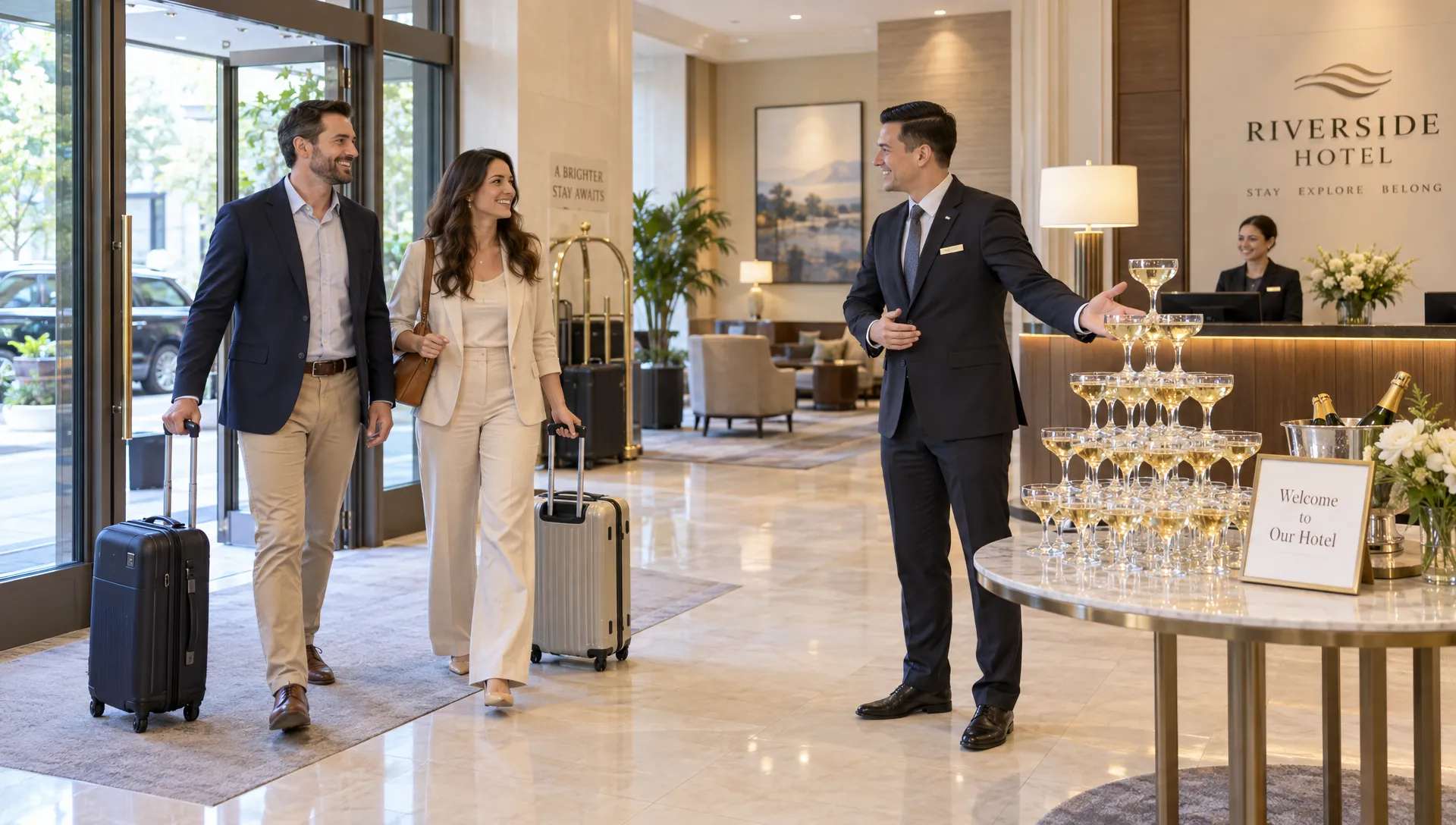
The strongest publicity stunt ideas give people a clear reason to pay attention, not simply something unusual to photograph. For a hotel opening, brand anniversary or VIP hospitality event, the spectacle should express something recognizable about the host: craftsmanship, generosity, precision or ambition. A striking moment earns its place when guests understand why this brand created it, in this setting, for this occasion.
Below are seven concepts for luxury event teams, followed by practical guidance on production, press planning and measurement. The aim is attention that strengthens the brand rather than distracting from it.
What separates a considered spectacle from a gimmick?
A gimmick asks people to notice an interruption. A considered spectacle gives them something worth noticing.
Start with a simple test: could a journalist describe the event and its relevance in one sentence? “A new waterfront hotel opens with a champagne pyramid celebrating its first service” has a clear connection between the occasion and the experience. An unrelated prank outside the same hotel does not.
The concept also needs to reward people who attend without a camera. Guests should enjoy the atmosphere, understand what is happening and retain comfortable access to hospitality throughout.
Finally, distinguish surprise from deception. An unexpected reveal can be compelling without fake emergencies, manufactured controversy or misleading claims. For luxury brands, protecting trust is part of the creative brief, not a restriction added later.
Seven publicity stunt ideas for premium events
1. Make a champagne pyramid the opening ceremony
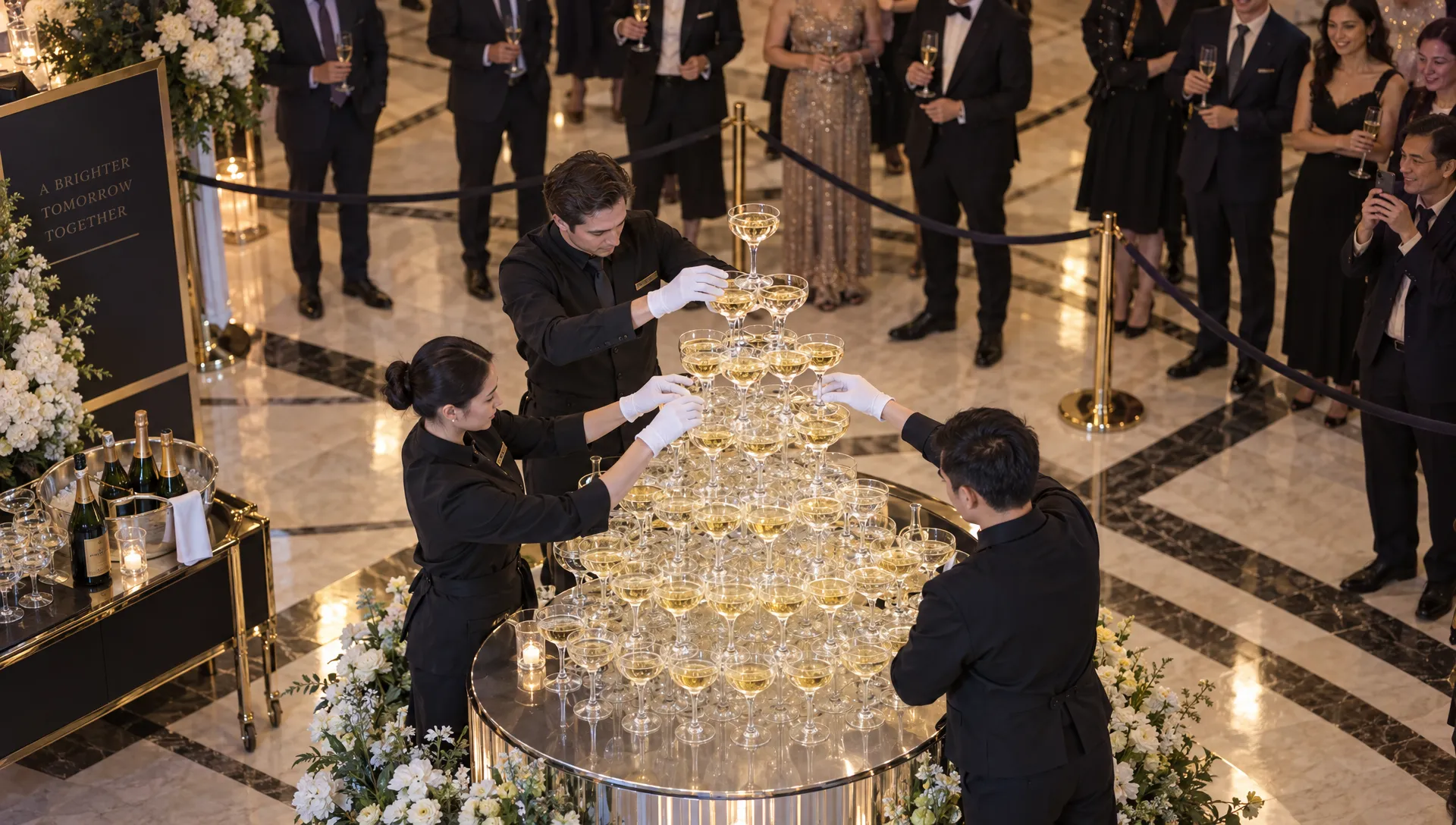
A champagne pyramid turns a familiar hospitality ritual into a focal point with scale, anticipation and a clear culmination. It suits hotel openings, significant anniversaries and celebrations where the act of welcoming guests is central to the story.
Build the program around a deliberate reveal and ceremonial pour rather than treating the tower as background decoration. Sightlines, lighting and the surrounding space should let guests appreciate the construction without crowding it. The professional builder’s requirements must inform the layout from the outset.
The editorial angle is strongest when the scale has a purpose, such as marking a major opening or a genuine record attempt. If pursuing a Guinness World Records title, follow the official application process and applicable requirements. An impressive installation is not automatically an officially recognized record.
Keep it considered: choose a scale the venue can support elegantly, rather than the largest structure the budget might stretch to accommodate.
2. Open a temporary working atelier
For a brand defined by making, bring the process into view. A leather specialist finishing a commissioned piece, a florist constructing an architectural arrangement or an artisan completing a bespoke object can make expertise tangible.
Among publicity stunt ideas for luxury launches, a working atelier offers something a finished display cannot: visible decisions, skilled hands and a genuine sense of progress. The culmination might be the completion of one object created specifically for the occasion.
Give the craftsperson a proper working environment, not a decorative workstation surrounded by guests. Plan camera access, task lighting and short interpretation that explains what makes the work difficult or distinctive.
Keep it considered: let the process determine the timing. Rushing an artisan to fit an arbitrary countdown undermines the quality the event is intended to celebrate. Secure permission before filming techniques or details that the maker regards as proprietary.
3. Reveal the architecture through a restrained light sequence
For a hotel, flagship store or restored landmark, the building itself can become the subject of the opening moment.
A short lighting sequence might reveal an entrance, courtyard and facade in stages before the doors open. The creative treatment should draw from actual architectural details, local context or the building’s history, rather than covering every surface with unrelated animation.
The story is the arrival or return of a place. Arrange a strong exterior viewpoint for accredited photographers and provide architectural information that helps them explain what audiences are seeing.
Assess permissions, neighboring properties, traffic, accessibility and any restrictions affecting the site. Light spill and sound deserve particular attention where residents or hotel guests are nearby.
Keep it considered: use a clear beginning and ending. A brief reveal with a memorable final view can be more effective than a long sequence that delays the welcome inside.
4. Complete a permanent artwork during the event
Commission a site-specific work that will remain after the celebration, then make its final stage part of the program. This could suit a hotel opening, cultural partnership or anniversary tied to a particular location.
Participatory publicity stunt ideas need a credible reason for participation. An artist might incorporate contributions gathered from local craftspeople or invited collaborators before the event, then install the final element live. The audience witnesses completion without being asked to interfere with an unfamiliar process.
The lasting work creates a second story beyond the evening itself: what was commissioned, why it belongs there and how future visitors can experience it. Agree on ownership, attribution, maintenance and image rights before promoting the reveal.
Keep it considered: preserve the artist’s authorship. A commission should not become a logo exercise disguised as a cultural contribution, and the announcement should accurately describe who created it.
5. Turn a signature product into a temporary landmark
An oversized product is not inherently interesting. An imaginative interpretation of its design can be.
A luggage house could commission a walk-through pavilion inspired by a travel trunk. A jewelry brand might translate a recognizable setting into a sculptural entrance. The experience gives visitors an unexpected relationship with something normally held in the hand.
Choose one distinctive design feature and build the concept around it. Materials, detailing and photography should support the product’s identity rather than imitate it cheaply at a larger scale.
Treat the installation as a temporary structure requiring appropriate design, engineering and venue approval. Public access, weather exposure and dismantling all affect feasibility.
Keep it considered: explain what the structure is. Do not imply that a scenic interpretation demonstrates the strength, performance or construction of the actual product. Plan reuse or storage before fabrication, not after the photographs have been taken.
6. Connect several venues through one shared ceremony
A hospitality group celebrating an anniversary or opening can connect participating properties through a coordinated toast or reveal. The concept works when the locations have a genuine shared milestone, not merely a convenient connection.
For international hospitality brands, publicity stunt ideas can express both a shared identity and the character of individual properties. Each venue might contribute a short welcome or locally relevant detail before the common moment.
Time zones, connectivity, language and local service schedules need careful coordination. Give every property a workable contingency so a technical problem elsewhere does not leave its guests waiting.
The visual story should be understandable without watching a long broadcast. A planned set of images can establish the relationship between locations, supported by accurate captions.
Keep it considered: offer alcohol-free participation and respect local requirements. Describe the event’s actual scope rather than claiming unprecedented global scale without evidence.
7. Create a temporary public garden with a documented next chapter
For a hotel opening or property launch, a temporary garden can transform an overlooked courtyard or approved public-facing space into a destination. Its appeal comes from an unexpected change in the setting and a thoughtful invitation to experience it.
Work with a landscape specialist to choose suitable planting, accessible routes and a realistic maintenance plan. Public opening hours can be separate from the private reception, giving the community access without compromising either experience.
The concept becomes more substantial when the plants have a confirmed destination afterward. That might mean incorporation into the property’s permanent landscape or transfer to an organization that has agreed to receive and maintain them.
Keep it considered: communicate only the onward arrangements that are actually secured. Temporary greenery is not, by itself, evidence of environmental benefit. Avoid broad sustainability claims that the project cannot substantiate.
Test the concept before committing to production
Establish the nonnegotiables first
Before comparing publicity stunt ideas by cost, identify the conditions each concept must satisfy. These include brand fit, venue approval, guest access, production feasibility and the ability to capture a clear visual story.
Ask the relevant specialists to assess structural loads, working areas, installation access, utilities and emergency routes as applicable. A proposal should identify who owns each approval and who can stop the activity if conditions change.
For hospitality around major sporting occasions, check commercial rights as well as venue permissions. Being held during a race weekend does not automatically make an activation an official partner event. Names, marks and implied affiliations require careful review.
For record-led concepts, this assessment should also consider whether the additional preparation serves the event’s objective. Our guide to when a world record marketing stunt is worth the risk explores that decision in more detail.
Protect the guest experience with a fallback
Separate the spectacle’s critical requirements from the evening’s wider hospitality. Guests still need a good arrival, comfortable viewing, accessible circulation and timely service if the main moment is delayed or shortened.
Create one agreed cue sequence covering production, venue operations, security, photography and the host. Establish who makes the final go-or-no-go decision and how that decision reaches every team.
A fallback should preserve the celebration without pretending the original plan succeeded. For an outdoor reveal, that could mean an approved indoor presentation. For a record attempt, it means communicating the verified outcome accurately, whatever it is.
Give the press a story, not just an invitation
The most useful publicity stunt ideas contain an editorial angle before a press release is written. Explain what is happening, why it matters now and what makes it relevant to the intended publication.
A hospitality title may care about the opening and guest experience. A design publication may focus on the commission or architecture. A local outlet may be more interested in access, restoration or the people involved. Tailor the pitch without changing the facts.
Prepare a concise fact sheet, approved spokesperson, accurate captions and clearly assigned photography responsibilities. Confirm access and usage rights so strong images can be distributed promptly after the event.
Keep earned coverage separate from contracted promotion. If creators are paid or receive benefits, account for applicable disclosure requirements, including the FTC’s guidance on endorsements and influencers. An impressive content package does not guarantee independent media coverage.
Measure attention that matters to the brand
Agree on success before approving the concept. Publicity stunt ideas should be assessed against their intended job, whether that is introducing a property, strengthening a brand association or starting commercial conversations.
| Objective | Useful evidence | What to avoid |
|---|---|---|
| Reach the right audience | Relevant publications, audience geography and prominence of coverage | Counting every mention as equally valuable |
| Communicate a brand quality | Message accuracy in coverage and structured guest feedback | Assuming a recognizable logo proves understanding |
| Create reusable content | Rights-cleared assets suitable for agreed channels | Counting images that cannot be used afterward |
| Support commercial activity | Tracked inquiries, meetings or bookings within a defined period | Attributing every later sale to the event |
Review the whole delivery cost, including creative development, specialist production, permissions, capture and dismantling. Separate direct spending from wider outcomes rather than converting every impression into a supposed financial return.
The most revealing review asks two questions: did the right people notice, and did they understand the intended message? High visibility with the wrong association is not a successful result.
Frequently asked questions
How do you choose publicity stunt ideas for a smaller event? Reduce scale rather than execution quality. A smaller champagne tower, a single commissioned object or an intimate live-making demonstration can create a clear focal point. Protect sightlines, lighting and the connection to the occasion before adding more elements.
Does a publicity stunt need a world record? No. A record attempt is appropriate when measurable achievement supports the story and the team can meet the applicable requirements. Craftsmanship, transformation and a well-designed reveal offer other routes to attention.
How far ahead should planning begin? Begin before the venue layout and event program are fixed. Engineering, fabrication, permissions and any record application can affect the schedule. Ask suppliers for a project-specific timeline rather than assuming a standard lead time.
Can an event supplier guarantee press coverage? Independent editorial coverage cannot be guaranteed. A supplier can help develop a strong concept and publicity approach, but publication decisions remain with the media outlet.
Explore a champagne spectacle built around your occasion
If the brief calls for hospitality, craftsmanship and a distinctive ceremonial moment, a champagne pyramid is worth exploring. Luuk Broos Events specializes in champagne pyramid experiences, from smaller towers to world-record projects, with a professional builder team and marketing and publicity advice.
Start with the occasion, venue, audience and intended impact. Discuss your event with Luuk Broos Events to explore a scale and approach suited to the experience you want to create.


